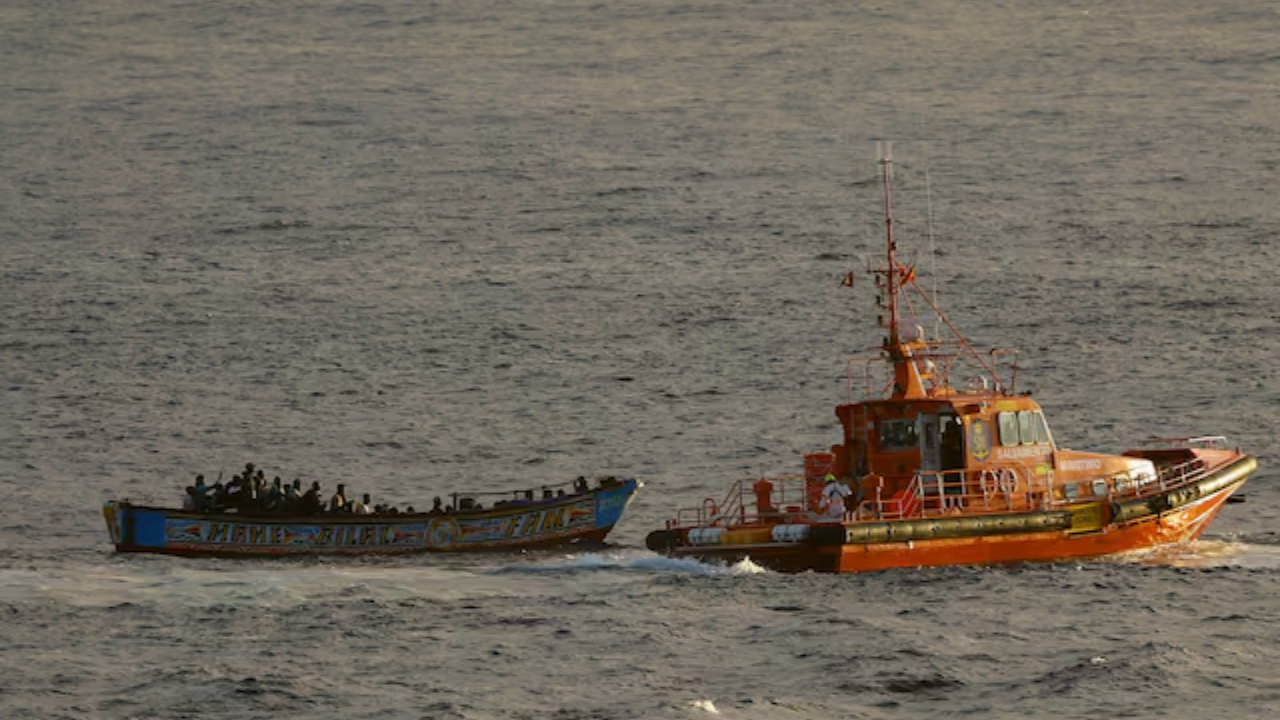
Salt stings the eyes before the sun clears the ridge. Out on the open Atlantic, where the Canary Current pulls cold water south past volcanic stone and dark swell, a single day can turn a quiet harbor log into a reckoning.
One thousand four hundred and eighty-eight people rescued in a single day. For an alternative look, consider: this related article.
That is the highest daily tally of migrant arrivals recorded in Spain’s Canary Islands since 2020. On paper, it reads like a dispatch wire: a surge, a rescue count, a record broken. Yet numbers flatten the sea. They hide the oil on a wooden gunwale, the cramp in a thigh muscle after fourteen hours wedged against a wet rib, the sudden quiet when a patrol vessel cuts its diesel near a drifting skiff.
I have stood on piers in the archipelago watching rescue crews haul soaked blankets from tenders while gulls wheeled overhead without a care in the world. You smell wet wool, diesel exhaust, and sun-baked salt all at once. You also feel a tug in your chest that no policy brief ever quite names—because once you look into eyes hollowed by dehydration and salt-burn, you stop seeing "flows" and start seeing neighbors who arrived uninvited on a Tuesday morning. Similar analysis on this matter has been published by USA Today.
Let me be candid with you: I do not have every answer to how Europe, West Africa, and island communities should share the weight of human movement across open ocean. Anyone who claims a neat, painless fix is selling you a mirage. What I can offer is a clearer look at what that single-day spike actually means—for the people in the boats, for the coastal towns receiving them, and for the rest of us reading headlines over coffee.
The Numbers Behind a Single Day
A record day rarely comes out of nowhere. When arrivals jump to 1,488 rescued in twenty-four hours—the sharpest single-day surge in the Canary Islands since 2020—meteorology, geography, and human desperation usually collide at the exact same moment.
Think of the Atlantic route like a funnel tilted toward open water. Departures from West African coasts—Mauritania, Senegal, The Gambia, and nearby shores—often rely on wooden cayucos or overloaded inflatable craft pushed far out past standard coastal lanes to evade detection. Why push farther west into deeper swells? Because tighter patrols along shorter crossings force smugglers and travelers alike to gamble on longer distances and rougher seas.
When calm spells hold just long enough, multiple boats set off together. Then a shift in wind or swell can bunch arrivals into one frantic window. Rescue coordination centers, maritime patrols, and port authorities suddenly find themselves processing hundreds upon hundreds of people before nightfall.
Compare that to how casual readers often picture migration: as a steady, predictable trickle like commuters crossing a bridge. It rarely works that way on water. Ocean crossings move in pulses. A calm week looks deceptively quiet; a single crowded day exposes how thin the margin is between rescue and tragedy.
When a Headline Becomes a Person
To understand what 1,488 rescued looks like beyond a counter ticking upward, let us step into a hypothetical scenario grounded in real conditions along the southern islands. Picture a fictional young man named Moussa—a name chosen purely to put a human face on an abstract statistic.
Moussa left a coastal town with a small plastic bag holding identity papers, a spare shirt, and whatever savings his family pooled together. His goal was simple enough to state in one breath and impossible enough to require weeks of planning: find steady work, send money home, survive the crossing.
For days, the ocean was a wall of gray-green moving mountains. Spray soaked through thin fabric within an hour. Cold wind cut straight to the bone at night, while daytime sun blistered exposed skin. Every wave demanded balance. Every engine sputter brought a spike of dread—because out past sight of land, a stalled motor means drifting wherever the current decides.
When a rescue boat finally pulls alongside, relief does not arrive like a movie soundtrack. Often it comes as numbness. Hands shake too hard to grip a lifeline cleanly. Legs buckle on solid deck plates after days without stretching.
Moussa’s story is invented for this page, yet the physical toll he experiences mirrors what maritime rescuers and medical teams document again and again: hypothermia, severe dehydration, fuel burns on skin mixed with seawater, and deep exhaustion. Treating one person is manageable. Treating hundreds arriving on the same tide tests every cot, every interpreter, and every nerve in a port facility.
Why Island Communities Feel the Squeeze First
Mainland capitals debate migration in parliamentary chambers and television studios. Island towns live with it at the end of the pier.
The Canary Islands sit hundreds of miles from mainland Spain and roughly sixty miles off northwestern Africa at their closest point. That geography makes the archipelago both a lifeline for people in distress at sea and a pressure point for local infrastructure.
Consider what happens when over a thousand people come ashore in a single day. Reception centers fill fast. Municipal services stretch. Volunteers, port workers, police, and humanitarian staff work long shifts under bright floodlights. Local residents—many of whom already navigate seasonal housing pressures, rising living costs, and tourism-dependent economies—watch their harbors turn into emergency triage zones.
Resentment can creep in when locals feel unheard. Compassion can fray when systems look overwhelmed. Neither reaction comes from thin air; both grow out of real strain on limited space and resources.
The Invisible Stakes We Rarely Measure
Most coverage stops at two questions: How many arrived, and what happens next administratively? Those questions matter, yet they leave out quieter stakes that shape the years ahead.
First is the human cost of the route itself. The Atlantic crossing is notoriously unforgiving. Even when rescue teams achieve a high daily save count, every surge raises the odds that unspotted vessels drift off course or founder before radar picks them up. A big rescue number tells you ships reached people in time; it does not tell you how many boats never made it into the tally.
Second is the strain on first responders. People who pull exhausted travelers from dark water carry memories home with them. Rescuers are human beings with families of their own, watching mothers clutch infants and young men weep from shock. Burnout rarely makes the headline, even though it determines how well a rescue system holds up next month and next year.
Third is the trap of treating a record day as a permanent crisis or a one-off fluke. Either extreme distorts judgment. If we treat every spike as an invasion, fear drives cruel or unworkable policies. If we treat it as mere background noise, we ignore real human suffering and real municipal pressure until something breaks.
A Different Way to Read the Tide
Think of migration pressure like water pressing against a levee. You can argue endlessly about who built the channel or why the rain fell upstream, yet once water rises against stone, ignoring the water line does not lower the level.
Effective responses usually balance three realities at once:
- Rapid, humane rescue and care at arrival: Saving lives at sea and meeting basic medical and shelter needs immediately is both a legal duty and a basic test of decency.
- Fair burden-sharing beyond the point of arrival: Leaving frontline islands to carry every administrative and reception burden alone creates predictable bottlenecks and local friction.
- Honest engagement with root causes and safe pathways: People keep boarding risky boats when hope at home feels closed off and legal avenues feel out of reach.
None of those pieces is easy. Each carries political friction, budget trade-offs, and disagreements over sovereignty and rights. Still, pretending the problem is simple only guarantees repeat headlines—another record day, another round of finger-pointing, another cycle of exhaustion.
Next time a number like 1,488 crosses your screen, pause for ten seconds before scrolling past. Picture the cold spray on a wooden bow miles from land. Picture the tired medic handing over a warm cup before dawn.
A statistic is just a mark on a ledger. The Atlantic keeps rolling either way.