The air inside the Shenzhen development hub smells of stale jasmine tea, hot silicon, and the quiet desperation of midnight.
Outside, the neon arteries of the city pulse with millions of commuters heading home under a slate-gray sky. Inside, twenty-two floors above the street, a young software engineer named Chen stares at a glowing monitor. Lines of code cascade down his screen in a relentless green waterfall. He hasn't slept in thirty-six hours. Discover more on a similar topic: this related article.
Chen is not writing poetry. He is tuning an artificial intelligence model designed to predict microscopic flaws in industrial lithium batteries before they leave the assembly line. Every successful prediction saves his factory thousands of dollars. Every failure means a recall.
And right now, Chen is winning. Further analysis by Wired explores related perspectives on this issue.
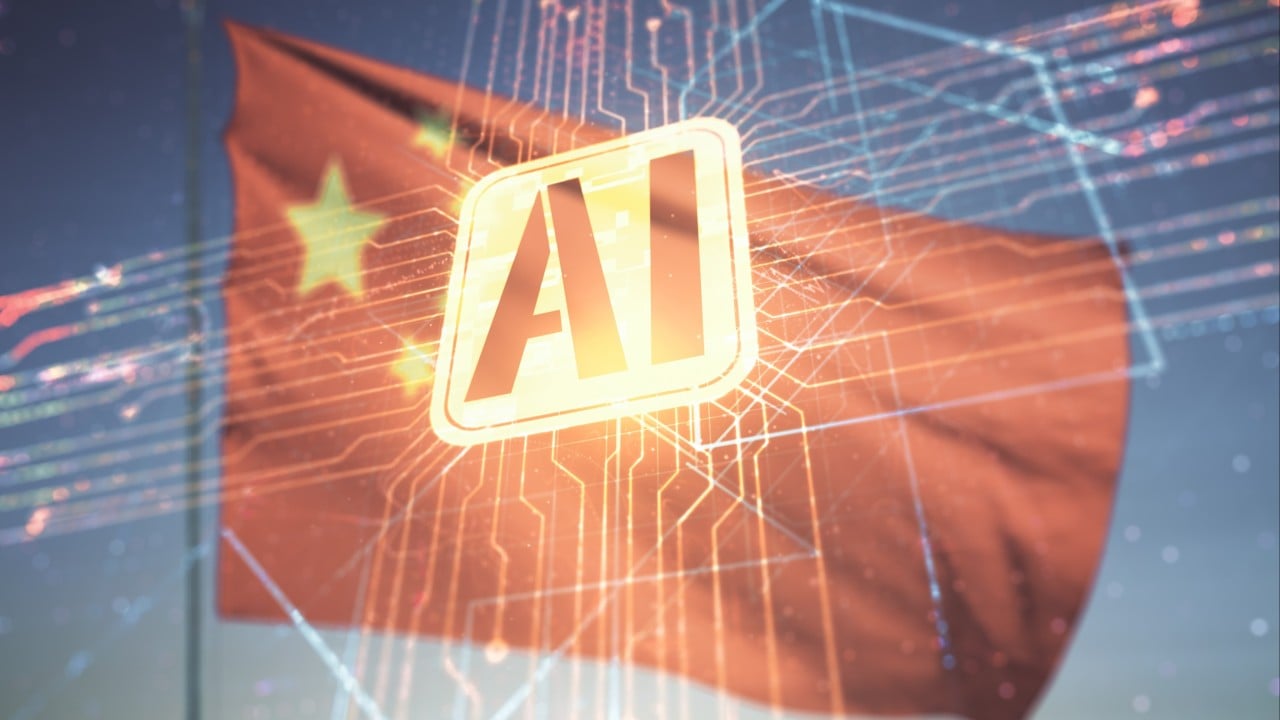
Across the globe, financial analysts in towering glass offices are crunching numbers that look abstract on spreadsheets. Goldman Sachs recently released a projection that sends ripples through international markets: China’s artificial intelligence revenue is hurtling toward thirteen billion dollars. The catalyst isn't just theory anymore. It is a sudden, violent collision of engineering breakthroughs and gritty, ground-level adoption.
To the casual observer on Wall Street, thirteen billion dollars is a tidy sum. It is a line item in a quarterly report. It is a marker of market share.
To Chen, thirteen billion dollars is the hum of a thousand server racks cooling in the desert of Inner Mongolia. It is the sound of a billion tiny calculations happening in the dark. It is the quiet, undeniable proof that the center of gravity in modern technology is shifting eastward, fueled not by hype, but by heavy industry.
We got the story wrong for years.
The Western narrative long painted the race for machine intelligence as a flashy parlor trick. We obsessed over chatbots writing sonnets or generating bizarre images of politicians eating pizza. We looked at the field through the narrow lens of consumer novelties. We thought the competition would be won by whoever made the cleverest virtual assistant.
That was a mistake.
While the West argued ethics and copyright in air-conditioned seminar rooms, factories in Guangdong and logistics hubs in Shanghai were quietly plugging algorithms into the dirtiest, heaviest parts of the economy. Artificial intelligence in China stopped being a tech sector phenomenon long ago. It became an industrial utility. Like electricity. Like water.
Consider what happens on the factory floor of a heavy machinery plant in Wuhan.
Ten years ago, inspecting a massive steel piston for microscopic stress fractures required human eyes, magnifying glasses, and endless hours of tedious labor. Tired inspectors missed things. Flawed pistons slipped through. Catastrophic failures happened out in the field.
Today, high-speed optical scanners feed visual data directly into a local neural network. The system processes thousands of images a second, flagging imperfections invisible to the human eye with cold, terrifying accuracy. It is not glamorous. It does not make headlines on evening talk shows. But it scales. It saves lives. And it generates revenue.
This is the hidden engine behind the thirteen billion dollar milestone. Goldman Sachs didn't pull that number out of thin air. It is the mathematical echo of millions of factory managers making a brutal, pragmatic calculation: automate or die.
The sheer scale of this transition staggers the imagination.
Imagine walking through a modern port in Ningbo. You will not see many dockworkers shouting or pulling levers. Instead, autonomous guided vehicles glide silently between towering stacks of shipping containers, coordinated by a central nervous system of predictive software. Cranes lift tons of steel with millimeter precision, guided by algorithms that factor in wind speed, wave currents, and weight distribution in real time.
This infrastructure didn't appear overnight. It was forged in the fires of intense economic pressure, demographic shifts, and a state-backed urgency that brooks no hesitation.
When you look at the macro data, the trajectory becomes stark. The breakthroughs aren't just happening in academic isolation. They are happening in the trenches of practical application. Domestic tech giants and nimble startups alike are finding ways to compress massive language models and computer vision systems so they can run on cheaper, locally manufactured hardware.
This brings us to the uncomfortable truth that Western planners are waking up to.
Sanctions and export controls were supposed to choke off the supply of advanced silicon, freezing the eastern machine in its tracks. The theory was simple: deny them the best chips, and you deny them progress.
But necessity remains a ruthless mother of invention.
When you cannot brute-force a problem with raw, unconstrained computing power, you have to get clever. Chinese engineering teams are rewriting the rules of model efficiency. They are pruning neural networks, optimizing data pipelines, and finding ways to extract maximum performance from constrained hardware. They are doing more with less because they have no other choice.
Step back for a moment and look at the historical parallel.
In the late nineteenth century, the second industrial revolution was defined not by who discovered electricity first, but by who electrified their factories fastest. The countries that merely marveled at the electric light bulb fell behind. The nations that rewired their entire manufacturing base—transforming textile mills, steel foundries, and assembly lines—redefined global power for a century.
We are living through the exact same transition today.
Thirteen billion dollars in revenue is merely the first visible crest of a much larger wave. It represents the tipping point where adoption transitions from an expensive experiment into an operational necessity.
Back in Shenzhen, the digital clock on Chen’s wall clicks past 3:00 AM.
His eyes burn. His coffee is long cold. But the simulation on his screen finally converges. The error rate drops below the threshold. A green checkmark appears, quiet and unassuming, at the bottom of the interface.
He leans back in his chair, rubbing his face with tired hands. He doesn't know about Wall Street projections. He doesn't care about the macroeconomic reports being bound in leather folders across the ocean.
He just knows that tomorrow morning, a thousand more batteries will roll off the line, a little safer, a little smarter, and a little closer to the future he is building one line of code at a time.