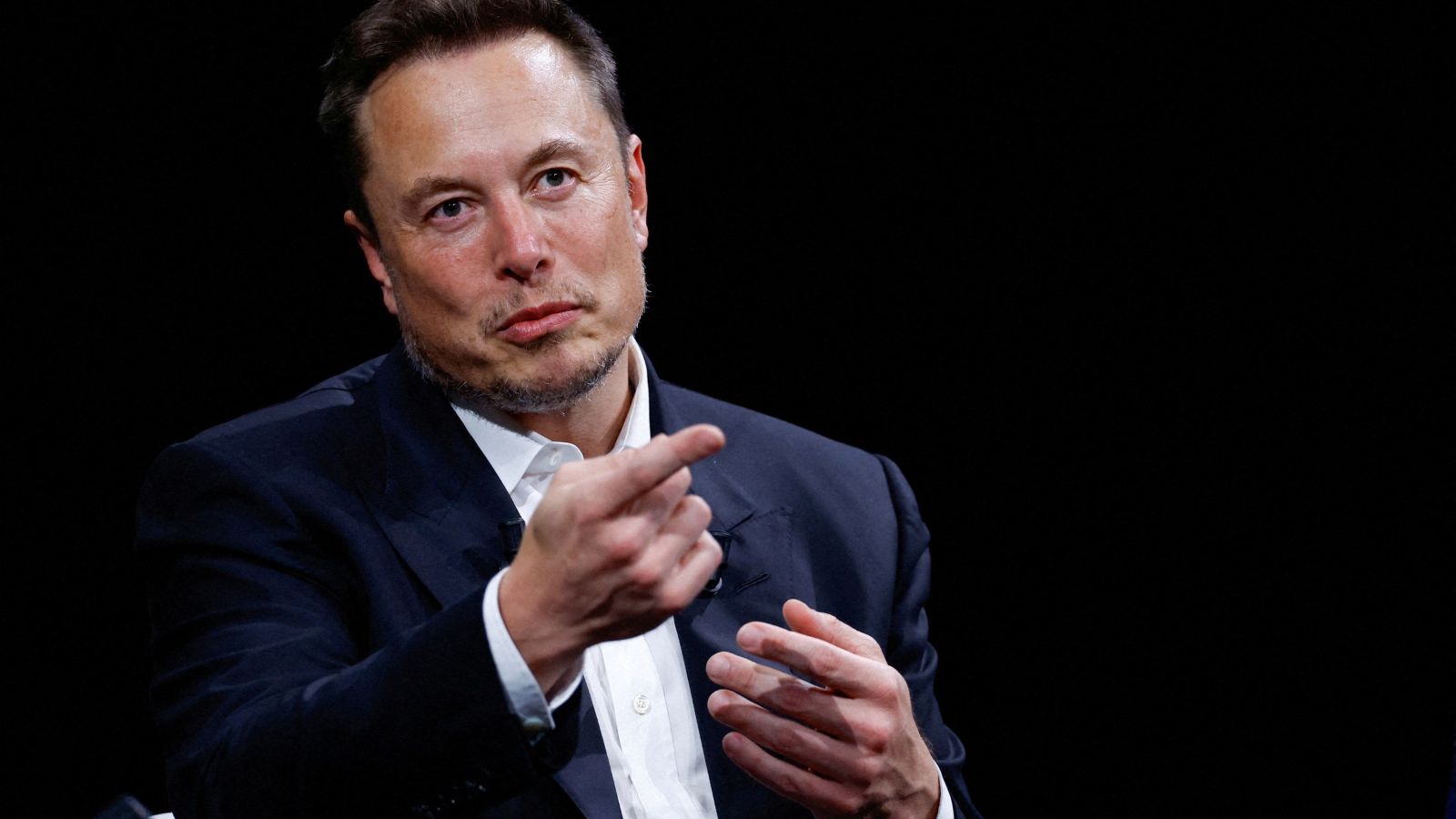
Elon Musk reportedly admitted to feeling "pretty foolish" after pouring roughly $445 million into the 2026 United States midterm elections, a staggering outlay that failed to produce the sweeping legislative firewall he sought in Washington. That single quote, surfaced in recent political reporting, captures a brutal truth about modern campaign finance. Money can buy attention, data operations, and television airtime, yet it cannot easily override midterm voter fatigue, local candidate quality, or the structural headwinds facing a sitting administration.
For decades, mega-donors have treated federal elections like distressed corporate acquisitions, assuming enough capital applied to the right consultants will force a predictable return. Musk approached the 2026 cycle with the same engineering mindset he applies to rocket boosters and electric vehicle supply chains. He treated voter turnout as a software optimization problem. What he discovered instead is that politics runs on human friction, local grievances, and tribal loyalties that resist brute-force spending.
The Architecture of a Half-Billion-Dollar Bet
To understand why a figure near $445 million leaves even the world’s richest man questioning his judgment, you have to look at how modern super PAC money actually moves. Federal law bars individuals from giving millions directly to candidates, so mega-donors route their fortunes through independent expenditure-only committees, commonly known as super PACs, alongside 501(c)(4) dark money nonprofits.
In the 2024 presidential cycle, Musk established America PAC as his primary vehicle, pouring hundreds of millions into ground-game canvassing and voter registration drives in battleground states. Following Donald Trump’s return to the White House and Musk’s high-profile role advising on federal efficiency, the expectations heading into the 2026 midterms were massive. The goal was straightforward: protect and expand Republican majorities in the House and Senate so the administration’s deregulatory and fiscal agenda could survive its final two years without paralyzing congressional oversight.
The spending scaled accordingly. Nearly half a billion dollars flowed into targeted House districts, Senate battlegrounds, and aggressive digital persuasion campaigns on X. Yet the mechanics of political spending carry severe diminishing returns.
When a super PAC floods a congressional district with $15 million, it does not buy $15 million worth of voter persuasion. Under federal rules, super PACs must pay commercial advertising rates rather than the discounted "lowest unit charge" guaranteed to official candidate committees. Media buyers take their percentage cuts. Consultants bill hefty retainers. By the time a dollar leaves a billionaire’s bank account and reaches a voter’s television screen or front porch, a substantial fraction has already evaporated into the campaign-industrial complex.
Why Silicon Valley Metrics Fail on the Campaign Trail
Silicon Valley runs on clean feedback loops. If an ad campaign on a digital platform fails to convert clicks into users, an engineer tweaks the algorithm by Tuesday and sees the results by Wednesday. Political campaigns offer no such clarity until the polls close on the first Tuesday after the first Monday in November.
Musk’s political operation leaned heavily on data analytics, paid field canvassers, and viral amplification on X. On paper, the metrics looked formidable. Impressions soared into the billions. Canvassing apps logged millions of door knocks across swing districts in Pennsylvania, Michigan, Arizona, and Georgia.
The flaw lay in confusing reach with persuasion. Amplifying a message to an already committed audience on social media generates massive engagement numbers, creating an echo chamber that feels like unstoppable momentum. Inside a swing district, however, the decisive voters are rarely scrolling through political threads at midnight. They are low-propensity suburban independents deciding whether to vote at all based on grocery prices, healthcare costs, local property taxes, and their gut reaction to the party in power.
There is also the well-documented problem of outsourced ground games. Traditional party committees rely on local volunteers who live in the neighborhoods they canvass, bringing genuine social proof to a doorstep conversation. When a super PAC hires out-of-state contractors paid by the hour or by the door knock, quality control becomes a constant battle. Campaign veterans across both parties have long warned that paid canvassing operations frequently suffer from high turnover, fabricated data entries, and scripted interactions that leave undecided voters cold.
The Unforgiving Math of Midterm Elections
Even a flawless ground game struggles against the single most reliable law in American politics. The party holding the White House almost always loses seats in midterm elections.
Going back to the Civil War, the president’s party has lost House seats in nearly every midterm cycle, with rare exceptions like 1998 and 2002. Midterm electorates are smaller, older, and disproportionately composed of voters motivated by anger or anxiety rather than hope. While supporters of the sitting president often stay home feeling their work was done two years earlier, the opposition party treats the midterm as an existential emergency.
Musk’s $445 million was essentially deployed as a seawall against a historical tide. In a handful of razor-thin House races, heavy outside spending likely kept vulnerable incumbents afloat. Across the broader electoral map, however, money could not insulate candidates from national political gravity, unpopular policy fights, or individual candidate missteps.
| Campaign Factor | Corporate / Tech Model | Midterm Political Reality |
|---|---|---|
| Capital Deployment | Scales output proportionally | Hits steep diminishing returns in media markets |
| Feedback Loops | Real-time A/B testing and conversion data | Delayed until Election Day; polling has wide margins |
| Brand Association | Founder visibility boosts product hype | High-profile donor becomes a target for rival ads |
| Customer / Voter Loyalty | Driven by product utility and price | Driven by partisan identity and economic mood |
When the Donor Becomes the Issue
There is another factor that makes a $445 million political investment uniquely hazardous, and it has nothing to do with ad rates or canvassing apps. When a donor becomes as famous as the candidates on the ballot, opposing strategists turn the donor into the central villain of the campaign.
In the 2026 midterms, Democratic media buyers did not need to invent a boogeyman. Every dollar Musk spent gave opposition super PACs fresh ammunition to frame local races as a referendum on billionaire influence over federal policy, Social Security, and government contracts. For an independent voter in a suburban swing district, seeing endless attack ads tying a local House member to the world’s richest man can neutralize the positive impact of the pro-incumbent ads Musk was simultaneously funding.
History offers plenty of warnings here. In 2020, Michael Bloomberg spent more than $1 billion of his own fortune on a presidential primary run that yielded only a victory in American Samoa. Tom Steyer poured hundreds of millions into his own presidential bid and progressive climate initiatives with mixed electoral results. On the right, the Koch network spent decades and hundreds of millions building policy infrastructure, yet still watched Donald Trump dismantle their preferred candidates in the 2016 GOP primaries.
Mega-donors routinely mistake the deference they receive from politicians in private meetings for actual control over the electorate. Politicians will gladly accept a nine-figure check, praise a donor’s vision, and pose for photographs. Once the voters step into the booth, those promises mean nothing if the underlying political fundamentals have soured.
The Opportunity Cost of Political Capital
Looking at the $445 million figure purely in financial terms misses the larger strategic cost. For a net worth measured in the hundreds of billions, writing a $445 million check does not threaten personal solvency. It is roughly equivalent to a median American household spending a few hundred dollars on a losing lottery ticket.
The real damage is reputational and operational. Running a massive political operation demands time, executive bandwidth, and public confrontation. Every sharp-edged post aimed at mobilizing voters in a swing district risks alienating consumers who buy electric vehicles, corporate clients who purchase satellite internet bandwidth, and international regulators who oversee launch licenses and autonomous driving approvals.
Business leaders who enter the political arena at that scale quickly learn that partisan victories are temporary, while regulatory scrutiny is permanent. Even when your preferred candidates win, they rarely deliver everything promised during the fundraising dinners. Congressional majorities are fractured, procedural hurdles like the Senate filibuster slow legislation to a crawl, and local constituent pressures routinely force lawmakers to break ranks with their biggest financial backers.
What Comes Next for Mega-Donor Politics
Musk’s candid assessment of feeling "pretty foolish" is unlikely to end the era of billionaire political spending, though it may force a tactical retreat among tech executives who viewed Washington as just another system waiting to be disrupted.
Smart political money rarely chases brute-force turnout operations in wave elections. Instead, seasoned donors focus on lower-profile, higher-leverage targets: state supreme court races, state legislative redistricting battles, ballot initiatives, and targeted primary challenges where a few million dollars actually represents a decisive share of the total spending. In a low-turnout primary or a state judicial race, $5 million can completely reshape the outcome. In a national midterm cycle saturated with billions of dollars in noise, $445 million buys a front-row seat to the limits of wealth.
The political consultants who pocketed the fees from Musk’s 2026 spending spree will happily tell him that the next cycle will be different, that a few tweaks to the data model and a fresh round of checks will finally crack the code. A veteran observer knows better. You can buy every billboard on the highway, every ad slot during the evening news, and every canvasser on the block, and voters will still walk into the booth and do whatever they want.



