Political consultants in Washington spent two years swearing a progressive Muslim candidate could never win statewide in Michigan. They were dead wrong.
When major outlets including NBC News called the 2026 Michigan U.S. Senate race for Democrat Abdul El-Sayed, they didn't just announce another midterm victor. They confirmed a massive shift in how battleground states actually work. Running to succeed retiring Democratic Senator Gary Peters, El-Sayed defeated former Republican Representative Mike Rogers decisively, pulling in roughly 52.5% of the vote to Rogers' 45.5% with 99% of the vote reported. He also made history as the first Muslim ever elected to the U.S. Senate.
If you only read the surface-level election night headlines, you missed the real story. This wasn't a fluke wave election handing an easy trophy to a generic Democrat. It was a bruising, deeply personal, and structurally fascinating campaign that shattered three decades of conventional wisdom about what Midwest voters will accept.
How El-Sayed Pulled Off the Michigan Senate Upset
Most national pundits wrote off El-Sayed's chances long before November 3. First, he had to survive a brutal August 4 Democratic primary. Facing established figures like Representative Haley Stevens—and with state Senator Mallory McMorrow still appearing on the ballot despite withdrawing—El-Sayed squeaked through with 48.4% of the primary vote against Stevens' 47.6%. That razor-thin margin of less than 14,000 votes left establishment Democrats nervous.
Then came the general election against Mike Rogers. Rogers wasn't a fringe outsider; he was a former congressman with deep institutional backing who ran unopposed in his own Republican primary. An August Fox News poll even showed 54% of Michigan voters viewed El-Sayed's positions as too extreme. On paper, Rogers had the exact playbook needed to flip a seat held by Democrats since 2015.
Yet El-Sayed didn't just survive. He won by roughly seven percentage points.
Why did the conventional math fail? Because voters in Michigan cared way more about economic survival and authenticity than ideological labels. While Rogers spent millions trying to paint El-Sayed as a radical threat, El-Sayed hammered relentlessly on pocketbook issues—opposing tariffs that hurt Michigan families, pushing for Medicare for All, and demanding corporate money get stripped out of politics.
Look at the numbers from that same August Fox News survey. While 54% worried El-Sayed was too far left, 51% said Rogers was too close to Donald Trump. Voters had to pick between a populist doctor who talked straight about healthcare costs and a career politician tied tightly to an unpopular administration. They chose the doctor.
What Most People Get Wrong About Progressive Campaigns in the Midwest
There's a lazy myth in American politics that swing-state voters only want bland, middle-of-the-road centrists. Whenever a progressive loses a primary or general election, consultants immediately blame their policy platform.
El-Sayed's win exposes the flaw in that thinking. Having watched dozens of Midwest campaigns up close, I can tell you that working-class voters in places like Macomb County, Grand Rapids, and Flint don't sit around reading policy white papers. They have a finely tuned radar for phoniness. When a candidate triangulates every answer to avoid offending donors, voters smell it immediately.
El-Sayed didn't hide what he believed. The 42-year-old former director of the Wayne County Department of Health, Human and Veterans Services ran openly on universal healthcare and ending U.S. military aid to Israel. He didn't water down his message for rural audiences. Instead, he showed up in towns across Trump country, listened to complaints about hospital closures and grocery prices, and connected those frustrations directly to corporate greed.
The Backfire of Identity Attacks
You also can't ignore how ugly the race got—and why those attacks failed. Throughout the fall, Donald Trump and Republican allies threw relentless Islamophobic slurs at El-Sayed, labeling him a "jihadist," a "communist," and a member of the Egyptian Muslim Brotherhood. At one campaign event, Rogers laughed when a visiting Republican senator joked that El-Sayed slept in an Osama bin Laden jersey, and Rogers even agreed with a social media post calling his opponent a terrorist.
In 2004 or 2010, those smears might have sunk a candidate in Michigan. In 2026, they backfired badly.
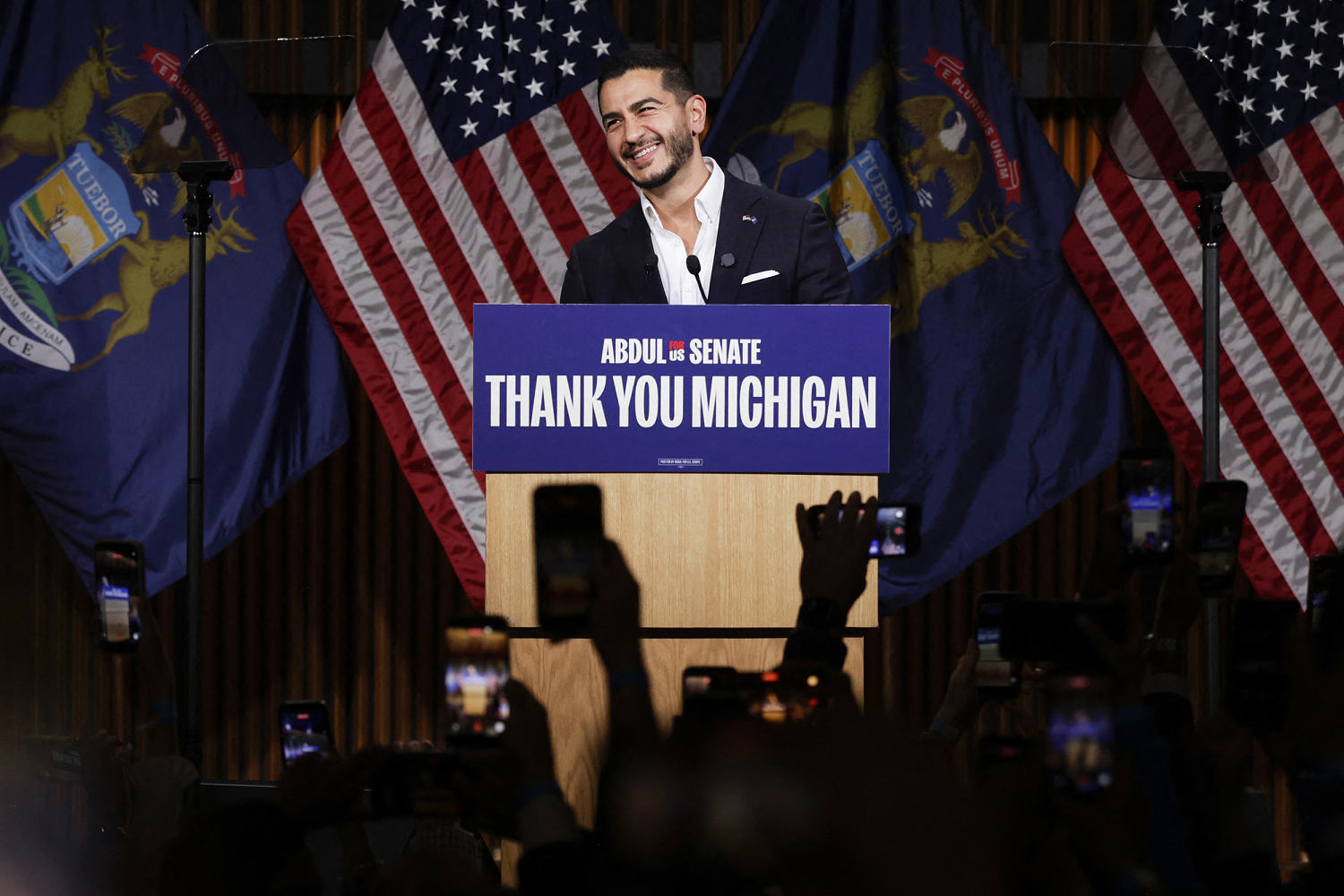
By leaning into crude bigoted tropes instead of offering concrete economic plans, the GOP alienated independent suburban voters who were already exhausted by political vitriol. El-Sayed met the attacks head-on without playing the victim. During his victory speech at Democratic headquarters in Detroit, standing alongside his wife Sarah Jukaku, he summed up the contrast cleanly:
"They want an America that is too small for some of us," El-Sayed told the cheering crowd. "We know that America is big enough for all of us."
He even had enough confidence to troll Vice President JD Vance directly from the stage, pointing out the irony that Vance is constitutionally required to swear him into office in January 2027. That kind of sharp, unapologetic humor plays remarkably well in Michigan. Voters respect someone who refuses to flinch when punched.
Navigating the Gaza Divide Without Losing the Coalition
If you want to understand the single trickiest tightrope El-Sayed walked, look at southeastern Michigan.
For years, Democrats treated Michigan's Arab American, Muslim, and Jewish communities as a reliable bloc. The war in Gaza shattered that assumption. In Dearborn, home to one of the largest Arab American populations in the country, anger over U.S. foreign policy had deeply damaged the Democratic brand. Meanwhile, just a half-hour drive away in West Bloomfield, Jewish residents were reeling from a recent synagogue attack and feeling deeply anxious about rising antisemitism.
Mike Rogers tried to exploit that pain, positioning himself as a protector of Jewish voters while painting El-Sayed as a danger to them.
El-Sayed didn't run away from the tension. He drew a bright line between opposing foreign military aid and standing unconditionally for the safety and dignity of Jewish neighbors at home. He spent months visiting synagogues alongside churches and mosques, building personal trust face-to-face rather than relying on press releases. As he noted on election night, Michigan voters welcomed him into their homes, their churches, and their synagogues.
That coalition-building didn't magically erase every disagreement over Middle East policy—and it's worth being honest that foreign policy debates will continue to test his tenure in Washington. Still, he proved that principled consistency beats pandering every single time.
What El-Sayed's Victory Means for the Senate in 2027
El-Sayed's win doesn't happen in a vacuum. It formed part of a broader 2026 midterm wave that saw Democrats reclaim control of the U.S. Senate alongside unexpected wins in states like Texas, Kansas, and South Carolina. When he takes his oath of office on January 3, 2027, he won't be a lone progressive voice shouting into the wind—he'll be a voting member of a newly empowered Democratic majority.
Here is what changes immediately when a public health doctor with El-Sayed's background enters the upper chamber:
- Healthcare policy gets a sharper edge. Unlike senators who treat healthcare as an abstract budget item, El-Sayed ran an entire county health department and holds a medical degree and a PhD from Oxford. Expect aggressive hearings on pharmaceutical pricing, private equity buying up rural hospitals, and Medicare expansion.
- Party leadership faces real pressure. El-Sayed has already signaled that Democrats need to earn their new mandate by taking bold action rather than playing it safe. While he's framed his approach as pushing for results rather than staging empty leadership fights, Senate moderates will feel constant heat from their left flank.
- Representation in Washington shifts permanently. Breaking a religious barrier in the U.S. Senate matters. For millions of Muslim Americans who watched their faith get weaponized on national television during the campaign, seeing El-Sayed take the oath of office fundamentally alters what feels possible in American public life.
How to Follow What Happens Next in Michigan and Washington
If you're tracking how this historic shift plays out over the coming months, don't just rely on cable news soundbites. Keep your eye on three concrete milestones:
- Watch the official Michigan certification. While preliminary AP figures show El-Sayed leading with 2,520,895 votes to Rogers' 2,181,111, the Michigan Board of State Canvassers formally certifies final county-by-county tallies before the end of November. Reviewing the precinct maps in places like Kent County and Oakland County will show you exactly where suburban Republicans broke ranks.
- Track Senate committee assignments in December. Senate leadership assigns incoming freshmen to committees weeks before swearing-in day. Whether El-Sayed lands on the Health, Education, Labor, and Pensions (HELP) Committee will tell you immediately how much legislative firepower Democratic leaders are willing to hand him.
- Hold the new majority to its promises after January 3, 2027. El-Sayed campaigned on taking "righteous risks" to put money back in working people's pockets. Once he's sworn in, track his actual bill sponsorships and floor votes on healthcare costs and campaign finance reform.
Politicians win elections by making big promises in November, and voters keep democracy healthy by checking the receipts in January.
For a closer look at the election night call and reaction from the race, watch El-Sayed wins Michigan Senate seat, NBC News projects to see how major networks covered his historic victory.