The air inside the Tokyo subway car smells faintly of rain, wet wool, and the heavy, exhausted silence of ten million people who are standing shoulder-to-shoulder yet living entirely alone.
Kenji knows that silence intimately. Every evening at nine, after a shift spent staring at spreadsheet cells that blur together into gray ribbons, he steps onto the platform. He walks past vending machines glowing with neon heat, past ramen shops where solitary diners slurp broth under harsh fluorescent lights, and into a tiny apartment that offers a very particular kind of quiet. It is the quiet of an unshared life.
He wants to change it. Or, more accurately, he used to want to change it, before the endless parade of dating apps turned his romantic aspirations into a part-time job.
Swipe left. Swipe right. Read a bio that says nothing. Send a message that vanishes into the digital ether. Pay for a monthly subscription that promises connection but delivers only a polished facade. The modern hunt for a partner has been reduced to a gamified meat market, leaving millions feeling more isolated than they were before they downloaded the software.
Tokyo is drowning in this quiet catastrophe. The birth rates are tumbling down a sheer cliff. Marriage statistics look like a flatline on a monitor in an empty room. Young adults are opting out, not because they despise love, but because the traditional paths to finding it have broken down completely. The neighborhood matchmakers of decades past are gone, replaced by cold algorithms designed to maximize user retention rather than actual human compatibility.
Governments panic. Economists sound alarms. Policy papers gather digital dust in municipal offices.
Then, the Tokyo Metropolitan Government decided to try something entirely different. They built an app.
When the State Enters the Dating Pool
At first glance, the idea sounds bureaucratic to the point of absurdity. Can you really code your way out of a demographic crisis? Can a government-backed matching service solve the deeply personal, profoundly messy business of human affection?
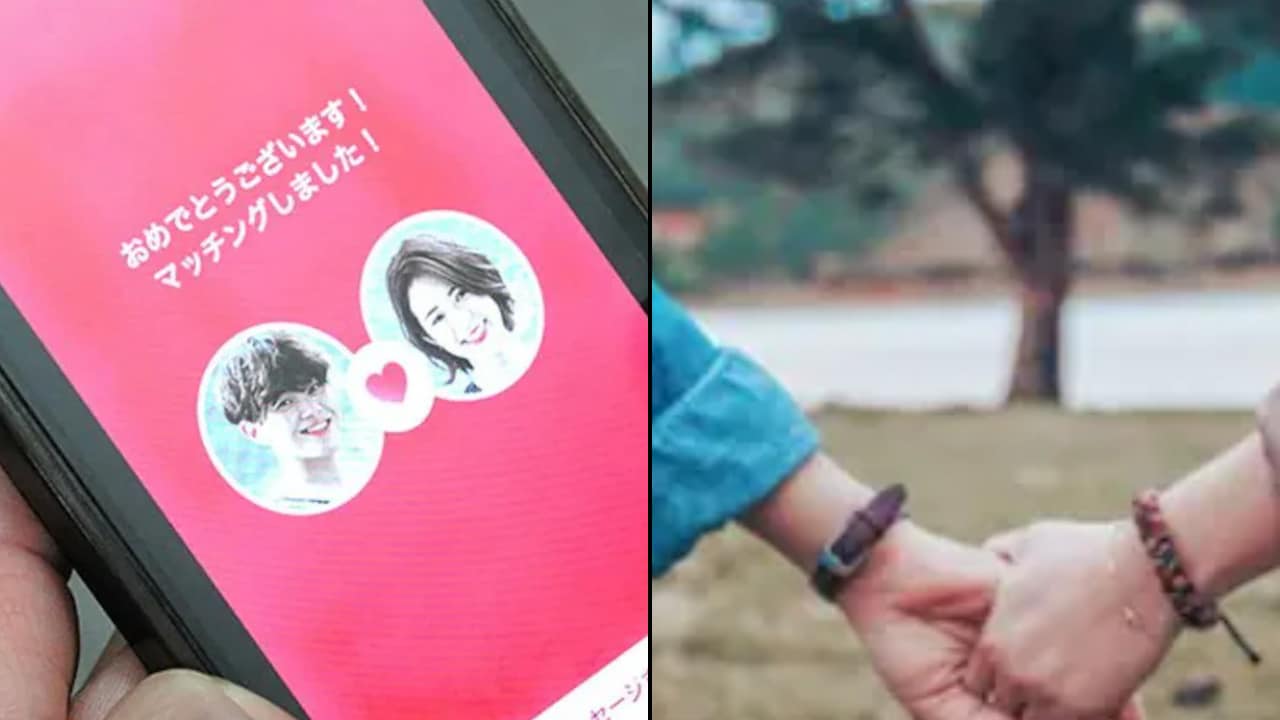
When officials launched Tokyo Futari Story—a public matchmaking initiative powered by artificial intelligence—skeptics scoffed. Yet, the numbers rolling out of the program tell a different story. Hundreds of Japanese couples are walking down the aisle, having found each other through a system designed not by Silicon Valley marketers, but by municipal planners trying to save their city's future.
To understand why this is working where commercial apps fail, you have to look at what the system actually asks of its users.
Commercial apps reward performance. They ask for your best photo, your wittiest one-liner, your most carefully curated vacation snapshot. They sell the illusion of infinite choice, which paralyzes the human brain. When you believe the next profile is just a swipe away, you invest nothing in the person right in front of you.
The public AI system takes a radically unsexy approach. It replaces the selfie-first model with a psychometric interrogation.
Applicants must fill out an exhaustive questionnaire. We are talking about more than a hundred questions covering everything from core values on domestic labor and financial management to obscure hobbies, conflict styles, and childhood memories. (Note: This deep behavioral profiling is a hypothetical reconstruction of the government's rigorous onboarding process, based on published municipal guidelines.)
You cannot hide behind a flattering filter. You have to state what you actually believe about life.
The Mathematics of Chemistry
Most people assume love is a bolt of lightning. A sudden, inexplicable collision of souls that defies reason.
Decades of psychological research suggest otherwise. Long-term partnership is less like a lightning strike and more like a well-engineered bridge. It requires shared weight-bearing pillars. It requires matching resonant frequencies.
This is where the artificial intelligence earns its keep. It does not look at whether you both like hiking or share a favorite pop band. Those superficial markers are what commercial apps use to keep you swiping, and they correlate almost not at all with marital longevity.
Instead, the municipal algorithm looks for structural alignment. It weighs values against values. If Kenji believes that raising children requires an egalitarian split of household chores, and the system pairs him with someone who values traditional gender roles, the algorithm screens them out before a single awkward coffee date takes place.
It eliminates the friction of discovery. It cuts through the polite lies people tell on first dates just to avoid conflict.
Consider what happens next: When two people finally meet through this public platform, they are not strangers trying to invent a connection from scratch. They already know they share a foundational worldview. The small talk evaporates. They skip straight to the substance.
The Cost of Trust
There is a catch, of course. There is always a catch when bureaucracy meets the human heart.
To use the Tokyo government's app, you cannot just log in with an anonymous handle and a burner email. You have to prove who you are. You must submit tax certificates confirming your income. You must provide official proof of your single status. You have to upload government-issued identification.
For digital natives raised on the frictionless privacy of global social networks, this feels invasive. It feels like stepping into a police station just to find a date.
Yet, that exact barrier to entry is its greatest superpower.
The internet is full of ghosts, catfish, scammers, and people looking for casual validation with no intention of building a life. By demanding absolute verification, the municipal app creates a walled garden of sincerity. Everyone inside has passed the same background checks. Everyone inside has put their real life, their real taxes, and their real identity on the line.
The psychological safety of that environment changes everything. When you know the person sitting across from you has been vetted by the same rigorous standards, your guard drops. You do not have to spend the first hour of the date wondering if they are married, lying about their job, or running a scam.
Trust becomes the baseline, not the reward.
Beyond the Screen
Kenji eventually decided to try it. Not because he believed a computer could magically manufacture soulmates, but because he was simply tired of the exhaustion.
He spent two hours clicking through the questionnaire on a rainy Tuesday night. He answered questions that made him uncomfortable, questions about his fears of failure, his expectations for aging parents, his vision of a quiet Sunday morning ten years down the road.
Three weeks later, the system pinged.
It did not send him a list of twenty options. It sent him one profile.
Her name was Yuko. She worked in public archives, spent her weekends restoring old books, and shared his exact, stubborn insistence on cooking dinner from scratch every single night. Her answers to the values assessment mirrored his own with an eerie, quiet precision.
Their first meeting was not a cinematic explosion of fireworks. It was quiet. They sat in a small café near Ueno Park, drinking green tea and talking about the strange comfort of old paper and quiet rooms. There was no performance. There was no need to sell themselves. The algorithm had already done the heavy lifting of ensuring they spoke the same emotional language.
Two years later, they filed their paperwork. They didn't have a grand, cinematic wedding. They had a small gathering of close friends, a few words of commitment, and a walk through the park as the streetlights flickered on.
The Quiet Future
Critics will always argue that government-run romance is clinical. They will say that reducing human connection to data points and vector alignments strips away the magic of serendipity.
They are right, in a way. Magic is wonderful. But magic does not feed a declining population, and serendipity is a poor weapon against an epidemic of profound, bone-deep isolation.
When the structures of traditional society dissolve—when neighborhoods shrink, work consumes our waking hours, and digital spaces turn human interaction into a performance—people need scaffolding. They need a place to stand where they can be seen for who they actually are, without the neon glare of a social media feed.
Tokyo's experiment proves something vital about the future of modern cities. Technology does not have to be an isolating force. It can be turned inward, away from the endless extraction of attention, and used to rebuild the most fragile infrastructure of all.
The bridge between two lonely lives.
The quiet hum of a shared apartment at nine in the evening.
A cup of green tea poured for two.