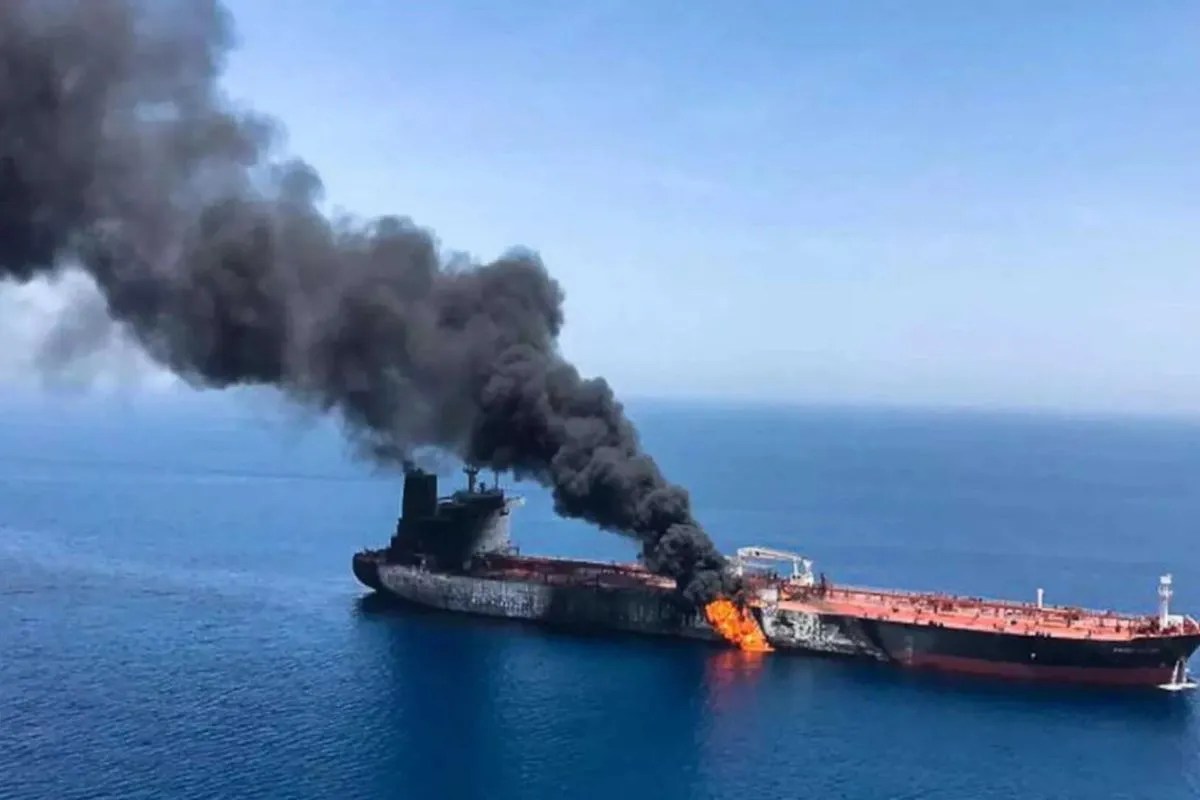
When two thousand Marines and an amphibious ready group suddenly park themselves within striking distance of the Persian Gulf, you shouldn't just scroll past the headline. It's easy to dismiss these maritime maneuvers as routine posturing or expensive naval exercises. After all, aircraft carriers and strike groups transit these strategic waters with predictable frequency. Yet, the current concentration of military muscle tells a different story about how volatile the Middle East remains.
Let's look past the official press releases and examine what's actually happening on the ground and at sea. You're watching a masterclass in deterrence, but deterrence is a fragile game. One miscalculation in the Strait of Hormuz can transform a tactical deployment into an active conflict faster than you can say escalation.
The Real Strategy Behind the Marine Deployment
Why send two thousand Marines right now? The standard Pentagon explanation usually points toward regional stability, protecting shipping lanes, and reassuring allies. Those factors matter, but they don't capture the entire picture.
When you deploy amphibious assault ships carrying marine expeditionary units, you're bringing crisis response capabilities that don't rely on fixed airfields. You're putting boots and aviation assets right where they can move rapidly if a flashpoint ignites. Tehran knows this. Every time Washington adjusts its posture in the Gulf, Iranian naval commanders recalculate their own operational thresholds.
Maritime choke points don't forgive mistakes. The Strait of Hormuz handles roughly a fifth of the world's petroleum consumption. When naval tensions spike, energy markets react instantly. You don't need a total blockade to send oil prices soaring; you just need enough uncertainty to spook global shipping insurers. That's the invisible pressure driving these military deployments.
What Most Observers Miss About Regional Alliances
We talk about the US and Iran as the only two actors in this drama, but that's lazy analysis. The Gulf states—from Saudi Arabia to the United Arab Emirates—are watching these developments with intense anxiety. They want American security guarantees, but they definitely don't want their own infrastructure caught in the crossfire of a regional war.
Diplomacy moves behind the scenes while warships maneuver in open water. Regional capitals spend sleepless nights trying to de-escalate tensions through quiet channels while publicly maintaining their strategic alignments. It's a delicate dance. If you're running supply chains or investing in regional tech hubs, you have to price this instability into your models. You can't just ignore geopolitical risk when military assets of this magnitude park on your doorstep.
The Danger of Accidental Escalation
The scariest part of any standoff involving major powers isn't a premeditated surprise attack. It's the accident that spirals out of control.
Imagine a fast-attack boat operated by the Islamic Revolutionary Guard Corps closing in on a US patrol vessel at high speed. Communication lags. Misinterpretations happen in seconds. When commanders operate on a hair-trigger because political tensions are at a boil, standard operating procedures can fail. We've seen close calls before, and luck isn't a permanent military strategy.
Iran's asymmetric naval tactics rely on swarming small boats, coastal defense missiles, and drone capabilities designed to overwhelm traditional carrier strike groups in confined waters. The US military knows this vulnerability well, which is why electronic warfare assets and integrated air defense systems accompany every single marine deployment into the region.
Tracking the Economic Aftershocks
Markets hate ambiguity. Whenever naval movements signal potential conflict in the Middle East, futures markets twitch. Shipping companies start rerouting vessels or demanding risk surcharges.
You feel these ripples at the gas pump and in your grocery delivery bills weeks before any shots are fired. Global supply chains remain remarkably interconnected. A bottleneck in the Persian Gulf reverberates straight through to manufacturing hubs in Asia and consumer markets in the West. That's why financial analysts track these troop movements just as closely as defense analysts do.
Keep your eyes on the maritime insurance rates and crude inventories over the coming weeks. Those indicators tell you the real story of how worried global markets actually are about the latest standoff.
Staying Grounded Amid the Noise
Don't panic every time a cable news anchor hypes up a new naval deployment. Power projection is a normal tool of statecraft, and major powers use it constantly to shape diplomatic outcomes without firing a shot.
At the same time, don't write off the risks. The Middle East has a long history of surprising smart people who thought they had every scenario mapped out. Watch the primary sources, ignore the breathless social media speculation, and remember that military readiness is designed to prevent wars—even when it occasionally flirts with starting them.



