The air inside a concert hall tastes different. It carries the metallic tang of hot electronics, the heavy musk of bodies packed shoulder to shoulder, and a collective static electricity born from a thousand strangers breathing the same rhythm. When the house lights drop, individual identity dissolves. You are no longer an accountant, a student, a lawyer, or a cynic. You are an ear, a chest cavity waiting to be rattled, a participant in an ancient ritual of communal sound.
Then the first chord hits.
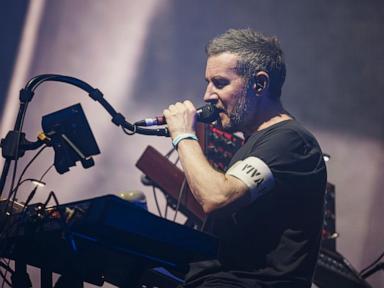
For two hours in Singapore, Massive Attack did what they have done for three decades. They built temples out of bass and electronic dissonance. Robert Del Naja and Grant Marshall stood at the center of that sonic architecture, orchestrating an experience that has always demanded more than passive listening. Their shows are sensory onslaughts, paired with giant LED screens flashing text, statistics, and political commentary. They do not separate art from the messy reality of the world outside the venue doors.
They never have.
But borders have rules. And Singapore has a very specific set of them.
Consider what happens next: the final note fades, the house lights glare back to life, and the illusion pops. The physical venue empties into the humid night, but the digital fallout is just beginning. Within hours, the government machinery moves. Not with the heavy, clumsy stomp of a riot squad, but with the quiet, bureaucratic stroke of a pen. Visas revoked. Entry barred. A preemptive strike against future echoes.
The state did not ban the music because it was out of tune. They banned it because of what happened on the screens. During the performance, imagery associated with the Palestinian conflict flashed across the backdrop, a direct visual statement in a region where public expressions on polarizing geopolitical flashpoints are heavily policed under the Maintenance of Religious Harmony Act and strict public assembly laws.
To understand why this matters, you have to step away from the flashing lights and look at the architecture of modern city-states.
Singapore is a marvel of urban planning, economic efficiency, and careful social engineering. It is a nation built on a delicate, multicultural equilibrium. Every square inch of public discourse is managed to prevent friction between different ethnic and religious communities. It is a place where order is prized above almost everything else, because the alternative—chaos in a densely packed island nation—is too terrifying to contemplate.
When international artists step onto a stage in Singapore, they are entering a contract. The unspoken agreement is simple: you bring the entertainment, we bring the audience, and everyone keeps the peace.
Massive Attack ripped that contract to shreds.
Critics of the ban argue that art cannot be sanitized. They point out that trip-hop, born from the gritty, marginalized streets of 1990s Bristol, is inherently political. It is music built on dissent, anti-establishment posture, and a deep-seated suspicion of state power. To invite Massive Attack and expect apolitical elevator music is like hiring a hurricane and asking it not to disturb the dust.
Yet, the perspective from the other side of the velvet rope is equally rigid. Sovereignty means the right to set the terms of engagement within your own borders. From the viewpoint of the Singaporean authorities, a concert venue is not a designated town square for foreign political debates. It is a commercial space licensed for entertainment. When an act uses that platform to broadcast contentious foreign policy stances, they cross a line from performance into unauthorized political advocacy.
The band knew the risks. Or perhaps, in the heat of a global tour, they simply stopped caring about local boundary lines, prioritizing their immediate moral imperative over municipal code.
That collision of values creates a strange modern theater. On one side, we have artists acting as global citizens, weaponizing their cultural capital to draw eyes toward human suffering thousands of miles away. On the other side, we have a sovereign government acting as a strict curator, protecting its domestic stability by pruning away anything that threatens to spark division.
Who is right?
The question itself is a trap. Both positions are entirely logical within their own internal universes. The artist believes silence in the face of tragedy is complicity. The state believes unmanaged foreign agitation is an existential threat to domestic harmony.
When these forces crash into each other, nobody wins. The fans in Singapore lose the chance to experience a legendary act. The band loses a market and has their mobility curtailed. The government spends political capital defending a restrictive policy to an international press corps that views the move through the lens of free expression.
Think about the fan standing in the front row of that Singapore concert. Let us call him Wei. Wei saved up for months to buy a ticket. He does not care about geopolitical strategy tokens or visa clauses. He wanted to hear the bassline of Angel rattle his ribs. When the political imagery hit the screen, Wei did not feel enlightened; he felt trapped in a geopolitical crossfire he had paid good money to escape. For Wei, the concert was supposed to be an escape hatch from the pressure cooker of modern life, not a lecture hall for foreign wars.
Conversely, imagine another fan, Sarah, who walked out of that same arena with her chest burning. She felt validated. She saw the band's statement as a rare crack in the sanitized, corporate veneer of modern touring culture. To her, art without teeth is just wallpaper.
Two people. Same room. Opposite realities.
This is the invisible cost of globalization meeting local governance. As the world shrinks digitally, physical borders are erecting higher, thicker walls. Artists are increasingly expected to be global diplomats, yet they lack diplomatic immunity. They carry their politics in their instrument cases, pulling them out under the harsh lights of foreign cities where the local laws do not care about artistic license.
The ban on Robert Del Naja and Grant Marshall will not stop the war in Gaza. It will not rewrite Singapore's internal security laws. It is a symbolic amputation. A clear message carved into the administrative records of the immigration department: actions have consequences, and international fame does not buy immunity from local statutes.
The speakers have been packed into flight cases. The crew has moved on to the next jurisdiction, where a different set of laws and a different audience wait in the dark.
Back in Singapore, the venue sits empty, waiting for the next act to step onto the stage, plug in their instruments, and test the invisible boundaries of what a society is willing to allow in the name of art.
The house lights stay down. The silence lingers. And somewhere in the dark, the tension between what an artist wants to say and what a world is willing to hear remains entirely unresolved.