Coverage of the Asia-Pacific Economic Cooperation (APEC) CEO Summit typically follows a familiar script: commentators parse speeches from leaders such as Chinese President Xi Jinping and Russian President Vladimir Putin for immediate policy shifts, diplomatic warmth, or clear signals on trade barriers. However, international trade economists and geopolitical analysts offer competing interpretations of what these addresses actually accomplish, noting a sharp divide between the public rhetoric delivered to executives and the structural realities governing global commerce.
To understand the significance of the summit addresses, analysts examine both the stated positions of the leaders and the underlying institutional mechanisms of APEC itself.
The Institutional Role of APEC
Founded in 1989, APEC operates on a foundation of non-binding commitments, open dialogue, and consensus-based decision-making among its 21 member economies. Unlike the World Trade Organization (WTO), which possesses formal dispute settlement mechanisms and enforceable tariff schedules, APEC produces voluntary declarations rather than legally binding treaties.
According to trade policy researchers at institutions such as the Peterson Institute for International Economics, this structure shapes how heads of state use the CEO Summit stage:
- Signaling to Global Capital: Addresses at the CEO Summit are directed primarily at multinational corporate boards rather than rival ministries. Leaders use the forum to project stability, predictability, and market openness to attract foreign direct investment (FDI).
- Domestic Framing: Speeches are simultaneously crafted for domestic audiences, framing national economic resilience and international standing without locking governments into enforceable concessions.
- Agenda Setting: The forum allows major economies to introduce preferred terminology—such as "inclusive growth," "supply chain resilience," or "multipolar trade"—into the regional diplomatic lexicon.
Competing Perspectives on Xi Jinping's Address
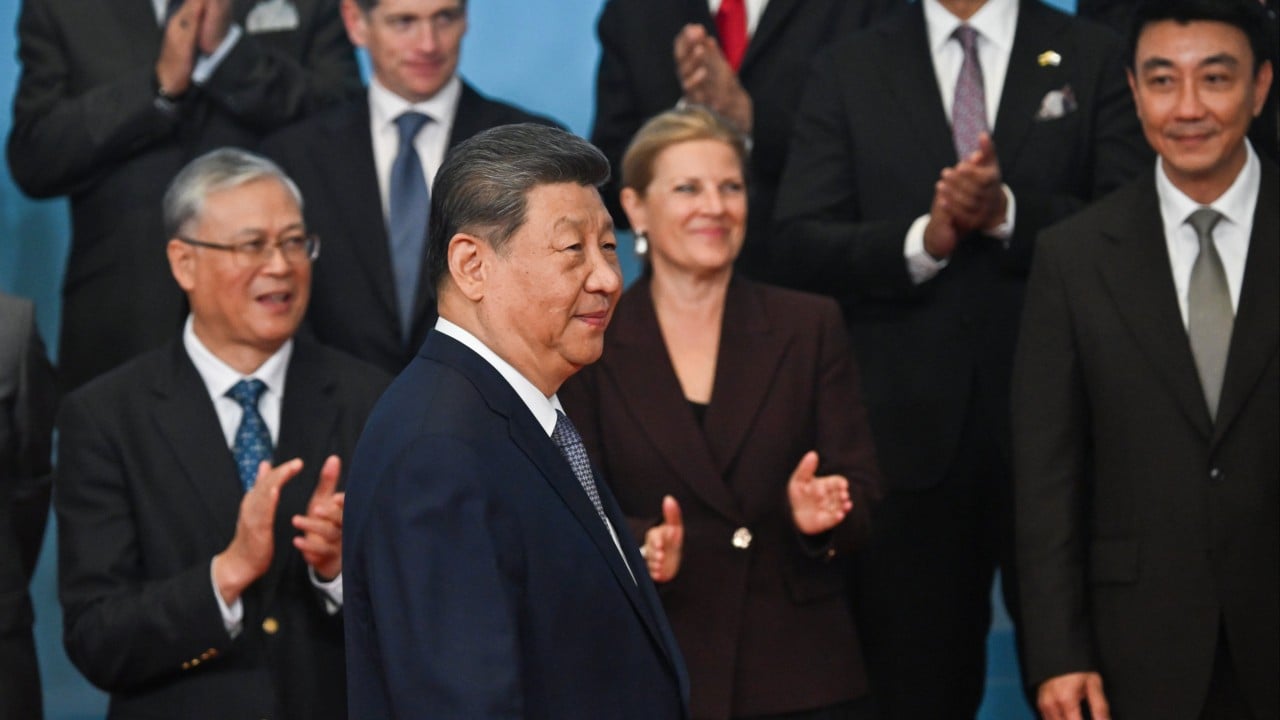
In recent APEC CEO Summit appearances—including his written and delivered remarks during the 2023 San Francisco summit and subsequent regional gatherings—Chinese President Xi Jinping emphasized China's commitment to high-level opening-up, opposition to decoupling, and support for multilateral trade frameworks.
The View That Remarks Signal Reassurance and Opportunity
Supporters of engagement and business chambers, such as the US-China Business Council, often point to Xi's emphasis on market access, visa facilitation, and green technology cooperation as genuine efforts to stabilize commercial ties. From this perspective:
- China remains a central manufacturing hub and consumer market that multinational firms cannot easily replace.
- Explicit commitments to treat foreign and domestic enterprises equally address long-standing investor concerns regarding regulatory predictability.
- Cooperation on climate transition and digital economy standards offers shared economic benefits regardless of broader geopolitical friction.
The Skeptical Assessment of Structural Friction
Conversely, trade analysts at organizations like the Center for Strategic and International Studies (CSIS) and the Rhodium Group argue that summit rhetoric frequently diverges from domestic industrial policy. Critics highlight several countervailing factors:
- Industrial Subsidies and Overcapacity: While speeches champion free trade, trading partners point to state-backed manufacturing subsidies in sectors like electric vehicles, solar panels, and batteries as drivers of global market distortion.
- National Security Legislation: Updates to China's counter-espionage laws and data security regulations have created compliance risks for foreign due diligence and consulting firms, complicating the message of unrestricted openness.
- Dual Circulation Strategy: Beijing's long-term economic blueprint prioritizes domestic self-reliance and supply chain autonomy alongside international engagement, which analysts view as a hedged approach rather than pure liberalization.
Competing Perspectives on Vladimir Putin's Addresses
Russian President Vladimir Putin's participation in APEC forums—whether in person prior to 2022 or via video address and senior delegation representation in subsequent years—has centered on critiques of Western financial architecture and the promotion of Eurasian trade corridors.
The Alignment and Alternative Architecture View
In addresses to regional business leaders, Putin and Russian officials have argued that sanctions and export controls fragment the global economy and harm developing nations. Analysts who focus on emerging market realignment note that this framing resonates with certain audiences:
- De-dollarization and Local Currency Settlement: Moscow emphasizes bilateral trade conducted in national currencies (such as the ruble and yuan) as a practical adaptation to financial restrictions.
- Resource and Transit Connectivity: Russia positions itself as an indispensable supplier of energy, fertilizers, and grain to Asia-Pacific economies, alongside infrastructure projects like the Northern Sea Route.
- Multipolar Framing: By portraying Western trade measures as politically motivated disruptions, Russian statements seek to align Moscow with countries wary of unilateral economic sanctions.
The Isolation and Economic Constraint View
Mainstream Western economists and sanctions researchers, including scholars at the Atlantic Council and Bruegel, contend that these addresses obscure severe structural limitations facing the Russian economy:
- Asymmetric Dependency: Rather than achieving balanced diversification, Russia's pivot to Asia has resulted in heavy reliance on a single major trading partner—China—often requiring steep price discounts on energy exports.
- Technological and Capital Constraints: Exclusion from G7 financial markets and advanced semiconductor supply chains restricts long-term productivity growth, regardless of diplomatic outreach at regional summits.
- Limited Corporate Appetite: Multinational executives attending the CEO Summit face strict secondary sanctions risks, meaning public appeals for investment rarely translate into private sector capital flows from major global firms.
Distinguishing Rhetoric from Commercial Reality
When evaluating speeches at the APEC CEO Summit, corporate strategists and trade economists generally advise separating diplomatic messaging from operational indicators. Rather than treating summit addresses as binding policy shifts, analysts track concrete metrics to gauge actual market conditions:
- Foreign Direct Investment Flows: Quarterly balance-of-payments data from central banks and UNCTAD reveal whether multinational corporations are expanding capital expenditures or repatriating earnings.
- Tariff and Non-Tariff Barrier Filings: WTO notifications, customs regulations, and export licensing rules provide verifiable evidence of whether trade barriers are rising or falling.
- Supply Chain Reconfiguration: Trade data tracking intermediate goods shipments—such as components routed through Southeast Asian economies like Vietnam, Malaysia, and Mexico—demonstrate how companies actually manage geopolitical risk on the ground.
Assessing the Value of the Summit Stage
Debate persists over whether high-profile speeches at the APEC CEO Summit meaningfully alter economic trajectories. Proponents of the forum maintain that direct dialogue among heads of state and corporate leaders prevents miscalculation and preserves channels for cooperation on transnational issues like energy transition and public health. Skeptics counter that when major powers pursue industrial policy, export controls, and strategic competition at home, summit speeches function primarily as public diplomacy rather than catalysts for market liberalization.