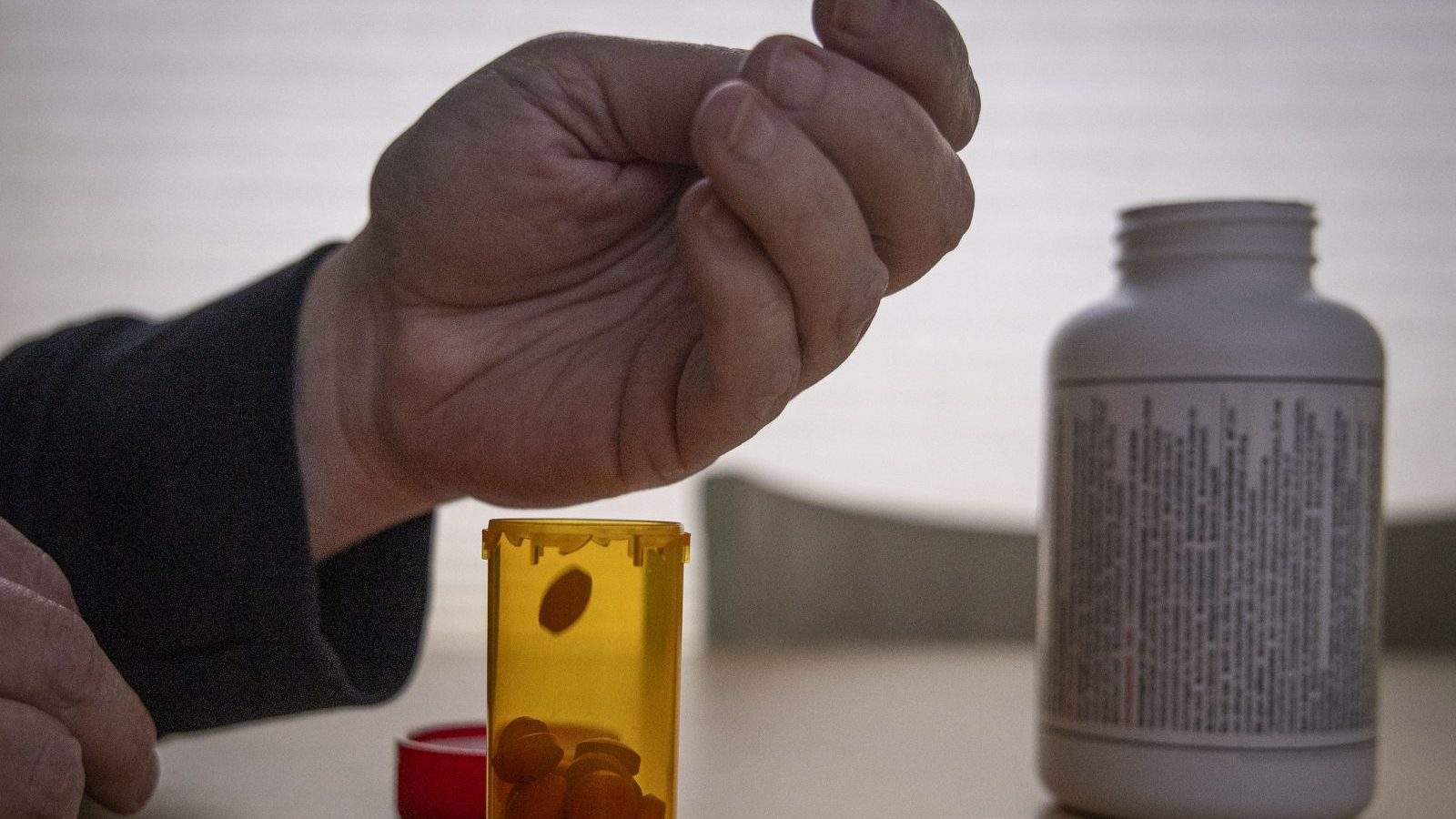
The loss of $2 million worth of pharmaceuticals in an emergency medical stockpile due to a freezer malfunction is not an isolated mechanical accident; it is the predictable mathematical outcome of single-point-of-failure infrastructure managing high-value, thermally unstable assets. When public health agencies store biologics, vaccines, or temperature-sensitive therapeutics without redundant thermal regulation and automated escalation protocols, a minor compressor failure or power fluctuation converts immediately into total inventory write-off.
To understand how a national emergency stockpile sustains a seven-figure loss from a refrigeration failure, operators must examine the mechanics of cold chain degradation, the failure modes of centralized storage, and the financial asymmetry between monitoring capital expenditures and replacement costs.
The Physics of Cold Chain Degradation
Pharmaceutical cold chains operate within narrow thermodynamic windows. Unlike shelf-stable small-molecule drugs, modern biologics, mRNA platforms, and specialized antidotes rely on complex protein folding or lipid nanoparticle encapsulation. These structures exist in a state of delicate equilibrium maintained only by restricting kinetic energy through low temperatures.
- Standard Cold Storage (2°C to 8°C): Used for conventional vaccines, insulin, and monoclonal antibodies. Excursion above 8°C accelerates hydrolytic and oxidative degradation, while freezing below 0°C causes protein aggregation and adjuvant separation, rendering the product inactive or toxic.
- Frozen Storage (-15°C to -25°C): Required for certain viral vector vaccines and plasma derivatives. Thermal drift into the glass transition phase initiates ice crystal recrystallization, physically shearing cellular or viral structures.
- Ultra-Low Temperature Storage (-60°C to -80°C): Necessary for specialized nucleic acid therapeutics and certain emergency biological countermeasures. At these temperatures, standard vapor-compression refrigeration reaches its thermodynamic limit, requiring cascade refrigeration systems where two separate refrigerant circuits operate in series.
When a freezer unit fails, the internal temperature does not remain static; it follows Newton’s Law of Cooling in reverse, driven by the thermal conductivity of the insulation, the ambient room temperature, and the thermal mass of the stored inventory. High-density storage slows initial warming, creating a deceptive buffer period, yet once the phase-change threshold is breached, spoilage occurs uniformly across the entire chamber.
The Three Failure Modes of Public Sector Cold Storage
Public emergency stockpiles—such as Canada's National Emergency Strategic Stockpile (NESS) or the United States Strategic National Stockpile (SNS)—face structural vulnerabilities distinct from commercial pharmaceutical distributors. Commercial distributors optimize for high inventory turnover, minimizing the duration any single batch spends in static storage. Emergency stockpiles optimize for readiness over multi-year horizons, holding inventory statically until an acute crisis triggers deployment. This static posture introduces three systemic vulnerabilities.
1. Cascade System Fragility and Deferred Maintenance
Ultra-low temperature and medical-grade freezers operate under continuous mechanical stress. In cascade systems, the high-stage compressor cools the condenser of the low-stage compressor. If the high-stage circuit loses refrigerant or suffers compressor burnout, the low-stage circuit overheats and trips its thermal overload switch within minutes. In facilities operating on fixed annual appropriations, preventative maintenance—such as replacing worn gaskets, clearing condenser coils, and testing compressor amp draws—frequently yields to immediate operational demands. A degraded door seal forces the compressor to run at a 90% duty cycle rather than a 50% duty cycle, cutting mean time between failures (MTBF) in half.
2. Alert Fatigue and Broken Escalation Loops
Modern pharmaceutical freezers are equipped with digital data loggers and building management system (BMS) integrations. However, hardware telemetry fails when human escalation protocols are poorly engineered. Facilities often suffer from alarm fatigue caused by poorly calibrated thresholds that trigger during routine defrost cycles or brief door openings. When an genuine thermal excursion occurs on a weekend or overnight shift, automated alerts frequently route to a central security desk lacking clinical authority, or to an unmonitored email inbox. Without a mandatory, tiered escalation tree—requiring active human acknowledgment within 15 minutes before routing to an on-call facilities engineer and a pharmacy director—a mechanical fault goes unaddressed until the thermal excursion is irreversible.
3. Absence of N+1 Thermal Redundancy
Commercial semiconductor cleanrooms and tier-four data centers design infrastructure around N+1 or 2N redundancy: if one cooling unit fails, an auxiliary unit automatically engages to assume the thermal load. Conversely, many government warehouse retrofits rely on standalone upright or chest freezers plugged into dedicated circuits without shared thermal manifolds. If a standalone unit fails, transferring $2 million of inventory requires manual labor, available staging space at the exact target temperature, and validated transport containers. If the failure occurs overnight, no crew is on-site to execute the physical transfer before the stability budget of the pharmaceuticals expires.
Quantifying the Asymmetry of Risk
In supply chain risk management, the expected monetary value (EMV) of a cold chain failure is calculated as the probability of hardware failure multiplied by the replacement value of the inventory plus disposal and operational disruption costs.
Consider the cost function of a single high-capacity medical freezer:
- Capital Expenditure (CapEx): A pharmaceutical-grade ultra-low temperature freezer costs between $15,000 and $25,000.
- Telemetry and Backup Power: Continuous cloud-based temperature monitoring with cellular failover and automated voice-call escalation costs roughly $1,200 annually per unit. Connecting the unit to a building-wide diesel generator with an uninterruptible power supply (UPS) adds a fractional marginal cost when engineered during facility buildout.
- Inventory Value Density: A single 700-liter freezer can easily house 10,000 to 50,000 doses of high-cost biologics or specialized countermeasures. At $40 to $200 per dose, the asset density inside a single cabinet routinely reaches $500,000 to $2,000,000.
This creates a 100:1 asymmetry between the asset value and the containment hardware. Saving $5,000 by purchasing commercial-grade rather than pharmaceutical-grade refrigeration, or omitting redundant telemetry to reduce operating expenses, exposes the organization to a 100x capital loss. When a $2 million write-off occurs in a public stockpile, the true cost exceeds the accounting loss. Emergency countermeasures often have single-source manufacturers with long production lead times; replacing the lost stock may take 12 to 24 months, leaving a measurable gap in national preparedness during the interim.
Structural Limits of Technical Controls
While engineering controls dramatically reduce failure rates, practitioners must recognize the hard operational limits of cold chain mitigation. No storage architecture eliminates risk entirely.
- Stability Budget Depletion: Every pharmaceutical product has a finite cumulative time-out-of-refrigeration (TOR) budget. Even when a freezer failure is caught early and inventory is moved to a backup unit, the thermal excursion consumes a portion of that stability budget. If the exact time-temperature curve during the failure cannot be verified via calibrated internal probes—not just air temperature sensors, which warm faster than liquid vials—regulatory standards force the destruction of the entire lot. Guessing potency is legally and clinically impermissible.
- Backup Power Synchronization Failures: Facilities equipped with backup generators still experience cold chain losses during power transitions. If the automatic transfer switch (ATS) fails to engage, or if the voltage spike upon generator startup trips the sensitive microprocessor boards inside modern medical freezers, the units remain offline even after building power is restored.
- Sensor Drift and Calibration Blind Spots: Resistance temperature detectors (RTDs) and thermocouples drift over time, particularly when exposed to extreme temperature cycling. A sensor reading -70°C might be experiencing an actual chamber temperature of -58°C. Without annual NIST-traceable calibration, operators operate under an illusion of compliance while inventory silently degrades.
Hardening the Stockpile Architecture
Eliminating seven-figure cold chain losses requires shifting from passive storage monitoring to active, redundant thermal management. Public health agencies and stockpile operators must execute four structural interventions across all temperature-controlled facilities.
First, eliminate standalone high-value freezers in favor of modular walk-in cold rooms and freezer vaults equipped with dual, independent refrigeration racks. Each rack must be sized to handle 100% of the thermal load independently, operating on an alternating duty cycle so both systems remain verified and operational.
Second, decouple temperature monitoring from the freezer's internal control board. Install independent, battery-backed wireless probes submerged in glycol or glass-bead buffers to mimic the thermal mass of the actual pharmaceutical vials. Program these systems to trigger a hardware-level alarm at 25% of the allowable temperature drift—for example, alerting at -65°C on a -70°C unit rather than waiting until the threshold breaches -60°C.
Third, enforce a zero-latency escalation protocol. Configure monitoring software to bypass general security desks entirely, routing simultaneous SMS and automated voice calls to a rotating roster of on-call pharmacy and facilities personnel. If the primary contact does not log into the system and acknowledge the alarm within ten minutes, the system must automatically escalate to department leadership until an acknowledgment is recorded.
Fourth, maintain pre-staged, qualified passive thermal shippers (such as vacuum-insulated panel containers with phase-change material coolants) equal to 20% of total cold storage capacity inside every warehouse. When an unrecoverable mechanical fault occurs, on-site staff must be able to pack and stabilize high-density inventory within 30 minutes without waiting for external refrigerated trucks to arrive.