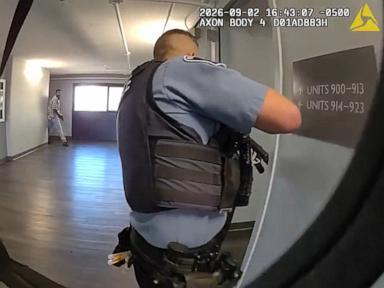
Rapid-response urban security incidents rarely unfold with the linear predictability depicted in after-action summaries. When a critical engagement occurs—such as the reported Minneapolis shooting resulting in officer injuries—the public narrative relies heavily on fragmented, sensationalized video clips. These visual fragments distort the underlying tactical reality. To analyze such an event with rigor requires stripping away the narrative gloss of breaking news coverage and examining the structural mechanics of the encounter: the operational environment, the ballistic constraints, the tactical decision-making matrix under physiological stress, and the post-incident containment protocol.
Evaluating high-stress operational deployments demands a shift from emotional reactions to systemic auditing. Every engagement is governed by immutable variables: time-to-contact, visual acquisition speed, cover availability, and the physiological degradation of motor skills under acute catecholamine surges.
The Operational Environment and Tactical Variables
Urban engagements share specific spatial and structural denominators that dictate outcomes regardless of jurisdiction. The primary variable is the architectural topography. Modern urban corridors create acoustic reflection chambers, narrow lines of sight, and asymmetrical cover options. When officers encounter a hostile contact in a built environment, the spatial compression leaves negligible reaction time.
The baseline physics of dynamic encounters dictate that distance equals time, and time equals options. At close quarters—typically defined within the tactical threshold of zero to seven yards—reactionary curves heavily favor the aggressor who initiates the action. By the time a threat is visually registered, processed by the prefrontal cortex, and translated into a physical counter-action, milliseconds have elapsed. In ballistic terms, milliseconds represent the difference between preemptive shielding and defensive casualty mitigation.
Furthermore, the lighting and environmental factors heavily influence visual target discrimination. In chaotic scenarios recorded by fragmented video, shadows, uneven illumination, and rapid movement obscure weapon identification. This creates an information deficit for responding personnel, forcing split-second categorizations under conditions of extreme sensory overload.
Physiological Stress Response and Decision-Making Decay
Human performance under deadly force encounters degrades in predictable, scientifically documented ways. When heart rates exceed one hundred and forty beats per minute due to an acute survival response, fine motor skills deteriorate. Complex cognitive processing shifts toward tunnel vision and auditory exclusion.
In the context of the Minneapolis shooting incident, the responding officers faced an immediate cognitive load requiring simultaneous threat assessment, communication, spatial navigation, and weapon retention or deployment. The popular expectation that personnel can execute textbook maneuvers under fire ignores the biological limits of the human nervous system.
Decision-making decay manifests in several distinct operational failure points:
- Loss of peripheral awareness due to visual narrowing.
- Impairment of fine motor control, rendering delicate manipulation of equipment difficult.
- Time-compression distortion, where memory of sequence and duration becomes unreliable.
- Communication breakdown resulting from auditory exclusion and high radio traffic density.
Recognizing these physiological constraints is essential for evaluating tactical performance. Critique must focus not on whether mistakes occurred—because cognitive degradation guarantees friction—but on how well the training baseline mitigated that inevitable decay.
Ballistic Realities and Lethal Force Dynamics
The kinetic exchange in a firearm incident operates outside cinematic conventions. Projectile performance in urban environments involves complex vectors of penetration, deflection, and terminal ballistics. When multiple rounds are discharged in confined spaces, the margin for collateral error expands exponentially.
The mechanics of law enforcement sidearm engagements reveal that static accuracy ranges achieved on a controlled firing lane rarely translate to dynamic, moving, low-light street encounters. Kinetic energy transfer, barrier interference (such as vehicles, drywall, or urban infrastructure), and the biological resilience of a determined adversary complicate the neutralization timeline. An officer wounded in the line of duty has typically sustained trauma before the physiological realization of the injury registers, due to the masking effect of high catecholamine levels.
The aftermath of such kinetic exchanges triggers an immediate logistical cascade: triage, tactical repositioning, perimeter establishment, and medical evacuation (MEDEVAC) coordination. The speed with which specialized trauma care is delivered dictates survivability. In modern tactical medicine, the focus has shifted entirely to immediate hemorrhage control through tourniquet application and tension pneumothorax management within the critical "golden hour."
The Information Void and Public Narrative Distortion
In the immediate wake of an urban shooting, an information void forms. Digital platforms and news agencies rush to fill this void using unverified video fragments, civilian recordings, and early scanner audio. This creates a distorted analytical baseline.
Video footage captured by bystanders or surveillance cameras is inherently biased by perspective, focal length, and missing contextual lead-ins. A two-minute video clip showing the kinetic climax of an incident omits the crucial preceding ninety seconds of verbal commands, positioning, and behavioral cues that dictated the officers' tactical calculus. Relying on such media artifacts for tactical evaluation produces flawed conclusions.
A rigorous post-incident review requires gathering body-worn camera telemetry, forensic ballistics mapping, internal audio channels, and spatial reconstructions. Without these data layers, public discourse remains trapped in reactive speculation rather than objective institutional learning.
Institutional Adaptation and Strategic Prevention
Mitigating future high-risk urban encounters requires addressing the systemic precursors that bring armed actors into violent contact with law enforcement. This involves analyzing dispatch criteria, mental health co-responder deployment models, and environmental design strategies that reduce concealment blind spots in high-crime corridors.
Training methodologies must continuously evolve to simulate the physiological reality of combat stress. Traditional marksmanship training is insufficient; operational units require scenario-based stress inoculation that forces decision-making under duress, forcing cognitive adaptation before actual deployment.
Resource allocation must prioritize ballistic protection advancements, integrated real-time situational awareness platforms, and decentralized tactical medicine training for every deployed unit. The ultimate measure of operational resilience is not the absence of conflict, but the systematic reduction of preventable casualties through rigorous preparation, transparent post-incident data auditing, and structural readiness.


