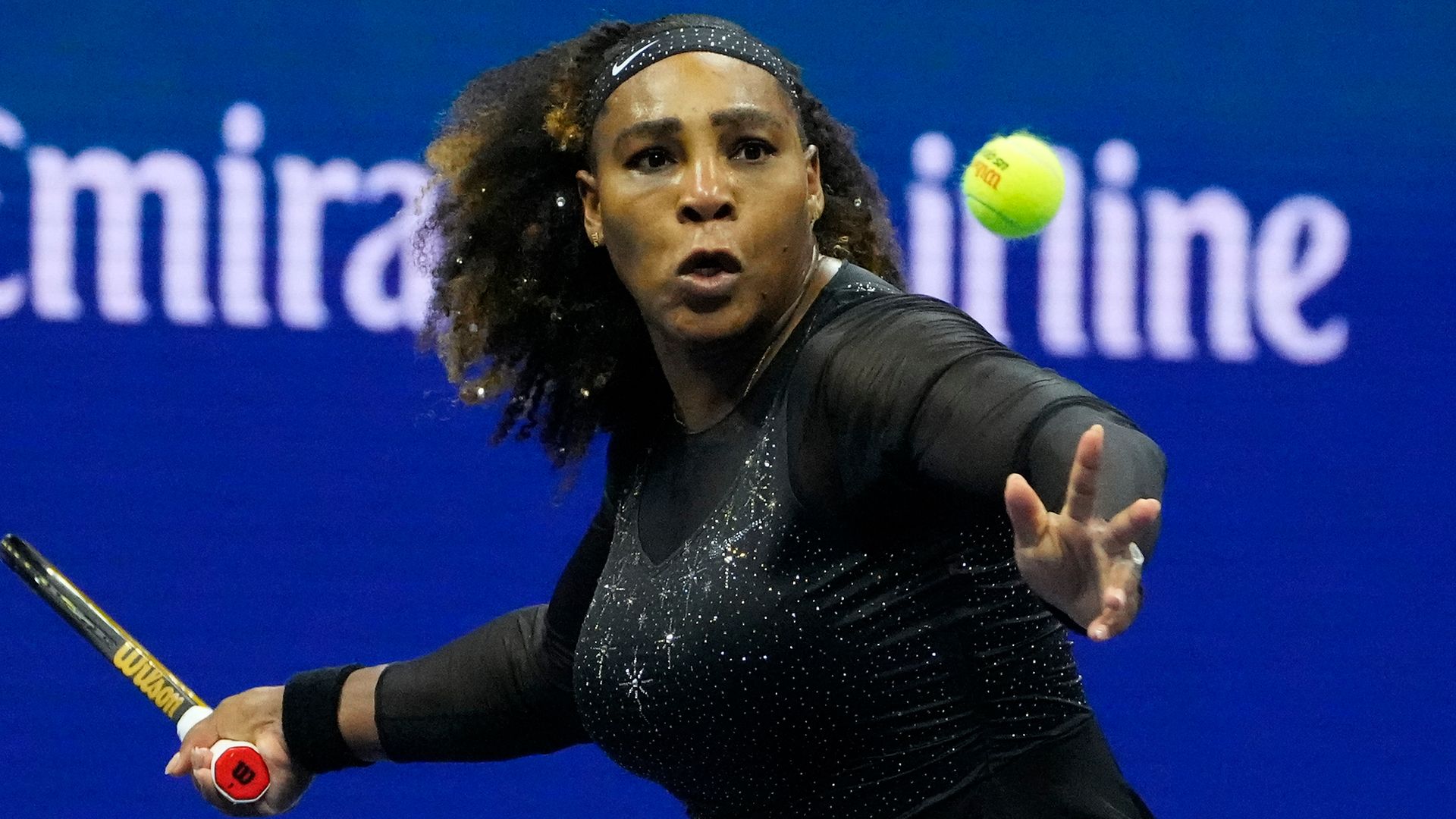
The announcement that Serena Williams will return to competitive tennis at age 44 at the 2026 HSBC Championships at Queen’s Club exposes a critical operational problem in elite sports management: the optimization of kinetic efficiency vs the compounding degradation of biological recovery. Williams enters the WTA 500 doubles draw via a wildcard invitation alongside Canadian teenager Victoria Mboko. This occurs nearly four years after her last competitive match at the 2022 US Open.
Analyzing this return requires moving past narrative sentimentality. Instead, it demands an evaluation of the structural, physiological, and regulatory mechanics governing modern tennis. A comeback at 44 is not an extension of a legacy; it is a live-data experiment testing the absolute limits of athletic longevity and economic asset monetization. Also making headlines in this space: The Anatomy of Fan Misconduct Accountability A Structural Breakdown of Stadium Discipline.
The Recovery Co-Efficient and Biomechanical Kinetic Degradation
The primary bottleneck for an elite tennis player over the age of 40 is not the loss of technical skill or peak velocity; it is the exponential decay of the biological recovery co-efficient. The physiological demands of professional tennis require a constant cycle of micro-tearing and rapid cellular repair. At age 44, the structural framework of this cycle is fundamentally altered by two primary variables.
The Fast-Twitch Glycolytic Deficit
Aging dictates an inevitable shift in muscle fiber composition. Type IIa and Type IIx fast-twitch muscle fibers, which govern explosive lateral movement and serve velocity, experience preferential atrophy compared to Type I slow-twitch endurance fibers. For an elite server like Williams—whose kinetic chain relies on explosive vertical leg drive to generate racket-head speed—this deficit directly degrades first-serve efficiency and court-coverage metrics. More information regarding the matter are covered by Yahoo Sports.
Collagen Synthesis and Joint Viscoelasticity
Tendons and ligaments lose water content and cross-linked collagen density over time. This reduces the viscoelasticity required to absorb the force of aggressive lateral deceleration on grass courts. The grass surface reduces immediate joint impact compared to hard courts, but it increases the micro-instability of the ankle and knee complexes due to lower, irregular ball bounds. This requires sustained, isometric low-quats that accelerate muscular fatigue.
The strategic choice to enter the doubles draw rather than singles serves as a mitigation protocol for these physical limitations. The table below delineates the structural differences in physical load between the two formats:
| Performance Metric | Singles Draw | Doubles Draw |
|---|---|---|
| Linear Court Coverage Area | 812.7 square feet | ~406.3 square feet (per player) |
| Average Rally Length (Grass) | 3.2 – 4.5 shots | 1.8 – 2.6 shots |
| Lateral Deceleration Events | High volume, high velocity | Moderate volume, predictable vectors |
| Aerobic to Anaerobic Ratio | Highly skewed to anaerobic ATP-CP | Balanced metabolic consumption |
By reducing the absolute volume of court coverage by roughly 50%, Williams limits her exposure to high-velocity lateral deceleration events. This lowers the probability of soft-tissue failure while maximizing her primary mechanical asset: net-clearance precision and serve velocity.
Regulatory and Anti-Doping Gateways
A professional comeback is not immediate; it is constrained by a rigid timeline governed by the International Tennis Integrity Association (ITIA). Under the World Anti-Doping Code, a player who has stepped away from the sport must re-enter the mandatory testing pool for a minimum of six consecutive months before becoming eligible for wildcards or competitive draws in sanctioned WTA events.
[December 2025: Pool Entry] ───► [6-Month Testing Window] ───► [June 2026: Competition Clearance]
Williams re-entered the ITIA testing pool in December 2025. This six-month lag phase serves a dual analytical purpose:
- It establishes a biological passport baseline to track longitudinal blood and steroidal parameters, neutralizing any pharmacological advantages of an unmonitored retirement period.
- It imposes a fixed macrocycle for physical preparation, forcing a structured build-up that prevents premature, high-load competition.
The primary limitation of this regulatory framework is its administrative rigidity. A player cannot accelerate the testing window based on physical readiness; performance optimization must be precisely synchronized to peak exactly at the expiration of the six-month administrative lockout.
The Strategic Synergies of Intergenerational Partnership
Partnering with 19-year-old Victoria Mboko is a deliberate tactical allocation of court responsibilities. In modern doubles, an effective intergenerational pairing functions like a balanced corporate portfolio: balancing a depreciating but high-authority anchor asset with a highly mobile, liquid asset.
The tactical execution relies on explicit court division:
- The Baseline Engine: Mboko possesses the baseline coverage capacity and defensive lateral speed required to absorb heavy groundstrokes from opponents. This covers the court area that Williams' fast-twitch deficit compromises.
- The Net and Serve Anchor: Williams commands the net and service line. Her depth perception, technical volley execution, and raw serve velocity remain effective because they rely on spatial positioning and mechanics rather than raw foot speed.
This setup creates a structural buffer. Opponents will logically attempt to isolate Williams by targeting her wide on the move. To counter this, the pairing must employ strict communication and aggressive poaching strategies, shifting the physical burden of lateral coverage onto Mboko while utilizing Williams’ wingspan at the net to cut off responses early.
Commercial Valuation and Tournament Ecosystem Economics
The financial architecture of women's professional tennis relies heavily on star-equity to drive ticket sales, media broadcasting rights, and corporate sponsorship valuations. The timing and location of this return align with explicit economic indicators within the WTA ecosystem.
The HSBC Championships at Queen's Club re-introduced tour-level women’s tennis to London recently, drawing 62,000 spectators in 2025. The tournament features a 35% increase in prize money allocation, making it the second-highest paying WTA 500 event globally.
The insertion of Williams into this specific tournament structure creates an immediate commercial feedback loop:
- Broadcast Monetization: Media rights holders experience immediate viewership spikes, raising advertising spot valuation for the grass-court swing leading into Wimbledon.
- Ticket Scarcity Pricing: Secondary ticket markets experience upward pricing pressure, validating the tournament's increased capital expenditure on player compensation and venue infrastructure.
- Sponsor Activation: Top-tier sponsors leverage the return via highly coordinated media campaigns—such as Williams' recent Nike promotional release—converting sports news cycles into direct brand equity.
This economic reality introduces a potential conflict of interest between commercial demand and physical capability. The financial pressure to transition from doubles to a singles wildcard at Wimbledon is immense. However, optimizing for short-term commercial returns introduces a high risk of structural physical failure if the player's recovery metrics have not adapted to singles workloads.
Definitive Performance Forecast
Data from previous late-career comebacks—such as Martina Navratilova competing at age 43 and 10 months—demonstrate that elite technical skill can sustain competitive viability in doubles, where positioning and tactical intelligence mitigate physical decline. Williams will likely achieve functional baseline competency in the doubles draw at Queen's Club, driven by hold-of-serve probability and net-front intuition.
The quantitative threshold for failure lies in the service return data. If opponents consistently exploit her lateral movement out of the corners during return games, the break-of-serve percentage will rise above the critical 30% threshold, rendering the pairing non-competitive against top-20 specialized doubles teams.
The strategic play for Williams' camp is to reject any immediate singles wildcards for Wimbledon, regardless of commercial pressure. The optimal path requires keeping her output restricted to the doubles format for the entire grass-court season. This allows her to collect live match-load data on her musculoskeletal recovery times before attempting any transition back to individual competition.