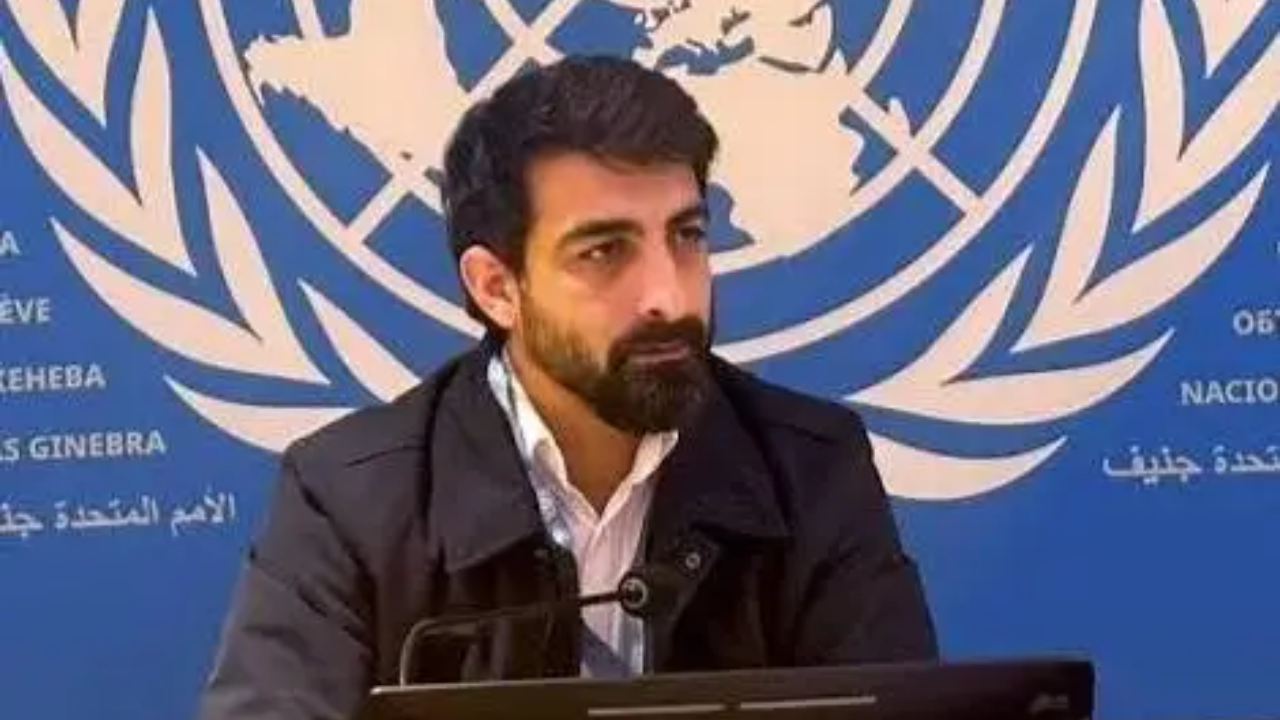
Digital architecture dictates the modern vectors of geopolitical friction, turning structural platform design into an amplifier for targeted rhetoric. The escalating confrontation between Mohamad Safa, the former executive director of the Patriotic Vision Association (PVA), and Elon Musk highlights a core structural shift in global information distribution. Safa’s transition from a United Nations consultative representative to a digital dissident accusing platform infrastructure of driving localized civil unrest demonstrates how institutional collapse and algorithmic design intersect. Understanding this dynamic requires moving past simplistic ideological debates and examining the specific operational frameworks governing contemporary digital engagement.
The Institutional Disintermediation Framework
The trajectory of non-governmental organizations (NGOs) within the United Nations system exposes a growing divergence between formal bureaucratic structures and decentralized digital networks. Safa operated within the UN Economic and Social Council (ECOSOC) system under the Patriotic Vision Association, an organization granted special consultative status in 2018. The ECOSOC framework was designed to operate as a structured, formal pipeline for civic engagement: Also making news in this space: The Sovereign Share.
- The Bureaucratic Cascade: Accredited entities submit data-driven policy recommendations to formal sub-committees, relying on institutional vetting to achieve state-level visibility.
- The Visibility Ceiling: The throughput of this pipeline is intentionally restricted by diplomatic protocol, prioritizing institutional consensus over immediate, wide-scale distribution.
Safa’s public resignation in March 2026—driven by unverified claims regarding a coordinated international misinformation campaign and an imminent nuclear strike on Iran—marked a deliberate shift away from this bureaucratic cascade. By moving his arguments entirely to public social media platforms, he bypassed institutional constraints to leverage an unmediated distribution model.
This shift reveals a structural trade-off. Bureaucratic accreditation offers institutional legitimacy but caps information velocity. Digital platforms remove transmission friction and expand reach, but they trade verified consensus for immediate engagement. Safa’s approach uses his past UN association to establish personal authority while operating outside the gatekeeping mechanisms that traditionally validate such claims. Additional information on this are covered by Gizmodo.
The Feedback Loop of Platform Architecture
Safa's recent public claims argue that platform architecture and financial networks directly drive civil unrest, specifically pointing to the anti-Muslim riots in the United Kingdom. Safa asserted that this hostility is funded by specific geopolitical interests and promoted through the structural mechanisms of the X platform. This dynamic can be analyzed through a precise operational loop:
[Platform Optimization Metric: High-Velocity Engagement]
                        │
                        ▼
          [Algorithmic Amplification]
                        │
                        ▼
       [Accelerated Distribution of Contested Content]
                        │
                        ▼
          [Direct Physical Aggregation]
This system relies on explicit structural features to maintain momentum. The premium subscription framework alters visibility by prioritizing the replies and posts of paying accounts within the main feed. When platform leadership directly interacts with highly contentious content or figures connected to localized unrest, the underlying distribution algorithms react to those signals. This interaction dramatically scales the reach of controversial content, moving it well beyond its original core audience.
The operational consequence of this design is a significant compression of response time for local authorities. Traditional distribution networks allow time for community intervention and verification. In contrast, modern platform architecture scales contentious content rapidly, matching or outstripping the deployment speed of physical law enforcement and local government responses.
Limitations of Geopolitical Attribution
Analyses of digital influence often rely on a single, clean narrative of state-sponsored coordination or top-down manipulation. However, mapping these digital dynamics reveals significant analytical blind spots:
- The Causality Illusion: Attributing localized civil unrest exclusively to algorithmic amplification or external funding networks oversimplifies complex situations. It ignores long-standing, structural socio-economic tensions that exist independently of digital platforms.
- The Verification Deficit: Assertions regarding hidden financial backing or high-level institutional conspiracies frequently lack verifiable evidence. Without transparent financial tracking or internal data access, these claims function as unproven hypotheses rather than established facts.
- The Governance Paradox: Demanding that platform owners act as centralized content arbiters creates an inherent structural conflict. It positions private, profit-driven entities as the primary regulators of public speech and international political discourse.
Platform algorithms do not manufacture social fractures out of nothing; instead, they operate as optimization engines that identify existing points of tension and accelerate their distribution to maximize user engagement.
Strategic Realignment for Information Operations
Countering the weaponization of platform infrastructure requires shifting away from retroactive content moderation and focusing instead on systemic resilience. Organizations and municipal authorities must treat information distribution as a critical infrastructure vulnerability.
Deploying highly structured, localized communication networks that operate independently of commercial platform algorithms is essential for stabilizing public discourse during crises. This approach reduces a community's dependence on engagement-driven channels, blunts the impact of rapid algorithmic amplification, and establishes clear, verified lines of communication before physical tensions escalate.
UN consultations of the Committee with NGOs, 13 Dec 2022
This archival video provides direct documentation of Mohamad Safa's formal diplomatic style and statements during his tenure as a UN representative, establishing a clear baseline for evaluating his transition to decentralized digital activism.