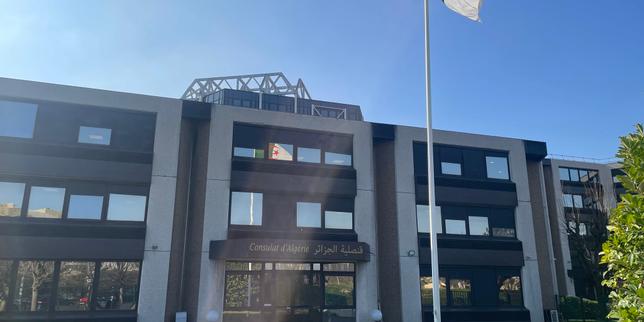
The detention of French sports journalist Christophe Gleizes in Algeria—sentenced to seven years for alleged "apologie du terrorisme"—is not a standard criminal or judicial event. It is a calculated exercise in asymmetrical diplomatic leverage. State actors increasingly use the judicial apparatus to convert low-cost domestic detentions into high-value international negotiating assets. In the bilateral matrix between Paris and Algiers, the holding of a foreign national operates as an artificial asset class designed to force concessions. The transactional logic underpinning this standoff relies on a specific mechanism: the asymmetric swap, where a state exchanges a detained private citizen for the repatriation or neutralisation of a sovereign political opponent or state asset.
To understand the mechanics of this diplomatic gridlock, the situation must be broken down into its core structural components, bypassing the standard media narrative of press freedom to look directly at the geopolitical balance sheet.
The Tri-Pillar Framework of Hostage Diplomacy
State-level detentions used for international bargaining operate across three distinct functional lines. Each pillar must be active for the state actor to maintain its position of strength without collapsing the entire bilateral relationship.
The Pretextual Anchor: The legal mechanism used to justify detention under domestic law. In this instance, the Algerian state leverages broad anti-terrorism statutes—specifically targeting contacts made by Gleizes with members of the Mouvement pour l'autodétermination de la Kabylie (MAK), a group classified as a terrorist organization by Algiers since 2021. The legal system provides the sovereign cover necessary to reject external interference as an infringement on judicial independence.
The Asymmetric Value Differential: The structural imbalance in how each state values the individual. To Algeria, a foreign journalist carries negligible domestic value but represents a premium external bargaining chip. To France, the domestic political cost of leaving a citizen in foreign confinement increases over time due to media pressure and public scrutiny. This gap creates the operational leverage.
The Target Asset Alignment: The specific concession the detaining state intends to extract. Bilateral negotiations are rarely about general goodwill; they track toward concrete structural transactions. The core of current discussions revolves around a direct trade: the freedom of Gleizes in exchange for the release, extradition, or neutralisation of Algerian assets or political dissidents currently residing under French jurisdiction, or individuals holding consular status whose legal standing remains contested.
The Friction Function in Bilateral Bargaining
The primary error in conventional analysis is treating the negotiation as a simple transactional swap. In practice, international law and domestic political constraints introduce a high degree of friction, slowing down potential agreements. This friction can be modeled as a function of three variables:
Legal Institutional Rigidity: France cannot simply execute an extrajudicial trade. The separation of powers means any individual sought by Algiers who is currently caught in the French judicial system—such as an Algerian consular agent or a registered political refugee—must move through formalized statutory channels. This creates a permanent structural bottleneck.
The Precedent Risk Premium: For the French state, agreeing to a direct swap creates an adverse incentive structure. If Paris yields to judicial hostage-taking by trading state assets or dissidents, it signals to other sovereign actors that arresting French citizens is a viable method for overriding French domestic law. The long-term cost of setting this precedent often outweighs the short-term political benefit of securing an immediate release.
Information Asymmetry: Neither side can accurately verify the true bottom line of the other. Algiers must gauge how much political capital Emmanuel Macron's administration is willing to spend as it enters its final political cycles, while Paris must determine whether the detention is a fixed geopolitical demand or an adjustable position subject to economic or military trade-offs, such as anti-terrorism cooperation in the Sahel region.
Structural Interdependencies and the Sahel Variable
The leverage calculus is further complicated by regional security architectures. The detention does not occur in a vacuum; it runs parallel to a broader realignment in North Africa and the Sahel. Algeria shares a 1,300-kilometer border with Mali, a zone of critical security concern for both Algiers and Paris following the drawdown of French military operations in the region.
This creates a secondary theater of transaction. Algiers frequently conditions its cooperation in regional counter-terrorism and intelligence sharing on French neutrality regarding its internal security policies and its handling of dissidents abroad. The French Ministry of the Armed Forces remains highly sensitive to these operational realities. Consequently, the diplomatic strategy pursued by the Quai d'Orsay must balance the humanitarian urgency of citizen repatriation against the hard military necessity of maintaining access to Algerian airspace and regional intelligence networks.
The tactical execution of this dispute reveals the exact limits of traditional diplomacy when facing an actor willing to weaponize its domestic courts. Standard diplomatic toolkits—consular visits, formal statements of concern, and institutional appeals—fail because they operate within the rules of international norms that the detaining state has intentionally bypassed to create the crisis.
The Final Strategic Play
The resolution of this deadlock will not come from rhetorical appeals to human rights or press freedom by external bodies like Reporters Without Borders. It will occur only when the maintenance cost of the asset for Algiers exceeds the projected value of the expected concession.
France's most viable path forward requires a policy of targeted decoupling. Paris must systematically separate the judicial fate of Gleizes from any discussions involving the extradition or trading of Algerian political opponents or consular personnel on French soil. Yielding on the asset-swap model collapses French judicial sovereignty. Instead, the French administration must shift the transaction to areas where Algeria faces structural vulnerabilities. This involves linking the resolution of the detention to bilateral economic levers, such as the calibration of visa allocation frameworks for the Algerian elite, and the enforcement of stricter compliance checks on Algerian state-backed financial flows within the European banking sector. Only by changing the cost-benefit equation at the state level can Paris neutralize the asymmetric leverage currently held by Algiers.
French sportswriter sentenced to 7 years for 'glorifying terrorism' in Algeria - AP News
This international broadcast outlines the initial charges and severe legal penalties leveled against the journalist, illustrating the structural pretexts utilized by the sovereign state to establish its bargaining position.