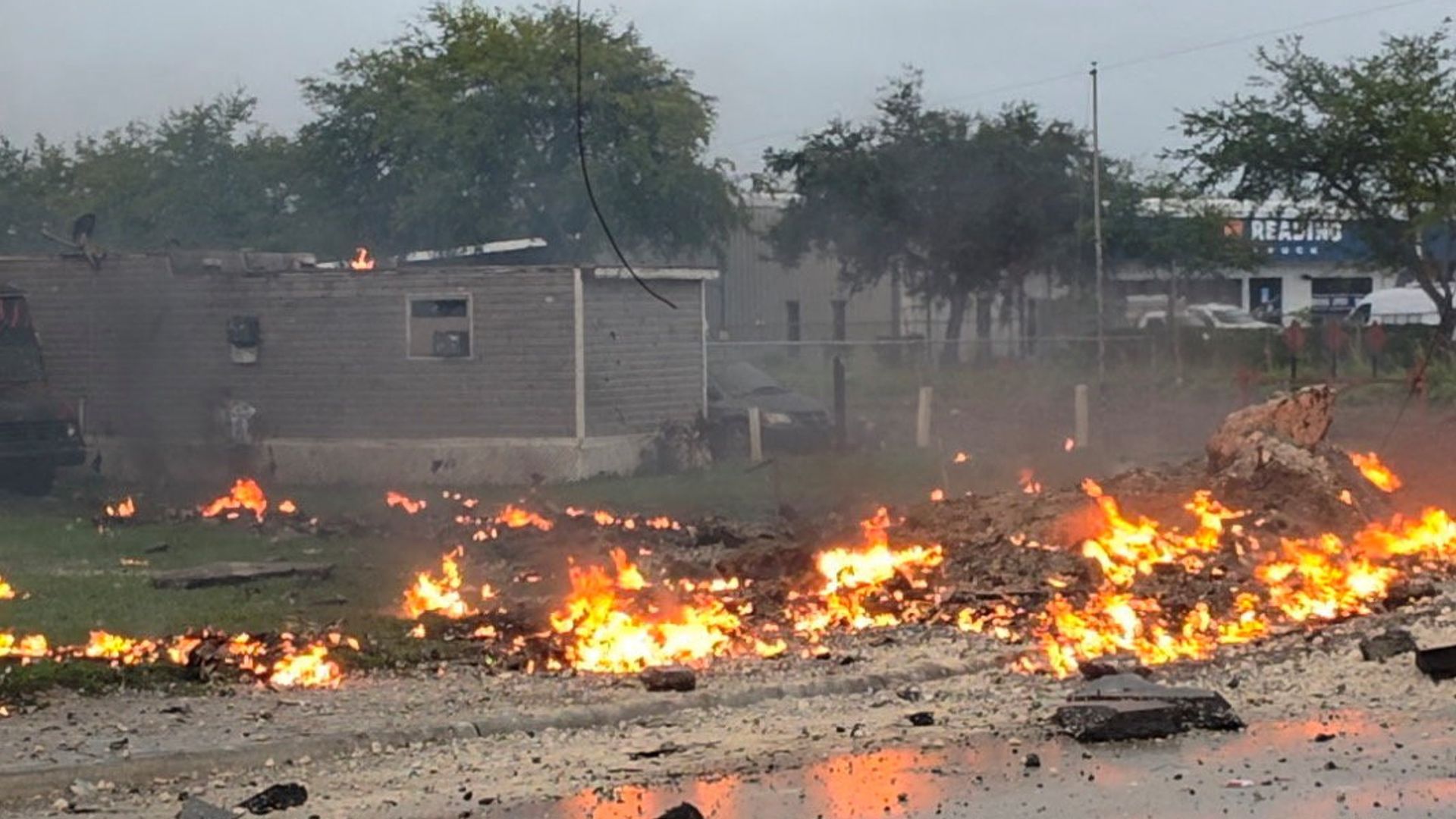
Standard local news coverage of fatal aviation incidents prioritizes emotional immediacy over structural mechanics, typically reducing complex forensic, legal, and regulatory operations into a single headline announcing the release of victim identities. When a private or commercial jet crashes in a jurisdiction like Florida, the public release of names is not a routine administrative formality; it is the terminal output of a multi-agency verification pipeline governed by federal aviation statutes, state medical examiner laws, and strict next-of-kin notification protocols. Understanding how authorities move from wreckage recovery to public identification requires mapping the operational friction between speed, forensic certainty, and privacy statutes.
The Three-Stage Verification Pipeline
Public reporting often treats victim identification as a single event rather than a sequential bottleneck. In reality, local law enforcement, county medical examiners, and the National Transportation Safety Board (NTSB) operate on distinct, asynchronous timelines.
Manifest Reconciliation and Preliminary Manifesting
The initial phase relies on documentary evidence rather than physical remains. For Part 121 (commercial) and Part 135 (charter) operations, federal regulations mandate precise passenger manifests prior to takeoff. However, Part 91 (private, non-commercial) flights—which account for a substantial portion of general aviation jet traffic in Florida—do not carry the same centralized manifest filing requirements. Investigators must reconstruct occupancy through Fixed-Base Operator (FBO) ramp logs, flight plan filings, and airport security footage. This creates an immediate data gap: a flight plan may list four souls on board, yet the absence of a verified manifest delays initial confirmation until ground witnesses or departure records establish exact occupancy.Forensic Pathology and Primary Identifiers
High-energy impact crashes involving jet fuel frequently result in severe thermal damage and fragmentation, rendering visual identification legally invalid and scientifically unreliable. Under standard forensic protocols established by the National Association of Medical Examiners (NAME), positive identification requires matching antemortem records with postmortem biological markers. Authorities rely on three primary modalities:- Odontology: Comparison of dental records and radiographs, which resist extreme thermal degradation.
- Friction Ridge Analysis: Fingerprint matching, viable only when soft tissue remains intact.
- DNA Profiling: Polymerase chain reaction (PCR) analysis comparing tissue samples against familial reference swabs or personal items, a process that introduces a mandatory 24-to-72-hour laboratory bottleneck.
Next-of-Kin Notification and Statutory Holds
Even after a county medical examiner establishes scientific certainty, public disclosure remains frozen until law enforcement executes in-person notification of the legal next of kin. Under Florida Statutes Chapter 406, medical examiners hold jurisdiction over bodies resulting from accidental or violent deaths, while local sheriff's offices or municipal police departments typically manage the public release of identities. If victims reside outside the state or internationally—a frequent variable in Florida's transient aviation corridor—local agencies must coordinate with out-of-state law enforcement or consular officials, extending the information embargo.
The Jurisdictional Friction Matrix
Standard journalism flattens the investigative hierarchy, often attributing all updates to "officials." In practice, fatal jet crashes trigger a strict division of labor where authority is bifurcated between the cause of the crash and the identity of the deceased.
- The NTSB (Probable Cause): Under 49 U.S.C. § 1131, the NTSB holds statutory authority over the investigation of civil aviation accidents. The agency focuses exclusively on operational, mechanical, and environmental failure modes—analyzing cockpit voice recorders (CVR), flight data recorders (FDR), air traffic control radar tracks, and maintenance logs. The NTSB explicitly avoids releasing victim names, deferring that function to local jurisdictions to maintain institutional separation between safety engineering and civil liability.
- The Federal Aviation Administration (Regulatory Compliance): Operating alongside the NTSB, the FAA audits airworthiness directives, pilot certifications, and flight school or charter compliance. While the FAA releases preliminary accident and incident notifications (ASIAS) containing tail numbers (N-numbers) and aircraft models within 24 hours, these reports omit occupant identities.
- County Medical Examiners and Local Law Enforcement (Identity and Cause of Death): In Florida, the district medical examiner determines the physiological cause and manner of death. Unlike many states where coroner records are sealed, Florida's broad public records laws (Chapter 119, Florida Statutes, known as the Sunshine Law) mandate the eventual release of public records, subject to specific statutory exemptions for active criminal investigations, autopsy photographs, and certain family privacy protections.
Why Tail Numbers Preceded Names in Information Flow
A persistent pattern in aviation reporting is the asymmetric release of aircraft data versus human data. Within hours of a crash, media outlets publish the exact make, model, and registration number of the jet, while victim names remain withheld for days. This discrepancy is driven by the architecture of aviation telemetry.
Modern turbine aircraft broadcast Automatic Dependent Surveillance-Broadcast (ADS-B) telemetry on 1090 MHz, transmitting GPS position, altitude, vertical speed, and the unique ICAO 24-bit aircraft address every second. Public tracking networks ingest this unencrypted data in real time. Once emergency dispatch logs confirm an aircraft down at specific coordinates, cross-referencing the final ADS-B ping with the FAA Civil Aviation Registry immediately yields the registered owner—often a limited liability company (LLC), trust, or corporate aviation department.
However, corporate registration obscures individual occupancy. Private jets in Florida are routinely registered to Delaware or Wyoming holding companies for tax and liability insulation. Consequently, knowing the owner of the airframe provides zero forensic proof of who occupied the flight deck or cabin. Bridging the gap between the FAA registry and the actual occupants requires physical evidence from the crash site and verification from the departure FBO, creating the structural lag between aircraft identification and victim naming.
Causal Mechanisms in General Aviation Jet Incidents
When media narratives focus exclusively on biographical details of the deceased, they obscure the operational risk factors inherent to business and private jet operations. The NTSB's historical accident data demonstrates that fatal turbine crashes rarely stem from a single catastrophic component failure; instead, they represent a cascade of compounding errors across three primary vectors.
Approach and Landing Phase Vulnerability
Although the approach and landing phases represent less than 15 percent of total flight duration, they account for nearly half of all fatal jet accidents. High closure rates, rapidly changing aerodynamic configurations, and compressed decision windows leave minimal margin for error. Unstabilized approaches—where an aircraft fails to maintain proper airspeed, descent rate, or glide path alignment below 1,000 feet—frequently force late go-arounds or result in runway excursions and controlled flight into terrain (CFIT).
Single-Pilot Workload Saturation
Many light jets (such as the Cessna Citation series, Embraer Phenom, or Beechcraft Premier) are certified for single-pilot operation. In benign weather, one pilot manages navigation, communications, and systems monitoring without difficulty. When an abnormal event occurs—such as an engine flameout, electrical bus failure, or sudden convective weather—cognitive load spikes exponentially. Without a second crew member to run emergency checklists and cross-check flight instruments, spatial disorientation or loss of control in-flight (LOC-I) becomes a high-probability outcome.
Microclimate and Convective Hazards
Florida's peninsula generates severe thermodynamic instability, producing rapid-onset microbursts, low-level wind shear, and intense convective cells. Unlike commercial airliners equipped with predictive wind-shear radar and supported by airline dispatchers, smaller private operations may lack real-time datalink weather updates in the terminal area, increasing exposure to sudden downdrafts during critical low-altitude transitions.
Limitations of Preliminary Reporting
Early coverage of fatal crashes suffers from severe epistemic limitations that readers and analysts must discount:
- Eyewitness Distortion: Ground witnesses almost universally report seeing an aircraft "on fire before it hit" or hearing "engine sputtering." Acoustic Doppler shifts and the visual reflection of sunlight off metallic airframes routinely produce false sensory impressions, which frequently contradict post-crash metallurgical engine teardowns showing normal rotational signatures at impact.
- ADS-B Telemetry Gaps: Public flight-tracking graphs often display erratic vertical speed spikes in the final seconds of a flight. These anomalies frequently reflect signal loss or terrain masking rather than actual aerodynamic maneuvers, making raw ADS-B plots unsuitable for determining flight control inputs prior to the release of the NTSB's factual report.
- The Preliminary Report Horizon: The NTSB publishes a preliminary report roughly 10 to 14 days post-accident, detailing basic meteorological conditions, flight path reconstruction, and wreckage distribution. Probable cause determinations require 12 to 24 months of laboratory component testing and human factors analysis. Any narrative assigning blame prior to the final docket is speculative.
Strategic Framework for Evaluating Crash Intelligence
To extract accurate operational intelligence from early-stage aviation accident coverage, analysts, risk managers, and informed readers must filter out emotional framing and audit the underlying data pipeline:
- Isolate the Operational Part: Verify whether the flight operated under Part 91 (private), Part 135 (on-demand charter), or Part 121 (scheduled airline). Regulatory oversight, pilot rest requirements, and maintenance intervals vary drastically across these classifications.
- Cross-Reference the Airframe History: Query the FAA registry using the N-number to determine airframe age, engine type, and ownership structure, while checking historical NTSB databases for prior incidents involving the specific operator or aircraft model.
- Track Official Docket Releases: Anchor all causal assessments to the three formal NTSB milestones—the Preliminary Report (Day 14), the Factual Docket (Month 12–18), and the Final Probable Cause Report (Month 18–24)—treating all interim local law enforcement statements strictly as jurisdictional updates regarding victim identification and scene security.


