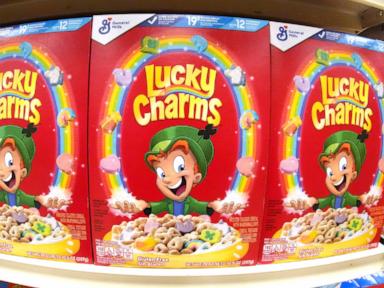
Legacy food manufacturing operates under a fragile equilibrium between sensory consumer expectations and industrial formulation economics. When General Mills committed to removing artificial colors and flavors from its core cereal portfolio, including flagship brands like Lucky Charms and Trix, the initiative represented a structural shift in how fast-moving consumer goods companies manage brand equity preservation. The public narrative framed this shift as a straightforward health mandate, but the operational reality required a complete re-engineering of supply chains, cost structures, and visual chemistry.
The Consumer Shift and the Erosion of Synthetic Equity
For decades, industrial food production relied on petroleum-derived synthetic dyes because they offered absolute chemical stability. Synthetic colorants maintain consistent chromatic saturation across extended thermal processing windows, endure light degradation on retail shelves, and present zero biological variability. Red 40, Yellow 5, and Yellow 6 became foundational pillars of mass-market cereal formulation precisely because they decoupled visual appeal from biological raw materials. Learn more on a similar topic: this related article.
Consumer demand vectors shifted due to heightened scrutiny of synthetic additives, creating a widening gap between heritage product design and contemporary purchasing preferences. General Mills faced a brand vulnerability vector: retention of market share depended on eliminating ingredients that retail demographics increasingly perceived as liabilities. This was not a sudden ethical awakening; it was a defensive maneuver to protect parent brand equity against erosion from niche, clean-label market entrants that capitalized on avoidance marketing.
The technical challenge centers on replacing synthetic stability with organic volatility. Natural colorants derived from vegetable juices, spice extracts, and fruit concentrates do not behave like chemical dyes. They degrade under high-heat extrusion, shift hue when exposed to varying pH levels in milk, and fade when subjected to ambient retail lighting. The strategic imperative required formulators to solve a physics and chemistry problem disguised as a marketing update. Further reporting by Forbes delves into comparable perspectives on this issue.
The Three Operational Constraints of Clean Label Conversion
Transitioning a legacy product line from synthetic to natural additives introduces three operational constraints that govern the entire manufacturing lifecycle.
- Thermal Degradation Thresholds: Standard cereal production involves high-temperature extrusion and toasting processes that easily destroy delicate anthocyanins and carotenoids derived from natural sources. Formulators had to adjust thermal profiles, lowering or shortening heat application windows, which inadvertently altered product texture, expansion rates, and moisture content.
- Supply Chain Volatility and Cost Structures: Synthetic dyes are synthesized cheaply from petrochemical precursors with reliable year-round output. Natural color sources—such as turmeric, radishes, red cabbage, and paprika—are agricultural commodities subject to weather events, crop yields, and seasonal price fluctuations. Procuring industrial-scale volumes of certified non-synthetic pigments introduced margin compression and supply chain fragility.
- Shelf-Life and Chromatic Decay: Once packaged in translucent or standard cardboard boxes, natural pigments degrade much faster than synthetic alternatives. Retail velocity became a critical factor. Products had to clear shelves before oxidation or light exposure altered the color profile to an unpalatable brown or grey hue, shifting inventory management requirements back to the distribution center.
The Chemistry of Compromise
The reformulations of Lucky Charms and Trix exposed the inherent trade-offs of industrial clean-label transitions. In Trix, the loss of vibrant synthetic brights meant that historical fruit-shape color coding had to be achieved via turmeric, radishes, and other botanical extracts. The resulting visual spectrum was muted, prompting a temporary consumer backlash among demographics accustomed to neon saturation. General Mills eventually reverted to the brighter synthetic formulation for a period before re-introducing a version of the natural product, illustrating the tension between corporate wellness signaling and core consumer sensory habits.
Lucky Charms presented a dual-phase challenge: the toasted oat pieces and the marshmallow bits required distinct formulation pathways. While the oat pieces transitioned relatively smoothly, the marshmallows demanded novel gelling agents and plant-based opacifiers to mimic the bright white background necessary for the colored sugar bits to pop visually. Every adjustment altered the cost of goods sold, forcing supply chain engineers to find operational efficiencies elsewhere in packaging, distribution, or raw material sourcing to preserve operating margins.
The Economic Impact on Margins and Market Positioning
Shifting from synthetic additives to natural extracts increases the baseline cost of formulation. Agricultural extraction requires higher input volumes per unit of output compared to petrochemical synthesis. Furthermore, the higher rate of batch spoilage and shorter shelf-life windows increase write-offs for spoiled inventory.
To absorb these cost increases without raising retail prices past consumer resistance thresholds, manufacturers must optimize secondary variables. Packaging weight reductions, automated visual inspection systems to catch discoloration early in the run, and long-term agricultural supply contracts help mitigate input volatility. However, the foundational margin structure of high-volume, low-cost processed foods remains fundamentally altered by the transition.
Brands that execute this transition successfully insulate themselves from future regulatory risk. Regulatory bodies in various jurisdictions periodically re-evaluate the safety profile of synthetic food colorings. By voluntarily preempting regulatory bans, General Mills mitigated the risk of emergency recalls or mandatory reformulation mandates that force rushed, costly changes under unfavorable timelines.
Strategic Execution Protocol
- Conduct a comprehensive inventory of all SKU-level inputs to isolate vulnerable synthetic components before public pressure forces reactive timelines.
- Establish direct agricultural sourcing partnerships with multi-region growers to hedge against crop failures and price spikes in natural color extract markets.
- Redesign the extrusion and thermal processing line parameters to accommodate the lower heat tolerance of organic pigments without sacrificing product structural integrity or crunch.
- Recalibrate inventory distribution algorithms to ensure faster retail velocity for natural-pigment SKUs, minimizing shelf-stagnation and chromatic degradation risks.