The convergence of artificial intelligence infrastructure and fossil fuel revival policies has created an acute structural friction point within the current political economy. When the federal administration issued directives to accelerate coal-fired electricity generation to meet the exponential power demands of machine learning computation clusters, it triggered an immediate counter-response from public health advocates within the Make America Healthy Again coalition. This dynamic exposes a fundamental tension between computational scaling imperatives and public health externalities. Resolving this tension requires an analytical deconstruction of the thermodynamic demands of modern neural networks, the operational economics of legacy baseload power, and the localized toxicological burden imposed by coal combustion waste streams.
The Thermodynamic Cost Function of Artificial Intelligence
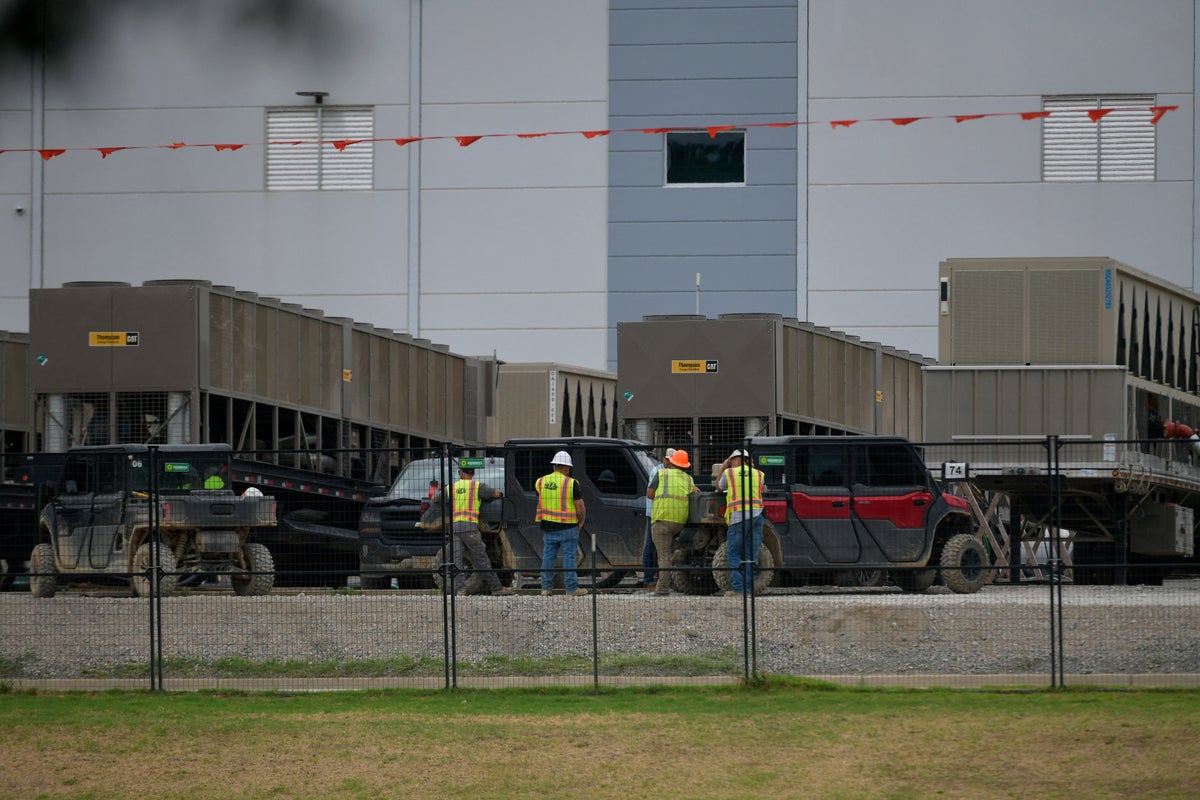
Modern artificial intelligence infrastructure operates on a scale of energy consumption that fundamentally breaks historical utility paradigms. Large-scale language models and deep neural networks require massive compute clusters housing tens of thousands of specialized accelerators. These clusters demand continuous, uninterrupted power loads measured in hundreds of megawatts per facility, creating a baseload requirement that intermittent renewable sources struggle to service without massive, multi-hour battery storage arrays.
The policy push to utilize coal is driven by a simple arithmetic of grid capacity. Grid operators face an unprecedented rise in electricity demand from industrial reshoring and digital infrastructure. Proponents of fossil-fuel-backed computation argue that coal plants offer high capacity factors, fuel abundance, and immediate dispatchability regardless of meteorological conditions.
Yet, this optimization for raw electrical output ignores the internal cost function of public health. The thermodynamic efficiency of burning coal to generate electricity for silicon chips comes with secondary systemic liabilities. Chief among these is the generation of coal combustion residuals, commonly known as coal ash, alongside fine particulate matter and heavy metal emissions.
Toxicological Externalities and Institutional Friction
The friction between administrative policy and public health coalitions centers on the distribution of risk. While the economic value of artificial intelligence leadership concentrates in financial returns, technological dominance, and localized tax revenues, the environmental and toxicological costs disperse across surrounding communities.
Coal combustion releases sulfur dioxide, nitrogen oxides, mercury, and particulate matter smaller than 2.5 micrometers. Epidemiological data links these emissions to elevated rates of cardiovascular disease and impaired neurological development in pediatric populations. Furthermore, the storage of coal ash in unlined or structurally vulnerable surface impoundments introduces leaching risks into regional water tables, threatening aquifers with heavy metals such as arsenic, cadmium, and lead.
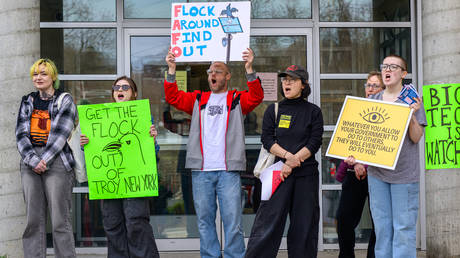
The Make America Healthy Again network's mobilization against coal-powered computation marks a structural break within a key political voting bloc. The core critique is not merely ideological; it is operational. The coalition's public commentary highlights a direct contradiction: an administrative framework prioritizing systemic health revitalization on one hand, while simultaneously rolling back emissions standards and incentivizing legacy combustion sources on the other.
Regulatory Mechanics and Permitting Bottlenecks
The operational execution of data center expansion relies heavily on fast-tracked permitting and the suspension or modification of federal environmental reviews. Executive actions designed to bypass procedural delays for energy projects aim to shorten the time-to-market for computation clusters. However, this acceleration strategy generates secondary legal and social resistance.
When local zoning boards and state utility commissions face applications for high-load data centers tied to legacy fossil-fuel generation, they encounter intense multi-partisan pushback. Communities neighboring proposed sites report severe degradation of local quality of life, driven by three distinct variables:
- Grid Price Inflation: Rapid spikes in local electricity rates as industrial data loads outpace regional generation capacity, shifting infrastructural upgrade costs onto residential ratepayers.
- Hydrological Depletion: Enormous water volumes required for evaporative cooling systems inside massive server halls, straining municipal water supplies.
- Acoustic and Air Pollution: Persistent low-frequency noise pollution from industrial cooling fans alongside localized air quality degradation.
The demand for transparent reviews of power-sourcing decisions and strict adherence to environmental impact assessments reflects an attempt to re-impose friction on an otherwise unbridled buildout.
Strategic Assessment and Grid Alternatives
To evaluate the viability of powering artificial intelligence without triggering public health crises or severe political fracturing, energy strategists must model alternative power matrices. The technical feasibility of pairing data centers with geothermal, advanced nuclear, or utility-scale solar-plus-storage installations offers a path toward clean baseload or firm power.
Geothermal energy, particularly enhanced geothermal systems, provides continuous subterranean heat capture capable of driving turbines without combustion byproducts or weather dependencies. Advanced nuclear small modular reactors present another high-density, zero-emission baseload alternative, though regulatory lead times remain an operational constraint.
The immediate strategic priority for enterprise operators and policymakers involves decoupling computational scaling from high-emission combustion assets. Mandating power purchase agreements that tie new data center construction directly to new zero-carbon generation capacity—rather than drawing from carbon-intensive legacy grids—remains the primary mechanism to neutralize public health opposition. Without this structural shift, the expansion of artificial intelligence infrastructure will face sustained legal challenges, community resistance, and legislative counter-mobilization that threaten to stall digital advancement at its physical foundation.