Pathogen containment is rarely an accident of geography; it is the direct output of institutional velocity, perimeter defense architecture, and pre-positioned response capital. When Uganda officially concluded its 2026 viral hemorrhagic fever cycle following the discharge of its final patient in mid-June and the subsequent clearance of the World Health Organization mandated forty-two-day monitoring window, the outcome was evaluated through emotional lenses in mainstream reporting. Mainstream summaries credited luck or generalized vigilance. They missed the underlying systemic mechanics.
The structural reality of the outbreak reveals a distinct operational playbook. While neighboring regions experienced exponential viral velocity, Uganda converted a high-risk cross-border importation event into a contained incident affecting precisely twenty individuals with a case fatality rate held at ten percent. Evaluating this event requires breaking down the containment architecture into three distinct operational pillars: boundary friction, institutional isolation velocity, and trace-and-quarantine compliance mechanics. Read more on a related subject: this related article.
The Mechanics of Boundary Friction
Epidemiological containment begins at the territorial perimeter. The 2026 outbreak originated in the eastern region of the Democratic Republic of the Congo, specifically within Ituri province, where porous borders create structural vulnerabilities for neighboring states. The initial vector entries into Uganda were not random domestic transmissions; they were cross-border movements of individuals seeking clinical intervention for unconfirmed symptoms before pathogen identification was established.
Instead of relying on passive monitoring, Ugandan authorities activated high-friction containment barriers immediately upon confirmation on May 15. The state deployed three simultaneous administrative interventions: More reporting by Psychology Today highlights similar perspectives on the subject.
- The immediate cessation of bilateral public transportation vectors and flight corridors linking high-incidence zones in Congo with Ugandan transit hubs.
- The executive prohibition of mass public congregations, including a major regional religious pilgrimage near Kampala that traditionally draws thousands of cross-border travelers.
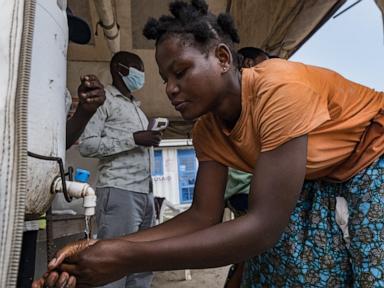
- Behavioral friction enforcement, notably the public directive to eliminate handshake protocols, instantly reducing vector transmission opportunities in communal spaces.
These measures altered the reproduction number of the virus within days. By restricting physical mobility before community-wide saturation could occur, the state forced the outbreak into a localized cluster rather than an exponential network.
Institutional Isolation and Clinical Throughput
The structural differentiator in Uganda's health response lies in pre-established physical infrastructure. Rather than constructing treatment facilities in response to the crisis, authorities utilized pre-positioned assets such as the Mulago National Referral Isolation Centre. This operational readiness bypassed the construction lag that paralyzes public health responses in less prepared jurisdictions.
The clinical strategy relied on two core variables:
- Multidisciplinary care teams operating inside standardized 80-bed specialized isolation units equipped for strict barrier nursing.
- Supportive care protocols administered under compassionate use frameworks, maximizing physiological resilience against the Bundibugyo strain, which lacks a designated vaccine or targeted antiviral therapeutic.
By routing every suspected vector directly into institutional quarantine, the health ministry severed the transmission chain between symptomatic individuals and household contacts. The financial and operational cost of institutionalizing contacts for twenty-one-day intervals is high, but the alternative—uncontrolled community spread—destroys economic output entirely.
The Cost Function of Surveillance Versus Containment
Epidemiological control operates on an inverse cost curve. Capital spent upfront on surveillance and institutional quarantine yields exponential savings compared to reactive measures deployed after widespread community penetration.
In comparative terms, the regional outbreak across the border in Congo expanded past three thousand cases within ten weeks, driven by localized security disruptions, community distrust of responders, and geographic inaccessibility. Uganda avoided this trajectory by eliminating the time lag between symptom identification and contact isolation.
The twenty individuals infected in Uganda represented the total boundary of the intrusion because contact tracing teams mapped secondary and tertiary touchpoints before infectiousness manifested in public settings. Enhanced active surveillance across border districts ensured that zero unexplained community transmissions bypassed detection during the mandatory incubation tracking cycles.
Operational Execution Metrics
| Variable | Uganda Response Metric | Comparative Regional Baseline |
|---|---|---|
| Primary Strain | Bundibugyo (No approved vaccine) | Bundibugyo / Mixed |
| Total Confirmed Cases | 20 | 3,262+ (Congo regional total) |
| Case Fatality Rate | 10% | Variable / High severity |
| Monitoring Window | 42 days post-discharge | Ongoing emergency response |
| Border Status | Restricted transit corridors | Porous high-velocity transit |
The success of the containment protocol demonstrates that infectious disease threats do not respect political boundaries, but they do succumb to administrative discipline. The forty-two-day countdown from the mid-June patient discharge to the formal declaration serves as a mathematical verification of zero active transmission chains.
To replicate this operational success in future biosecurity threats, health ministries must abandon passive surveillance models and adopt mandatory pre-positioning of isolation infrastructure, automated cross-border transit throttling, and rigid institutional tracking of all primary contacts within the first twenty-four hours of index case confirmation.