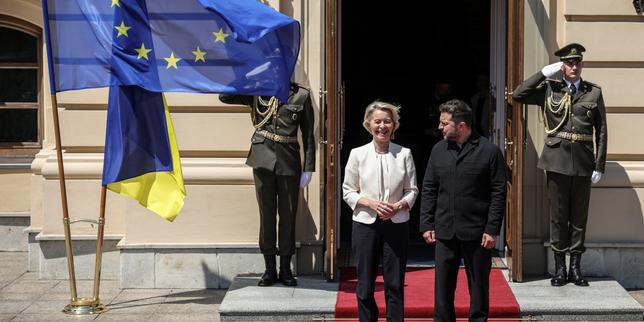
When European leaders gather in Brussels to announce new sanctions packages against Moscow, the press releases inevitably promise crippling blows to the Kremlin's war economy. The official narrative portrays a unified continent methodically tightening an economic vice around Russia. Beneath the public declarations lies a far more chaotic reality. Each round of sanctions triggers a punishing internal brawl among member states, leaving the final measures stripped of their initial teeth long before implementation.
The fundamental problem is structural. The European Union requires complete unanimity among all 27 member states to adopt sanctions. That requirement transforms every diplomatic negotiation into a high-stakes arena for national self-interest, commercial lobbying, and political extortion. You might also find this connected story useful: The Economics of Asymmetric Hostage Taking in Energy Markets.
While public anger often focuses on visible spoilers in Central Europe, the erosion of European sanctions is a widespread effort. Mediterranean maritime nations quietly gut shipping restrictions to protect their commercial fleets. Major Western European industrial powers carve out narrow exemptions for national manufacturing champions. Central Asian trade corridors route prohibited European goods directly into Russian markets without hindrance.
The result is a sanctions regime defined by compromise rather than force. What begins as a strategic economic campaign routinely ends as a patchwork of regulatory loopholes. As extensively documented in recent articles by NBC News, the implications are worth noting.
The Myth of European Consensus
European unanimity was meant to signal unwavering political resolve. Instead, it grants every national capital individual veto power over continental foreign policy.
When diplomats sit down to draft restrictive measures, national delegations immediately begin carving out exceptions. A proposal to ban Russian liquefied natural gas (LNG) transshipments encounters fierce pushback from maritime economies citing port revenues. A push to restrict Russian metals gets whittled down by nations dependent on industrial supply chains. A draft targeting Russian financial entities sees listed institutions removed following pressure from banking centers concerned over domestic exposure.
This dynamic creates a systemic race to the bottom. To secure twenty-seven signatures, the European Commission must continually lower its ambitions. The final text rarely matches the original proposal. It represents the lowest common denominator that no single capital feels bothered enough to block.
Consider a hypothetical European machinery exporter facing a broad export restriction on industrial components. If the national government negotiates a transition period or a specific tariff classification exemption, the machinery continues moving across borders under legal cover. Multiply that single exception across thousands of industrial categories and dozens of national jurisdictions, and the entire economic restriction disintegrates.
How Maritime Interests Neutralized the Energy Cap
Energy restrictions were designed as the central pillar of Europe's economic response. They have exposed the deep fractures inside the bloc.
When the G7 and European allies introduced price caps on crude oil and petroleum products, the objective was straightforward. They intended to keep Russian oil flowing to global markets to prevent global price spikes while capping the revenue flowing to Moscow's treasury. Executing that plan required the cooperation of European maritime nations, whose fleets control significant portions of global tanker capacity.
Instead of an absolute blockade, diplomatic negotiations yielded extended transition windows, frozen price caps, and broad transport exemptions. Greece, Malta, and Cyprus repeatedly insisted on protecting their shipping sectors, arguing that strict enforcement would simply hand market share to unaligned foreign fleets.
"When national commercial interests collide with foreign policy objectives, national capitals almost always choose their domestic industries," notes a senior EU trade diplomat speaking off the record. "Brussels can draft ambitious frameworks, but the enforcement mechanisms are carved away during late-night technical negotiations."
The consequence of these carve-outs was immediate. Russia built a vast shadow fleet of aging tankers registered in lax jurisdictions, entirely outside Western insurance and maritime networks. Western shipping restrictions became largely symbolic as Moscow shifted its primary energy exports to Asian buyers, utilizing non-Western financial rails and unregulated vessels.
The Central Asian Shadow Pipeline
Direct trade between Europe and Russia has plummeted under headline sanctions. Trade statistics from Russia's immediate neighbors tell a strikingly different story.
Exports from European capitals to countries like Armenia, Kazakhstan, Kyrgyzstan, and Georgia surged exponentially following the imposition of trade restrictions. Dual-use components, industrial electronics, luxury vehicles, and advanced machinery flow from European factories into Caucasus and Central Asian customs hubs. From there, these goods cross porous borders directly into the Russian Federation.
European regulators understand this trade pattern. Stopping it requires secondary sanctions against third-country entities, a tool that Brussels has historically hesitated to deploy aggressively.
Enforcing compliance across twenty-seven distinct national customs authorities is almost impossible. A customs officer in Antwerp operates under different domestic priorities and resource constraints than an inspector in Poland or Italy. Without a centralized European sanctions enforcement agency, monitoring re-exports depends entirely on national governments that often lack the administrative capacity—or political appetite—to investigate domestic exporters.
European businesses frequently operate behind layers of third-party intermediaries. A European manufacturer sells equipment to a trading company in Dubai or Tashkent. The contract includes standard clauses prohibiting re-export to restricted destinations. Once the shipment leaves European soil, control vanishes. The goods are resold, rebranded, and shipped across the border, satisfying Russian industrial demand while keeping the European exporter technically compliant on paper.
Financial Disconnection and the Swift Illusion
Cutting major Russian institutions from the SWIFT international banking network was touted as an economic nuclear option. In practice, the financial disconnection was partial and selective.
Key financial institutions handling energy payments were explicitly granted exemptions to preserve European heating and power supplies. Unsanctioned smaller banks quickly filled the void, stepping in to process cross-border transactions for non-restricted commerce.
At the same time, Moscow pivoted toward alternative payment channels. The Kremlin expanded its domestic financial messaging system (SPFS) and increased reliance on regional currencies, non-Western clearing houses, and digital assets.
European financial institutions face complex regulatory burdens. The sheer volume of transactions means compliance teams rely heavily on automated screening tools. Sophisticated trade networks easily bypass these checks by fragmenting payments, utilizing obscure shell companies, and masking beneficial ownership through multi-jurisdictional corporate structures.
The Friction of Internal Politics
Underneath the technical details lies an increasingly toxic political dynamic among member states.
Sanctions packages are routinely hijacked to extract unrelated political concessions. Individual member states use their veto power as leverage to secure frozen European development funds, obtain energy carve-outs, or settle bilateral disputes with neighboring states.
This transactional diplomacy turns foreign policy into a domestic bargaining chip. Negotiations drag on for months, giving targeted industries ample time to restructure supply chains, liquidate vulnerable assets, and establish workarounds long before any restrictions take effect.
The delay destroys deterrence. When sanctions are announced months before they are legally codified, market participants adapt in real time. The element of surprise is lost, and the economic impact is muted before the ink on the agreement is even dry.
Rebuilding the European Enforcement Apparatus
If the European Union intends to make economic restrictions an effective instrument of power, the current mechanism requires structural reform.
First, Brussels must abandon the requirement for total unanimity on sanctions enforcement and updates, moving toward qualified majority voting for procedural adjustments and entity listings. As long as a single capital can block a package, European foreign policy will remain captive to internal extortion.
Second, Europe needs a centralized sanctions enforcement body modeled on the U.S. Treasury's Office of Foreign Assets Control (OFAC). Leaving enforcement to fragmented national customs agencies guarantees inconsistent application and widespread circumvention. A single European authority with direct investigative powers could target third-country intermediaries and penalize non-compliant firms across all member states.
Third, secondary sanctions must become standard practice rather than an exceptional diplomatic measure. European leaders must be willing to penalize foreign financial institutions and trading hubs in third countries that facilitate circumvention, regardless of the potential diplomatic friction.
Without these structural changes, future sanctions packages will follow the exact same predictable pattern. Commission officials will present ambitious drafts, diplomats will dilute them behind closed doors to satisfy national commercial interests, and market actors will quickly find new routes around the remaining rules.
An economic embargo built on twenty-seven individual exemptions is not a blockade. It is an administrative illusion.
This reporting on Hungary's veto threats and EU sanctions negotiations provides critical background on the diplomatic friction obstructing continental foreign policy.