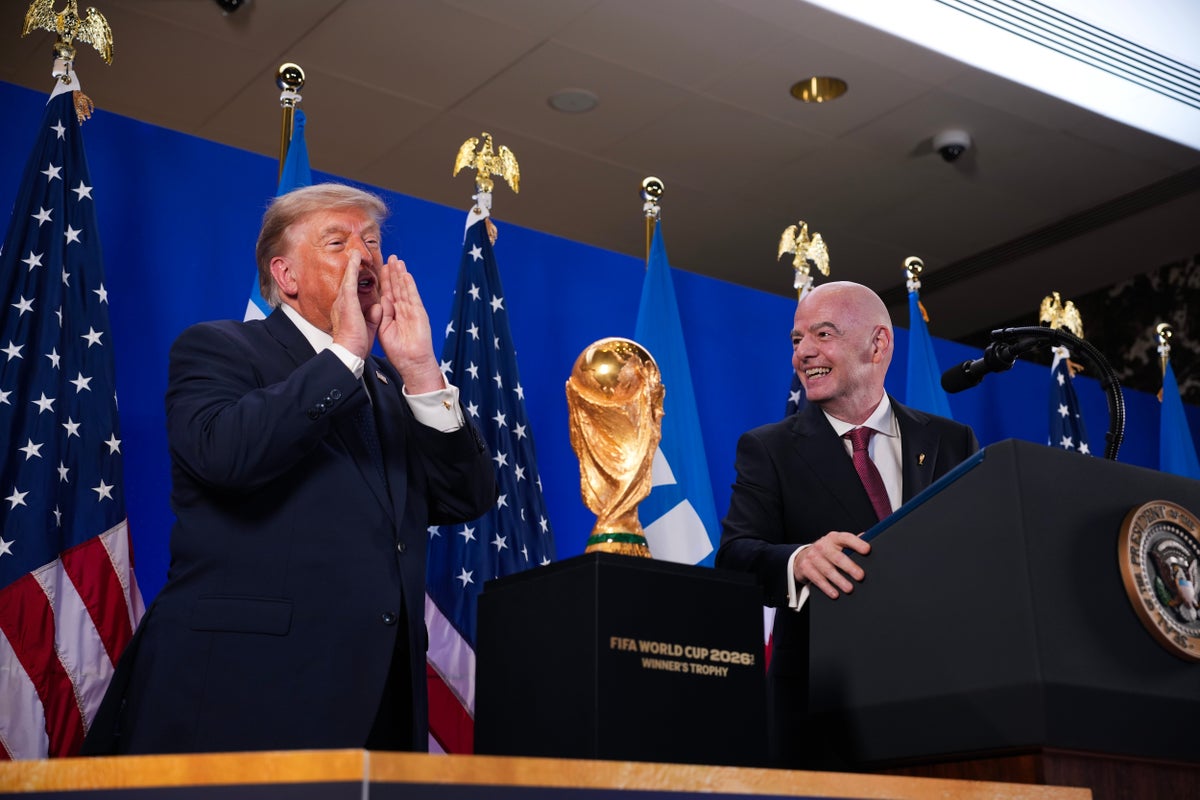
Geopolitical leverage and independent sports governance collided when world football’s governing body suspended a mandatory one-match disciplinary ban for United States striker Folarin Balogun. The intervention, triggered by direct lobbying from the executive branch of the tournament’s co-host nation, exposed a structural vulnerability in sports regulatory frameworks. By mapping the mechanics of this intervention, we can dissect the strategic alignment between the executive branch and world football's leadership, the regulatory mechanisms exploited to bypass standard appeals processes, and the long-term operational fallout for international sports governance.
The structural breakdown of this intervention reveals how political capital can distort established field-of-play protocols, establishing a dangerous blueprint for future multi-jurisdictional sporting events. For a deeper dive into similar topics, we recommend: this related article.
The Interlocking Mechanisms of Geopolitical Leverage
The reversal of Balogun's suspension was not an isolated disciplinary adjustment; it was the product of a highly coordinated, multi-tiered lobbying campaign executed by the host nation's government. To quantify the pressure applied to the governing body, the intervention must be broken down into three distinct operational vectors:
- Executive Direct Line: Direct telephonic communication between the head of state and the president of the sporting federation. This vector bypasses standard sporting infrastructure (such as national federations) and reframes a technical field-of-play dispute as a bilateral diplomatic issue.
- Task Force Deployment: Deploying specialized administrative units, including the executive director of the domestic task force and high-level cabinet officials, to execute a continuous, multi-day administrative press.
- Public Information Campaigns: Public statements from senior diplomatic figures designed to challenge the legitimacy of the officiating crew, shifting public narrative and creating an external imperative for institutional intervention.
This multi-tiered approach created a classic institutional bottleneck. The international governing body, highly dependent on host-nation cooperation for logistical, tax, and security infrastructure for an expanded 48-team tournament, faced an asymmetrical cost function. Resisting the intervention risked alienating the executive leadership of its most lucrative market, whereas compliance merely required exploiting ambiguities within its own legal apparatus. For additional details on this issue, extensive reporting is available on Bleacher Report.
Exploiting Regulatory Ambiguity: The Article 27 Loophole
Under standard field-of-play regulations, a straight red card triggers an automatic, non-appealable one-match suspension. This structural rigidity is designed to protect the finality of referee decisions and eliminate mid-tournament litigation. However, the legal teams engineered a bypass by shifting the battleground from standard appellate channels to the discretionary domain of the disciplinary committee.
The mechanism chosen was Article 27 of the disciplinary code. Rather than attempting to legally erase the on-field infraction—a move that would fundamentally violate the referee's authority—the legal strategy successfully sought a probationary suspension of the penalty. The ban was suspended for a 12-month period, contingent on the player avoiding a secondary identical infraction.
This maneuver revealed a massive flaw in the governance framework:
[On-Field Red Card Issued] ---> [Mandatory 1-Match Ban] ---> [Appeals Channel: BLOCKED]
                                       |
                                       v (Executive & Legal Intervention)
                        [Disciplinary Committee Discretion]
                                       |
                                       v (Article 27 Applied)
                        [12-Month Probationary Suspension] ---> [Immediate Eligibility]
The application of this probationary mechanism to a straight red card for a serious foul infraction is unprecedented in modern tournament history. The technical justification rested on procedural anomalies regarding how the Video Assistant Referee (VAR) reviewed the slow-motion footage of the ankle-contact foul. By arguing that slow-motion video artificially amplifies the perceived force of a contact point, the legal team created a sliver of technical doubt that the disciplinary committee used as cover to execute its politically expedient retreat.
Institutional Fallout and the Neutrality Crisis
While the immediate objective of the intervention was achieved—ensuring the host nation's primary attacking asset was eligible for the Round of 16 knockout match—the systemic costs have fallen entirely on the sporting regulators. The primary casualty of this episode is the principle of political neutrality, a core tenet of international sports governance.
The immediate institutional consequences are already materializing across three fronts:
- External Ethics Investigations: A formal referral has been lodged with international Olympic ethics investigators targeting the president of world football for a direct breach of political neutrality rules. Because international sports executives frequently hold overlapping memberships in bodies like the International Olympic Committee, domestic political compliance triggers international regulatory exposure.
- Asymmetrical Precedent: By altering disciplinary outcomes under political pressure, the governing body has compromised its defensive position against future interventions. Future host nations now possess a clear precedent to demand reciprocal adjustments, destroying the uniformity of the disciplinary code.
- Officiating Degradation: Publicly delegitimizing elite officials by citing unproven historic investigations or alleging systemic bias undermines the security and authority of the refereeing corps. This creates an environment where on-field officials must weigh the geopolitical consequences of making a standard disciplinary call against a host nation's player.
The irony of this operational compromise is highlighted by the ultimate competitive outcome. Despite securing Balogun's immediate eligibility through unprecedented executive leverage, the national team suffered a comprehensive 4-1 tactical dismantling by Belgium in the Round of 16. The intervention failed to yield competitive dividends, leaving the governing institution with all of the regulatory damage and none of the intended commercial or competitive upside.
Strategic Imperatives for International Sports Governance
To prevent the total erosion of regulatory autonomy in an era dominated by multi-nation mega-events, international sports federations must structurally decouple tournament logistics from field-of-play adjudication. Relying on vague executive discretion or arbitrary disciplinary code clauses like Article 27 leaves sports bodies vulnerable to state-level pressure.
The immediate strategic move requires a total overhaul of the disciplinary framework ahead of the next major tournament cycle. First, sports bodies must implement an absolute firewall around the disciplinary committee, mandating that any ex-parte communication from government officials regarding an active case triggers an automatic, permanent freeze of the file. Second, the automatic one-match ban for straight red cards must be rewritten to eliminate the possibility of probationary suspensions or deferrals during short-format tournament play. If the sports complex fails to close these structural loopholes, international tournaments will cease to be purely athletic contests, transforming instead into arenas where outcomes are negotiated via administrative leverage and executive overreach.