The morning air in Manhattan always smells faintly of roasted coffee beans, diesel exhaust, and cold cement. On December 4, 2024, that familiar rhythm fractured. Outside the sleek midtown Hilton, a quiet commotion erupted into a national tremor. Brian Thompson, the chief executive of UnitedHealthcare, stepped out onto the sidewalk, and in a matter of seconds, an ordinary morning dissolved into an enduring American nightmare.
The shooter did not linger. He vanished into the labyrinth of the city, leaving behind a shell casing, a bicycle, and a nation already holding its breath. For days, the city hummed with a tense, collective paranoia. Every hoodie pulled low over a brow, every stranger lingering near a subway turnstile, felt heavy with implication.
Then came the manhunt, spanning days and state lines, stretching from the asphalt canyons of New York to the quiet, wind-swept coast of Pennsylvania. When law enforcement finally cornered Luigi Mangione inside a McDonald's in Altoona, Pennsylvania, on December 9, the immediate panic subsided, only to be replaced by something far more complex. A nationwide reckoning.
To understand how a life, an executive's career, and a sprawling legal docket converge into a single court appearance, we have to look past the cold register of police blotters and legal filings. We have to look at the human architecture of what followed.
Consider what happens next: the silence of a courtroom.
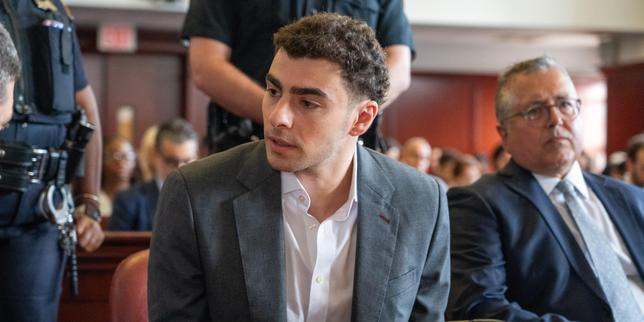
Mangione was hauled back to New York, the legal machinery grinding into gear with predictable, heavy momentum. Grand juries convened. Indictments were handed down. Prosecutors laid out charges that read like a masterclass in severity: second-degree murder, criminal possession of a weapon, terrorism. The word terrorism hung in the air, sharp and contested, transforming a targeted killing into an ideological flashpoint.
In the weeks that followed, the public watched through pixels and press conferences. Legal teams sparred over extraditions, mental evaluations, and procedural motions. Every document filed became public fodder, parsed by millions who saw more in the case than a simple murder trial. They saw a symbol.
That is the heavy burden of high-profile litigation. It rarely belongs solely to the accused or the victims anymore. It becomes a mirror.
By early 2026, the timeline of legal maneuvering reached a precipice. The defense poured over forensic evidence, digital footprints, and the manifesto fragments attributed to the suspect. The prosecution built its wall of circumstantial and physical certainty, pointing to fingerprints, DNA, and the chilling coldness of the act itself.
Guilt.
When the news broke of a guilty plea, it did not arrive with the dramatic fanfare of a gavel slamming down in a crowded, shouting theater. It landed with a dull thud. A quiet admission in a sterile room. The legal chapter was closing, yet the cultural resonance remained wide open, festering in the spaces where ordinary people navigate the labyrinth of modern American systems.
We talk about healthcare in spreadsheets. We talk about deductibles, prior authorizations, denials of coverage, and out-of-pocket maximums. We treat them as administrative inconveniences, the bureaucratic friction of modern existence. But ask anyone who has sat by a bedside, holding the hand of a loved one whose life-saving treatment was delayed by a fax machine three states away, and you will hear a different language. You will hear grief. You will hear rage.
This is not to excuse an act of violence. Violence is a full stop where conversation dies. But to pretend that the violence occurred in a vacuum, completely divorced from the quiet despair of millions, is an exercise in willful blindness.
Mangione became an unintended symbol for a profound, simmering resentment. In online forums and coffee shop whispers, a disturbing counter-narrative took root. People who would never dream of picking up a weapon found themselves nodding in grim understanding at the sheer frustration that birthed the tragedy. That dissonance is the true American story of these past two years.
The legal system deals in clean binaries. Guilty or not guilty. Life imprisonment or freedom. Paragraphs of statute and pages of precedent. But justice and healing live in the messy, unquantifiable spaces between those lines.
As the prison doors close and the media circus drifts toward the next inevitable spectacle, the core questions remain unanswered. What happens when a population loses faith in the institutions designed to protect them? How many administrative denials does it take before a society forgets how to talk to itself?
The silence left in the wake of the gunfire is heavy. It echoes down sterile hospital corridors and across marble courtroom floors, a permanent reminder that systems built only for efficiency will eventually break under the weight of human suffering.