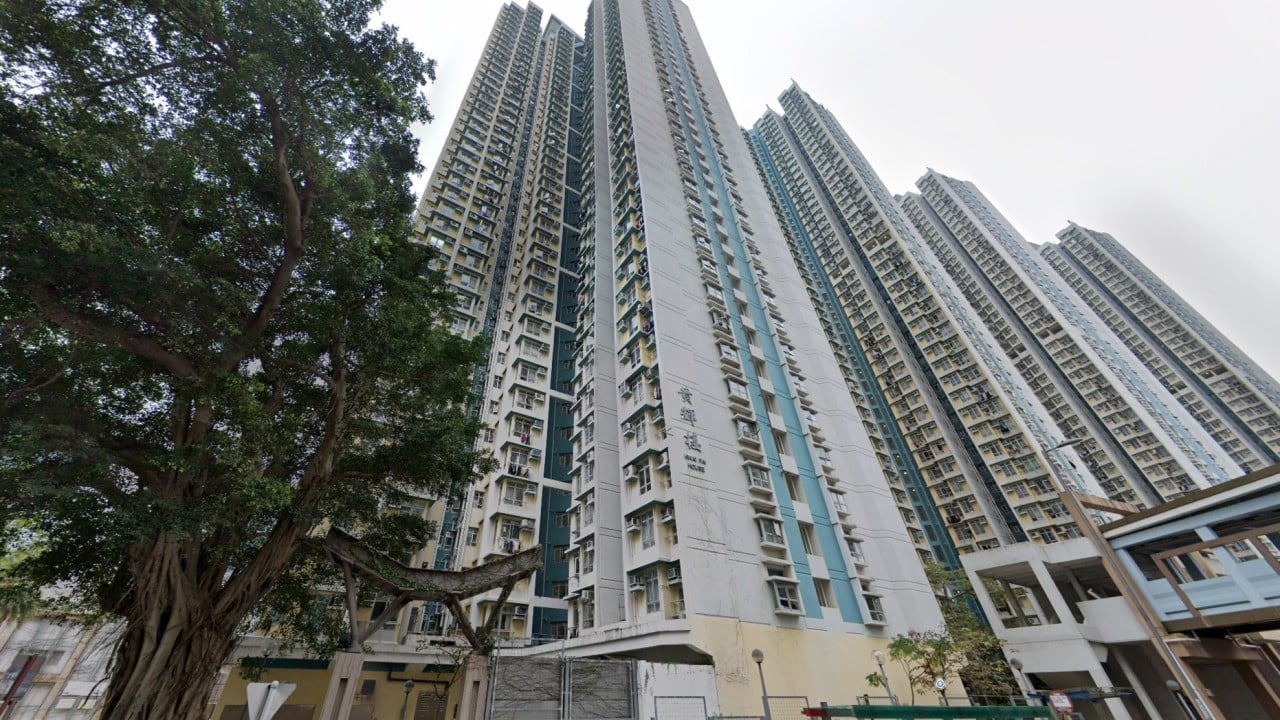
The reported theft of HK$810,000 in physical currency and gold jewellery from a single Hong Kong residential flat represents a textbook failure in personal asset custody and domestic perimeter defense. Standard crime reporting treats a burglary of this magnitude as an isolated, unfortunate event, focusing exclusively on the gross valuation of the stolen goods and the procedural initiation of a police investigation. That surface-level reporting misses the underlying structural mechanics that make high-density urban residences prime targets for precision property crime. When an offender extracts nearly one million Hong Kong dollars in untraceable, liquid assets from a private residence, the incident is rarely a random act of opportunism; it is the predictable outcome of predictable vulnerabilities in physical security, asset storage habits, and urban architectural design.
To understand how a residential burglary reaches an HK$810,000 valuation without triggering immediate interception, one must deconstruct the event into its operational components. In security risk management, loss severity is governed by the intersection of three variables: target attractiveness, perimeter permeability, and internal friction. A breakdown in all three areas is required for a perpetrator to locate, extract, and transport high-density wealth from a multi-unit residential building.
The Economics of Liquid Target Selection
Perpetrators targeting high-value residential units operate according to rational choice theory, weighing the expected financial yield against the probability of apprehension and the friction of liquidation. The specific composition of the stolen property in this case—physical cash paired with gold jewellery—demonstrates an acute optimization for immediate liquidity and zero traceability.
Modern banking systems, serial-numbered luxury watches, and registered electronics carry high forensic friction. Electronic devices can be remotely bricked or geolocated via wireless networks. High-end horology pieces carry engraved serial numbers logged in international databases, restricting the thief to black-market fences who pay a steep discount—often 70 to 80 percent below retail value—to absorb the legal risk of holding hot merchandise.
Physical banknotes and gold bullion or jewellery bypass these secondary-market bottlenecks entirely. Cash requires zero conversion; it possesses a 100 percent liquidity ratio upon extraction. Gold, particularly in the form of traditional jewellery common in Hong Kong households, functions as a bearer asset. Once melted down, gold loses all provenance, allowing it to re-enter legitimate bullion supply chains at near-spot market prices.
The concentration of HK$810,000 in these two asset classes points to a critical behavioral vulnerability among urban residents: the private hoarding of unbanked liquidity. Cultural preferences for tangible wealth storage, combined with distrust of institutional intermediaries or the desire to keep wedding and ceremonial gold accessible, create localized pockets of extreme value inside standard residential floor plans. From a risk-assessment standpoint, keeping HK$810,000 in liquid bearer assets inside a private flat creates an asymmetric risk profile. Financial institutions distribute security costs across thousands of depositors using vaulting, armed transport, and institutional insurance. An individual homeowner attempting to self-custody the same value assumes 100 percent of the downside risk while relying on residential-grade hardware that was never engineered to withstand a determined adversary.
Structural Mechanics of Urban Perimeter Failure
Hong Kong’s residential architecture presents a paradox of perceived security. High-rise apartment blocks and multi-unit residential buildings typically feature ground-floor security guards, closed-circuit television (CCTV) networks, and keycard-controlled lobby doors. Residents frequently mistake these visible deterrents for comprehensive security, leading to complacency at the individual unit level.
In practice, high-density residential structures suffer from chronic perimeter permeability driven by three operational flaws:
- Tailgating and Access Control Dilution: In buildings housing hundreds of residents, delivery couriers, domestic workers, and maintenance personnel create constant foot traffic. Security personnel stationed at lobby desks cannot realistically verify the authorization of every individual entering during peak hours. Once an intruder bypasses the ground-floor threshold, the vertical circulation core—elevators and fire escape stairwells—becomes an unmonitored highway.
- External Envelope Vulnerabilities: Unlike suburban detached homes, Hong Kong flats rely heavily on vertical separation for security. Criminals exploit this assumption by using exterior scaffolding erected for building maintenance, adjacent rooftops, or external drainage pipes to access upper-floor windows and balconies. Units located on lower floors, podium levels, or adjacent to temporary bamboo scaffolding face exponentially higher breach probabilities.
- Door and Lock Deficiencies: Standard residential doors in older and mid-tier Hong Kong developments frequently utilize single-cylinder mortise locks paired with hollow-core or thin timber frames. Against a pry bar or basic lock-bumping techniques, these assemblies fail in under thirty seconds. Without secondary mechanical reinforcement, such as reinforced strike plates, deadbolts with hardened steel inserts, or anti-lift hinges, the apartment door functions merely as a visual barrier rather than a physical delay mechanism.
The Time-to-Penetration vs. Time-to-Response Deficit
Every physical security system is governed by a fundamental equation: the time required for an intruder to breach the perimeter and extract the target must exceed the time required for detection and law enforcement response. When a burglary nets HK$810,000, the perpetrator successfully inverted this ratio, achieving a low time-to-extraction against an effectively infinite time-to-response.
Detection failure occurs first. If a flat lacks active intrusion detection—specifically magnetic reed switches on entry points and passive infrared (PIR) motion sensors inside primary living areas—the burglary remains invisible until the resident returns home. This creates an unmonitored window that can span hours or days. During an unmonitored window, a burglar faces zero time pressure, allowing for a methodical search of the premises.
Even when intruders operate under moderate time constraints, predictable concealment habits drastically reduce search time. Law enforcement data consistently shows that burglars check master bedrooms first, focusing immediately on wardrobes, dresser drawers, under-mattress spaces, and bathroom vanity cabinets. In Hong Kong flats, where compact floor plans restrict available storage volume, the number of plausible hiding spots is severely limited. An experienced thief can sweep a 600-square-foot apartment in less than seven minutes.
If the resident stores cash and gold inside an unanchored domestic safe—or worse, inside standard cabinetry—the safe becomes a portability aid rather than a deterrent. Small residential safes weighing under 50 kilograms can be carried out of the flat intact inside a standard duffel bag or rolling suitcase, allowing the perpetrator to force the locking mechanism open at a secure off-site location.
Forensic Constraints in High-Density Environments
Once the perpetrator exits the building with HK$810,000 in cash and gold, the investigative burden shifts to the Hong Kong Police Force. While Hong Kong maintains one of the highest closed-circuit television densities and clearance rates among global financial centers, residential burglaries involving untraceable bearer assets present severe evidentiary bottlenecks.
Investigators rely on three primary vectors to reconstruct the crime and identify suspects:
- Digital Trail Reconstruction: Police canvass municipal CCTV cameras, private building security feeds, and surrounding commercial storefronts to track the suspect's ingress and egress routes. However, perpetrators mitigate this vector through basic counter-surveillance: wearing surgical masks (which remain culturally normalized in East Asia), hats, and non-descript clothing, while switching transit modes—moving from foot to taxi to MTR—to break visual continuity.
- Physical Forensics: Crime scene examiners sweep entry points and interior surfaces for latent fingerprints and touch DNA. Experienced offenders eliminate this vector entirely by wearing nitrile or latex gloves throughout the operation and avoiding contact with porous surfaces.
- Financial and Pawnshop Monitoring: Police circulate descriptions of stolen jewellery to licensed pawnshops and gold dealers across the territory. This mechanism relies on the suspect attempting to liquidate identifiable pieces intact. If the thief uses an illicit smelter or transports the gold across the border into mainland China via informal channels, the physical evidence is permanently destroyed within hours of the theft.
The reliance on post-incident investigation highlights the core limitation of reactive policing: law enforcement can punish the offender after the fact, but the probability of recovering unserialized cash and melted gold drops precipitously after the first 24 hours.
Capital Allocation Framework for Residential Security
Preventing a catastrophic asset loss requires treating personal security as a capital allocation problem rather than a one-time hardware purchase. Homeowners holding high-value liquid assets inside a residence must align their defensive expenditure with the replacement cost of the exposed capital. Securing HK$810,000 with a HK$500 lock represents a severe mispricing of risk.
An effective defensive architecture operates across three concentric rings:
Ring 1: Asset Offloading (Eliminating the Target)
The highest-return security intervention is removing the target from the residential environment entirely. Physical cash exceeding immediate monthly liquidity needs belongs in interest-bearing institutional accounts. Ceremonial or investment-grade gold should be stored in bank safe deposit boxes or specialized private vaulting facilities equipped with UL-rated Class 3 vaults, biometric access controls, and 24-hour armed response. Moving HK$810,000 out of a flat reduces the residential burglary loss exposure to near zero without spending a single dollar on home renovations.
Ring 2: Perimeter Hardening (Maximizing Delay)
For assets that must remain on-site, the objective is to increase the physical time required to breach the flat beyond the threshold an opportunistic or semi-professional burglar will tolerate.
- Replace hollow-core entry doors with solid-core timber or steel-reinforced doors fitted with Grade 1 deadbolts (certified under ANSI/BHMA A156.36 standards) featuring a minimum one-inch throw bolt.
- Install steel reinforcement plates across the door jamb using three-inch screws that anchor directly into the structural concrete or masonry wall, preventing kick-in failures.
- Fit laminated security film (minimum 8-mil thickness) to all accessible exterior glass windows and balcony doors, paired with key-operated window locks. Security film holds shattered glass within the frame, forcing an intruder to spend several noisy minutes hacking through the membrane.
Ring 3: Active Detection and Anchored Containment
Physical barriers only delay an intruder; they must be paired with immediate detection to trigger a response before the delay expires.
- Deploy a cellular-backed alarm system with battery backup. Hardwired telephone lines or standard Wi-Fi routers can be disabled by cutting external utility cables or using portable signal jammers. Dual-path cellular alarms transmit tamper alerts immediately upon perimeter breach.
- Install interior cameras configured to push real-time encrypted video clips to cloud servers upon motion detection, ensuring footage survives even if the intruder destroys the local recording hardware.
- Any on-site safe must carry a verified burglary rating (such as EN 1143-1 Grade I or higher) rather than a simple fire-resistance rating. Crucially, the safe must be bolted directly into the structural concrete floor slab using heavy-duty expansion anchors, eliminating the possibility of whole-unit removal.
Limitations of Residential Defense Strategies
No domestic security architecture is impenetrable. High-end physical hardening introduces friction for legitimate residents, increasing exit times during fire emergencies if double-cylinder deadbolts are improperly deployed. Furthermore, aggressive visible security measures—such as heavy exterior window grilles or overt commercial-grade cameras—can inadvertently signal to observant scouts that the unit contains disproportionate wealth, increasing target selection probability.
Insurance policies also carry strict operational caveats. Standard Hong Kong home contents insurance policies impose low sub-limits on cash and unspecified valuables—frequently capping cash payouts at HK$2,000 to HK$5,000 and unscheduled jewellery at HK$10,000 to HK$20,000 per item. Without scheduled personal property endorsements backed by formal appraisals and proof of forced entry, a homeowner suffering an HK$810,000 loss will recover less than five percent of their capital through standard coverage.
Strategic Mandate for High-Liquidity Households
Residents holding significant physical currency or precious metals in urban apartments must immediately audit their asset-to-security ratio. If the liquid value stored inside the flat exceeds HK$50,000, execute an immediate capital transfer: relocate all non-essential cash into insured banking institutions and transfer gold jewellery into commercial safe deposit vaults. For the residual valuables retained at home, reallocate capital away from passive deterrents and invest exclusively in three high-friction upgrades: a structural concrete-anchored EN 1143-1 rated safe, dual-path cellular intrusion detection, and a scheduled valuable articles insurance rider tailored to the exact appraised replacement value of the remaining inventory.


