The Spatial Economics of Compute Infrastructure Siting
Modern digital infrastructure expansion operates on a strict optimization function: minimize latency, maximize power proximity, and acquire land at the lowest possible cost per square meter. When these parameters intersect with culturally dense or protected geographic zones, friction is inevitable. The proposed placement of a high-density data center adjacent to a Buddhist monastery in Texas is not an isolated land-use dispute. It is a textbook case study in negative spatial externalities, municipal zoning inertia, and the hidden costs of accelerated digital growth.
To understand why this specific conflict triggered intense public resistance, one must look past the emotional rhetoric and examine the operational realities of hyperscale compute facilities. These installations require immense, continuous volumes of electrical power and thermal dissipation. They do not function as silent office buildings. They operate as heavy industrial nodes disguised as quiet concrete blocks.
Municipal zoning frameworks often fail to account for the unique operational footprint of modern compute infrastructure. Traditional zoning laws categorize land use into residential, commercial, and industrial buckets. A server facility technically fits into light industrial or commercial designations, yet its environmental and social outputs bear little resemblance to a warehouse or a light manufacturing plant. This regulatory mismatch creates a structural loophole where high-impact industrial operations can be approved under antiquated zoning codes that never anticipated the acoustic and thermal demands of artificial intelligence clusters and cloud storage arrays.
The Operational Matrix of Hyperscale Facilities
Evaluating the friction between industrial digital infrastructure and peaceful, contemplative sanctuaries requires deconstructing the facility into its primary operational vectors. Each vector generates a distinct set of externalities that directly impacts the surrounding micro-environment.
The Acoustic Vector
Servers generate intense heat, which necessitates continuous active cooling. This cooling process relies on arrays of high-capacity industrial fans and massive chiller units. The resulting sound profile is not a localized hum. It is a low-frequency, continuous broadband noise that travels significant distances, particularly in flat rural or semi-rural terrain where natural sound barriers are absent.
For a monastery, where acoustic sanctity is a foundational requirement for contemplative practice, a permanent low-frequency noise floor alters the baseline environment. Decibel measurements alone fail to capture the qualitative disruption. Human and meditative focus is acutely sensitive to mechanical rhythms and persistent tonal frequencies. Even if sound levels comply with municipal noise ordinances, the character of the noise transforms the experiential quality of the space.
The Thermal and Hydrological Vector
Cooling large-scale server racks requires millions of gallons of water daily, either through direct evaporative cooling towers or closed-loop systems that still demand substantial municipal or groundwater resources. In regions prone to water stress, such as parts of Texas, industrial water consumption introduces competition for local aquifers.
Furthermore, evaporative cooling towers generate a visible plume of water vapor and, in certain configurations, can create micro-climatic humidity shifts and particulate drift depending on water treatment chemicals. The hydrological draw directly affects local water tables, creating quantifiable economic and environmental pressures on neighboring landowners and institutions that rely on stable, clean water supplies.
The Electrical Grid Vector
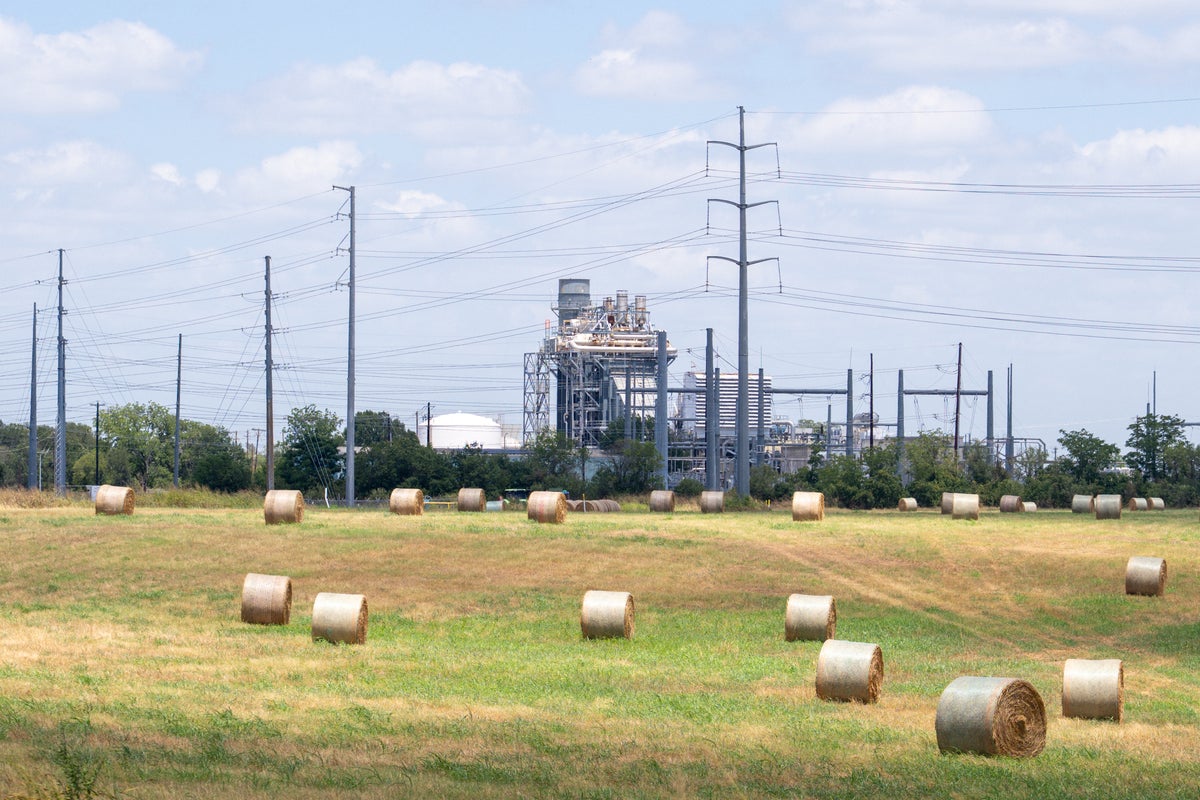
A modern data center draws electrical power equivalent to a small city. This load requires dedicated substation construction, high-voltage transmission line routing, and continuous grid balancing. Siting a facility near a rural or semi-rural sanctuary inevitably brings heavy electrical infrastructure into view and alters the local electromagnetic and visual landscape.
The transmission infrastructure required to feed these facilities introduces visual blight and potential electromagnetic interference concerns. More critically, the localized strain on the electrical grid can drive up utility costs for surrounding residential and institutional ratepayers, transferring the infrastructure cost burden onto neighbors who derive no economic benefit from the digital facility.
Municipal Failure Modes in Siting Approvals
The friction in Texas stems from a predictable failure in the municipal approval pipeline. Local economic development boards frequently prioritize the short-term tax revenue and construction-phase capital injection of a data center over long-term land-use harmony. This dynamic creates specific systemic vulnerabilities.
First, notice and transparency protocols are often inadequate. Hyperscale developers typically operate through shell companies or anonymous LLCs during the land acquisition and initial zoning variance phases. This practice obscures the true nature and scale of the project from the public until permits are largely secured. By the time local residents and institutional stakeholders become aware of the installation, the bureaucratic momentum heavily favors the developer.
Second, cumulative impact assessments are rarely mandated. Municipalities evaluate data center applications in isolation, measuring the impact of a single facility against current grid capacity and traffic norms. They fail to model the cumulative effect of multiple facilities clustering in the same sub-station catchment area. As power demand surges across the region, the infrastructure approaches critical failure thresholds, leading to emergency grid management measures that impact all local consumers.
Third, the asymmetric distribution of costs and benefits defines the conflict. The developer and the municipality capture the financial upside through capital investment, sales tax rebates, and long-term property tax revenue. The immediate neighbors and institutional inhabitants absorb the costs: acoustic degradation, diminished property values, visual disruption, and resource competition. Without a mechanism to internalize these negative externalities, public resistance is the only remaining feedback loop available to affected communities.
Mitigation Strategies and Alternative Frameworks
Resolving the structural tension between digital infrastructure expansion and sensitive land uses requires moving beyond binary fights between preservation and development. Standard compromise models rarely work because the operational footprint of a data center cannot be entirely neutralized. However, targeted engineering and policy interventions can bound the externalities.
Spatial Buffering and Topological Isolation
The most reliable mitigation against acoustic and visual intrusion is distance, augmented by topological design. Zoning codes should mandate strict minimum setback requirements specifically tailored for high-density compute facilities, scaling exponentially based on the sensitivity of adjacent zones.
Natural topography, such as rolling terrain or dense, mature timber stands, should be legally protected as permanent acoustic buffers. Where natural barriers do not exist, engineered sound-attenuation walls and earth berms must be integrated into the primary site plan before operational permits are issued.
Closed-Loop Thermal Architecture
To eliminate the heavy water consumption associated with open-loop evaporative cooling, regulatory bodies should mandate dry cooling or advanced closed-loop liquid-to-liquid cooling architectures in water-scarce regions. While dry cooling incurs a minor energy penalty—reducing overall system efficiency slightly due to higher operating temperatures—it internalizes the environmental cost and removes the threat to local aquifers.
Developers must be required to prove zero net hydrological impact on adjacent parcels, shifting the burden of resource conservation onto the entity profiting from the high-density compute operations.
Mandatory Benefit-Sharing and Impact Fees
When negative externalities cannot be fully eliminated, economic mechanisms must compensate the impacted parties. Impact fees levied on industrial developments should not merely flow into general municipal coffers. A direct percentage of these fees must be earmarked for local infrastructure hardening or mitigation projects chosen by the affected community, whether that involves funding advanced acoustic insulation for neighboring structures or acquiring surrounding land to create permanent conservation buffers.
Structural Trajectory of Compute Siting Conflicts
The intersection of digital infrastructure and traditional land use will only intensify as computing demand scales upward. The rapid expansion of machine learning training clusters and decentralized cloud architecture guarantees that developers will continue probing for cheap land with accessible power transmission lines, regardless of what sits next door.
Municipalities that fail to update their zoning taxonomies to account for the unique industrial weight of data centers will continue to face sudden, highly polarized public backlashes. Resolving these conflicts requires shifting from reactive dispute management to proactive spatial planning. Until industrial computing is treated with the same rigorous environmental and social impact scrutiny as heavy manufacturing or resource extraction, communities and cultural institutions will remain vulnerable to the unmitigated externalities of the digital economy.