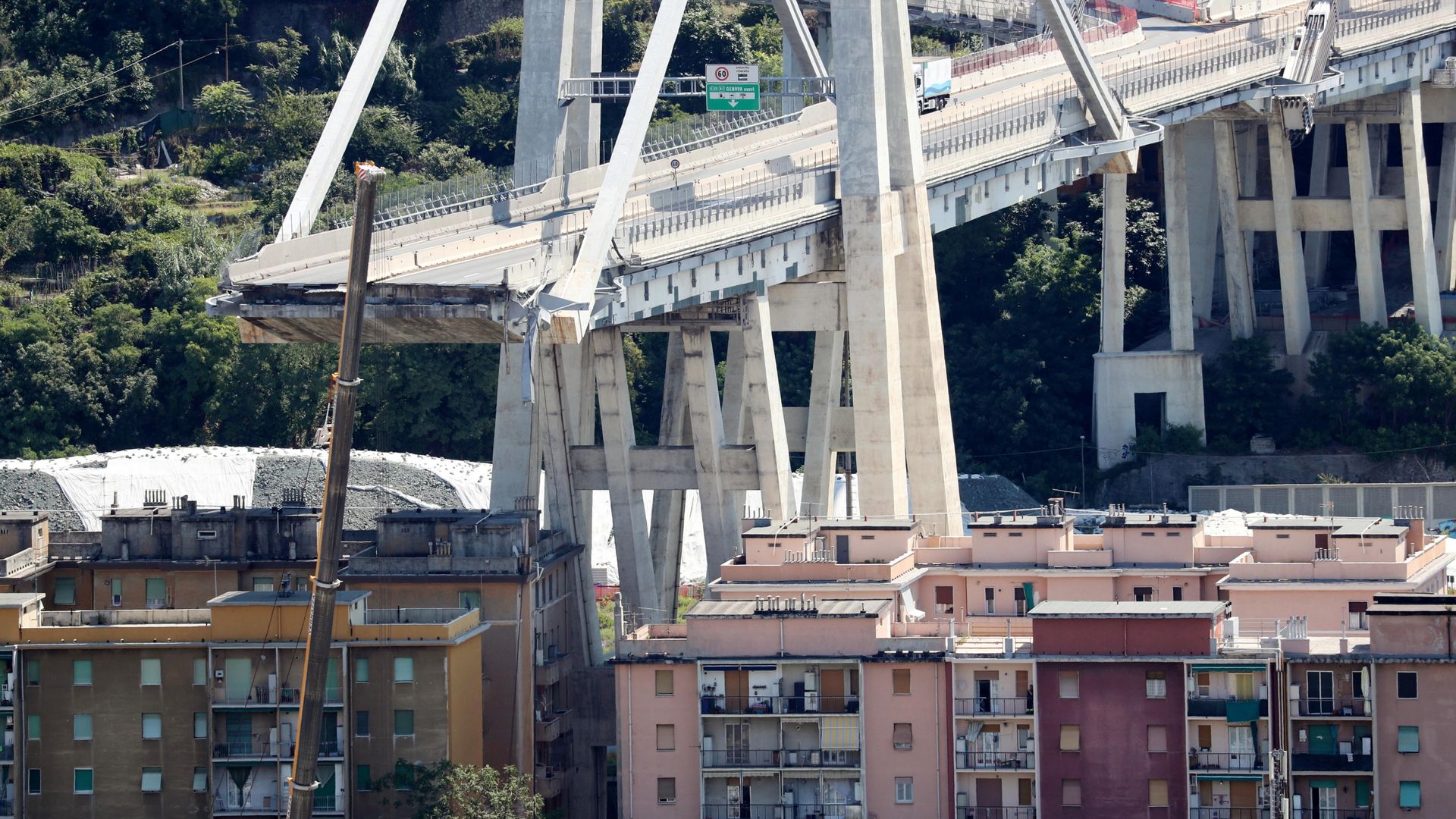
The sentencing of Giovanni Castellucci, the former chief executive of Italy’s largest toll-road operator, Autostrade per l’Italia (ASPI), to 12 years in prison represents a watershed moment in corporate liability, infrastructure asset management, and public-private partnership risk-modeling. On July 16, 2026, a Genoa court convicted Castellucci and 31 other co-defendants—including executives from engineering subsidiary SPEA and officials from the Ministry of Infrastructure and Transport—for negligent disaster and multiple counts of manslaughter. The 2018 collapse of the Morandi Bridge, which claimed 43 lives, was not an unpredictable act of God; it was the direct, quantifiable outcome of a systemic failure in risk management, structural monitoring, and regulatory oversight.
This analysis deconstructs the structural, operational, and financial mechanisms that culminated in the disaster. By dissecting the failure points across the three key dimensions of concessionaire operations, engineering oversight, and state regulation, we can extract the critical risk-management frameworks required to prevent similar failures in global civil infrastructure. You might also find this similar article interesting: The Imran Khan Protest Myth: Why Street Mobilization is Pakistan's Biggest Political Illusion.
The Tripartite Failure Model
The collapse of the Morandi Bridge exposes a fundamental breakdown across three distinct organizational layers. Rather than a singular point of failure, the disaster occurred at the intersection of operational neglect, compromised auditing, and passive regulation.
┌────────────────────────────────────────────────────────┐
│               Regulatory Oversight (MIT)               │
│               - Passive enforcement                    │
│               - Reliance on obsolete circulars         │
└──────────────────────────┬─────────────────────────────┘
                           ▼
┌────────────────────────────────────────────────────────┐
│          Technical Auditing & Monitoring (SPEA)        │
│          - Compromised structural assessments          │
│          - Postponed structural remediation            │
└──────────────────────────┬─────────────────────────────┘
                           ▼
┌────────────────────────────────────────────────────────┐
│          Operational Concessionaire (ASPI)             │
│          - Maximized short-term cash flows             │
│          - Deferral of capital expenditure (CapEx)     │
└────────────────────────────────────────────────────────┘
1. The Concessionaire Layer (ASPI)
As the private operator managing the public toll-road network under a long-term concession, ASPI's primary corporate objective diverged from public safety. The prosecution successfully argued that ASPI prioritized short-term financial performance and shareholder distribution over capital expenditure for structural remediation. By deferring intensive maintenance programs, the concessionaire artificially boosted EBITDA margins and cash-flow generation, directly transferring risk from the balance sheet to physical infrastructure. As discussed in detailed reports by TIME, the effects are notable.
2. The Auditing and Engineering Layer (SPEA)
Under standard asset management protocols, independent third-party audits serve as the primary defensive barrier against structural deterioration. In this case, however, SPEA operated as an in-house engineering subsidiary of the parent group, Atlantia, which also controlled ASPI. This structural conflict of interest compromised the objectivity of the inspections. Structural assessments were downplayed, and critical warning signs regarding the corrosion of concrete-encased stay cables were omitted from official reports, blinding stakeholders to the rate of structural decay.
3. The Regulatory Layer (Ministry of Infrastructure and Transport)
The state regulator failed to execute independent verification, relying instead on self-reported data provided by the concessionaire and its subsidiary. The court found that ministry officials relied on obsolete regulatory guidelines—specifically a 1967 Ministry of Public Works circular—to govern monitoring frequencies, failing to mandate modern, non-destructive testing methodologies capable of assessing the interior condition of concrete-sheathed cables.
The Mechanics of Structural Deterioration
To understand why the Morandi Bridge was highly vulnerable, one must analyze its unique structural typology and the specific mechanics of its degradation. Designed by engineer Riccardo Morandi and completed in 1967, the bridge utilized a rare design: concrete-encased prestressed stay cables.
Morandi's engineering thesis was that encasing high-strength steel tendons in prestressed concrete would protect them from atmospheric corrosion and weathering, typical of the marine environment of Genoa. The design carried a fatal vulnerability: the steel cables were inaccessible for direct visual inspection.
┌──────────────────────────────────────────────────────────────┐
│                  Morandi Stay Cable Profile                  │
├──────────────────────────────────────────────────────────────┤
│  [Prestressed Concrete Sheath]                               │
│     ┌──────────────────────────────────────────────────┐     │
│     │  [Void/Carbonated Grout Layer]                   │     │
│     │     ┌──────────────────────────────────────┐     │     │
│     │     │  == High-Strength Steel Tendons ==   │     │     │
│     │     │  (Subject to Chloride-Induced Rust)  │     │     │
│     │     └──────────────────────────────────────┘     │     │
│     └──────────────────────────────────────────────────┘     │
└──────────────────────────────────────────────────────────────┘
The deterioration path followed a predictable chemical and physical trajectory:
- Concrete Carbonation: Over five decades, atmospheric carbon dioxide penetrated the outer concrete sheath, reacting with calcium hydroxide to lower the concrete's pH. This destroyed the alkaline passive layer that naturally protects steel from rusting.
- Chloride Penetration: The bridge's proximity to the sea, combined with industrial pollution and winter de-icing salts, introduced chloride ions. These ions migrated through micro-cracks in the concrete, accelerating localized pitting corrosion on the internal steel tendons.
- Grouting Deficiencies: During construction, the injection of grout into the protective sheath was incomplete, leaving internal voids. Moisture and oxygen accumulated within these voids, turning them into corrosion chambers.
- Tension Redistribution Failure: On August 14, 2018, during a heavy storm, the corroded steel tendons inside Stay Cable No. 9 suffered sudden tensile failure. Because the design possessed low structural redundancy, the load could not be redistributed to adjacent structural elements, causing the immediate collapse of the associated pylon and a 200-meter section of the deck.
Evidence presented in court demonstrated that this degradation mechanism was not an unknown variable. In 1993, structural remediation was carried out on two of the bridge’s three pylons (Pylons 10 and 11) to address the exact same structural decay. Despite identifying severe corrosion in those pylons, the concessionaire failed to perform equivalent repairs on Pylon 9. For 25 years, the operational team ignored the structural reality that identical physical structures, subjected to identical environmental stressors, would experience identical failure modes.
The Financial-Operational Conflict
The underlying driver of the Morandi Bridge collapse was a misaligned incentive structure within the privatization model. The financial performance of a toll-road concession is governed by a simple relationship:
$$\text{Net Profit} = \text{Toll Revenue} - (\text{Operating Expenses} + \text{Maintenance Capital Expenditure} + \text{Financing Costs})$$
To maximize Net Profit and subsequent dividend distributions, the concessionaire had a strong incentive to minimize both Operating Expenses (OpEx) and Maintenance Capital Expenditure (CapEx). Under the regulatory regime established in Italy during the privatization wave of the late 1990s, tariff increases were decoupled from strict, audited performance metrics. This structure allowed the operator to capture high margins without being legally forced to reinvest a fixed percentage of revenues into structural preservation.
The following table contrasts the strategic profiles of a speculative concessionaire focused on short-term optimization versus a resilient asset manager focused on long-term sustainability:
| Operational Metric | Speculative Operator Profile (ASPI Historic) | Resilient Asset Manager Profile |
|---|---|---|
| Maintenance CapEx Allocation | Minimized to meet basic compliance; back-loaded to future years. | Risk-based; prioritized by predictive decay curves and structural health index. |
| Engineering Audits | Internalized or captured via subsidiaries to control reporting narratives. | Fully independent, third-party audited with open data access for regulators. |
| Risk Assessment Model | Qualitative, compliant-focused, relying on outdated circulars. | Quantitative Structural Health Monitoring (SHM) utilizing real-time sensor arrays. |
| Asset Lifecycle Management | Run-to-failure or delayed intervention to maximize immediate dividend payouts. | Preventive and proactive rehabilitation to maintain baseline structural integrity. |
This misalignment was exacerbated by the lack of clear financial penalties for structural neglect. The regulatory framework treated maintenance delays as administrative infractions rather than systemic safety risks, allowing the operator to absorb minor fines as a cost of doing business while maintaining high dividend payouts.
The Legal and Precedent-Setting Implications
The conviction of Castellucci and senior executives from ASPI, SPEA, and the Ministry of Transport sets a significant legal precedent for corporate governance and infrastructure oversight globally.
First, the court pierced the veil of corporate delegation. The defense argued that executive leadership cannot be held criminally liable for localized engineering failures and must rely on the expertise of technical departments. The court rejected this argument, establishing that when systemic cost-cutting measures directly restrict the resources available for maintenance, executive leadership bears direct responsibility for the resulting physical failures.
Second, the ruling establishes that compliance with legacy regulations does not shield an operator from liability. The defense's reliance on the 1967 Ministry circular was deemed insufficient. The court ruled that operators must employ the state-of-the-art monitoring tools available at the time of operation, not merely those required at the time of the asset's construction or concession signing. This shifts the legal standard from passive regulatory compliance to active risk mitigation.
Third, the political and corporate fallout resulted in a structural realignment of the Italian toll-road model. The Benetton family, which controlled Atlantia and ASPI, was forced to relinquish its controlling stake, returning the concessionaire to state-backed control under Cassa Depositi e Prestiti (CDP). This demonstrates that systemic infrastructure neglect can carry terminal consequences for corporate entities, resulting in the forced nationalization of assets.
Operational Imperatives for Infrastructure Operators
The technical and organizational failures that led to the Genoa disaster dictate a major shift in how major civil infrastructure assets are managed, audited, and regulated. Operators must transition from reactive, compliance-driven paradigms to quantitative, risk-based operational models.
Mandate Structural and Operational Separation of Audits
To eliminate the conflict of interest that compromised SPEA’s oversight, infrastructure concessions must legally separate engineering auditors from the operating company. Audit firms must be appointed directly by the regulatory authority and compensated via an independent trust fund funded by a percentage of toll revenues, rather than being hired and paid directly by the concessionaire.
Implement Quantitative Structural Health Monitoring (SHM)
Visual inspection and reliance on historical records are insufficient to assess complex structural elements. Operators must deploy continuous, non-destructive monitoring technologies, including:
- Acoustic Emission Sensors: Installed along prestressed concrete elements to detect high-frequency stress waves generated by the micro-cracking of concrete or the snapping of internal steel wire strands.
- Digital Twin Modeling: Integrating real-time sensor data with finite element analysis to continuously assess load capacity, stress distribution, and deterioration acceleration under varying thermal and mechanical loads.
- Ground-Penetrating Radar (GPR) and Radiography: Periodic high-resolution imaging to identify voids, moisture intrusion, and corrosion in encased structural components before visible exterior cracks appear.
Establish a Mandatory Capital Reserve for Maintenance
Concession contracts must incorporate a legally binding, ring-fenced maintenance reserve account. A fixed percentage of gross revenues must be deposited into this account monthly. These funds can only be utilized for structural maintenance and capital rehabilitation. They must be senior to any dividend distributions, ensuring that cash cannot be extracted from the concession at the expense of structural integrity.
Redefine the Regulatory Oversight Framework
Regulators must transition from reviewing paperwork to active, independent validation. This requires the establishment of a dedicated civil engineering regulatory body staffed by technical experts who perform independent safety audits and have the authority to unilaterally reduce speed limits, restrict axle loads, or shut down assets that display anomalous structural behavior. Compliance must be measured against dynamic, risk-based performance indicators rather than static, decades-old administrative guidelines.