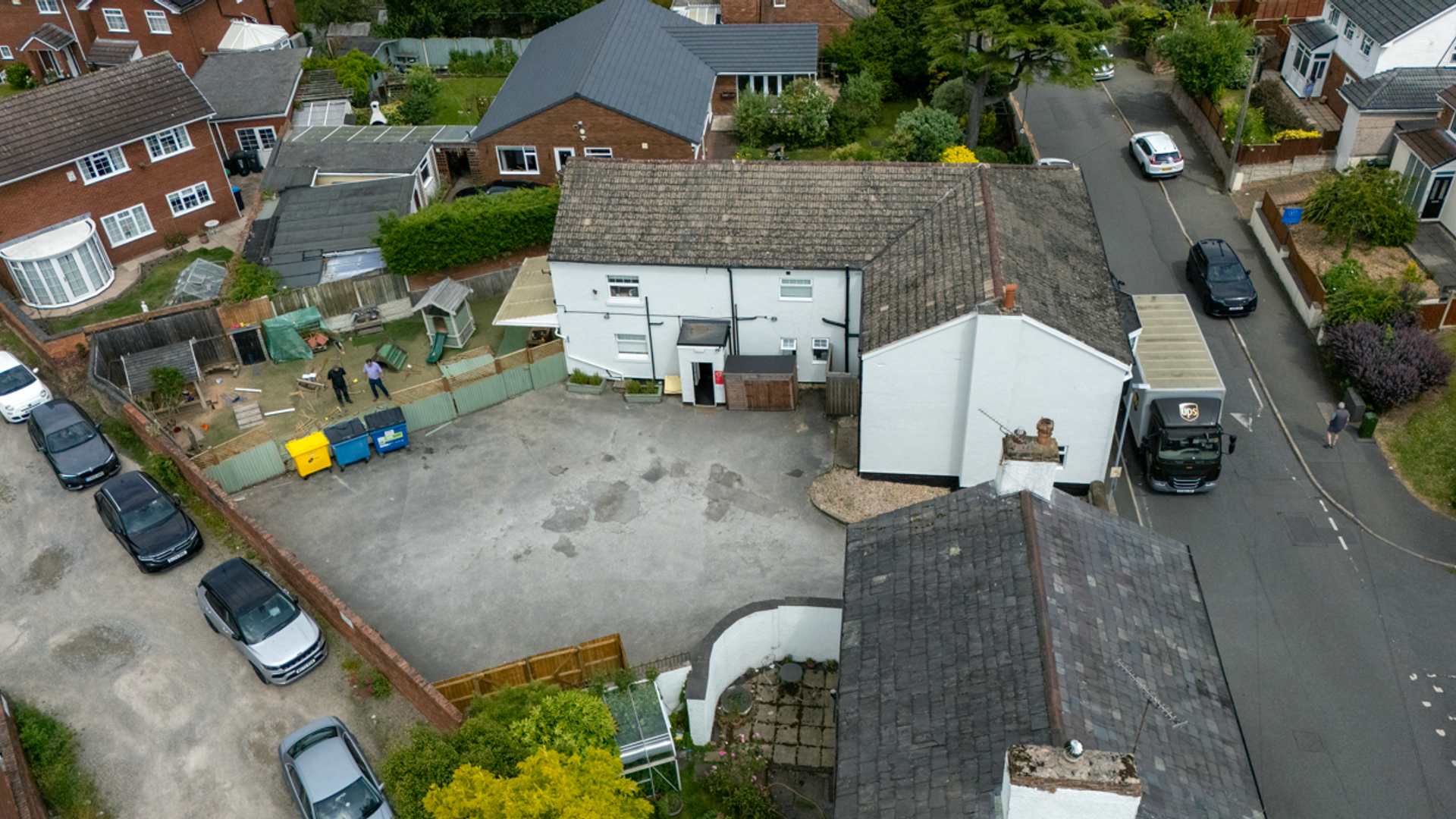
The intersection of vehicular transit networks and early childhood education infrastructure presents a systemic vulnerability that standard municipal zoning frequently miscalculates. When a vehicle breaches a perimeter and enters a nursery playground, the incident is rarely the result of a single isolated failure. Instead, it represents the simultaneous breakdown of three distinct systems: spatial buffering, structural energy absorption, and operator control. Evaluating these events requires moving past reactionary reporting and instead mapping the kinetic, structural, and regulatory variables that dictate child safety in high-density zones.
A critical evaluation of perimeter breaches reveals that traditional chain-link fencing or light timber barriers offer zero structural resistance against kinetic energy transfers from modern vehicles. To understand how a routine traffic deviation escalates into a critical incident injuring a toddler, we must analyze the physical mechanisms of the crash, the regulatory gaps in zoning, and the tactical retrofits required to isolate vulnerable populations from vehicular kinetic energy.
The Kinetic Energy Function of Perimeter Breaches
The severity of a vehicular intrusion into a pedestrian or play space is governed by the transfer of kinetic energy. This relationship is defined by the fundamental formula:
$$E_k = \frac{1}{2}mv^2$$
Where $m$ represents the vehicle mass and $v$ represents the velocity at the point of impact. Because velocity is squared, minor increases in speed yield exponentially greater destructive potential.
[Vehicle Deviation] ──> [Buffer Zone Deficit] ──> [Barrier Failure] ──> [Playground Intrusion]
                                                                               │
                                                                               ▼
                                                                     [Kinetic Energy Transfer]
Standard passenger vehicles averaging between 1,500 and 2,500 kilograms possess immense kinetic energy even at low urban speeds.
- A 2,000-kg vehicle moving at 30 km/h (approximately 18 mph) generates roughly 69 kilojoules (kJ) of kinetic energy.
- The same vehicle accelerating to 50 km/h (approximately 31 mph) generates approximately 193 kilojoules—nearly triple the destructive force.
When a vehicle leaves the roadway due to driver incapacitation, mechanical failure, or criminal negligence, this energy must be entirely dissipated. If the perimeter barrier consists solely of standard aesthetic fencing, the fence acts as a non-resistant medium. The energy dissipation obligation is then transferred directly to the objects and individuals within the playground space.
The structural failure of the perimeter occurs because these barriers lack the yield strength to deform plastically and absorb energy. Instead, they fracture, occasionally transforming into secondary projectiles that increase the risk profile for occupants inside the perimeter.
The Three Pillars of Vulnerability in Childcare Zoning
Municipalities frequently treat childcare facilities identically to standard commercial retail units during the zoning and permitting phases. This oversight ignores the specific behavioral and physical profiles of the occupants. Minimizing spatial vulnerability requires analyzing three distinct systemic pillars.
┌────────────────────────────────────────────────────────┐
│               SOCIOCONTEXTUAL VULNERABILITY            │
├───────────────────────────┬────────────────────────────┤
│ Physical Disadvantage     │ Reaction Time Delays       │
│ Lower bone density, less  │ Underdeveloped spatial     │
│ mass to absorb impacts.   │ awareness, slower flight.  │
└───────────────────────────┴────────────────────────────┘
Proximity to High-Velocity Transits
Childcare centers are frequently situated in high-density commercial zones or along arterial roads to maximize convenience for commuting parents. This economic optimization places high-occupancy child spaces directly adjacent to high-velocity, high-volume traffic streams. The probability of a vehicle leaving the roadway correlates directly with traffic density, intersection complexity, and speed limits, yet setback requirements rarely scale to reflect these variables.
Structural Barrier Deficits
The vast majority of daycare play areas rely on boundary markers rather than protective barriers. Chain-link, vinyl, and wooden slat fencing are designed for containment (keeping children inside) and exclusion (keeping unauthorized pedestrians out). They possess no rating from the American Society for Testing and Materials (ASTM) for vehicular impact attenuation.
Occupant Biomechanics and Behavioral Limits
Toddlers and young children possess distinct physiological and cognitive limitations that exacerbate injury severity during structural breaches. Cognitively, children under five lack the spatial awareness and reaction times to recognize an oncoming vehicle and execute evasive maneuvers. Physiologically, their lower body mass, lower bone density, and lower overall height mean that any direct or indirect impact transfers force closer to vital organs and the cranium, maximizing the probability of severe trauma from even low-velocity kinetic transfers.
Regulatory and Engineering Bottlenecks in Site Security
The recurring nature of vehicular incursions into soft target environments stems from a fragmented regulatory landscape. Commercial building codes generally focus on internal safety mechanisms—such as fire suppression, air quality, and egress routing—while ignoring external kinetic threats.
The fundamental gap lies between voluntary engineering standards and mandatory building regulations. Organizations like ASTM international have established clear metrics for low-velocity impact resistance, notably the ASTM F2656/F2656M standard, which tests the crash performance of perimeter barriers. A barrier rated under these criteria is engineered to halt a vehicle of specific weight traveling at designated speeds within a precise penetration distance.
┌───────────────────────────────────────────────────────────┐
│              PERIMETER SAFETY SPECIFICATIONS              │
├─────────────────────────────┬─────────────────────────────┤
│ Standard Aesthetic Fence    │ Non-rated, zero attenuation │
├─────────────────────────────┼─────────────────────────────┤
│ ASTM F2656 Rated Bollard    │ Certified kinetic stop      │
└─────────────────────────────┴─────────────────────────────┘
Despite the existence of these testing frameworks, local zoning boards rarely mandate ASTM-rated barriers for childcare facilities. The regulatory failure occurs because risk assessments are typically reactive, triggered only after a high-profile casualty event occurs within a specific jurisdiction. Consequently, property developers optimize for cost-efficiency, selecting non-rated perimeter fencing that fulfills basic privacy and containment mandates while leaving the facility entirely exposed to roadway deviations.
Furthermore, the legal liability framework surrounding these incidents remains convoluted. When a driver breaches a playground, criminal and civil culpability shifts primarily to the operator of the vehicle. However, the secondary liability regarding whether the facility operators provided a reasonably safe environment remains a grey area. This lack of legal clarity removes the financial incentive for commercial landlords to invest in heavy structural retrofits.
Tactical Engineering Solutions for Kinetic Isolation
Upgrading existing early childhood facilities from high-risk zones to hardened, secure environments requires a multi-layered engineering strategy. Relying on single-point defenses creates a single point of failure. Security architecture must instead employ a defense-in-depth model that systematically reduces a vehicle's kinetic energy before it reaches the child occupancy zone.
[Roadway] ──> [1. Active Disruption (Rumble Strips)] ──> [2. Spatial Buffer] ──> [3. ASTM Bollards] ──> [Playground]
Active Disruption Zones
The first layer of defense occurs at the roadway margin. Implementing high-friction surface treatments reduces braking distances on approaches to curves or intersections adjacent to childcare facilities. Raised curbs, textured rumble strips, and tactical chicanes physically disrupt a deviating vehicle's path, forcing a reduction in speed and alerting an incapacitated or distracted driver before the vehicle leaves the municipal right-of-way.
Geometric and Spatial Setbacks
Distance serves as a natural energy dissipater. Every additional meter of setback between the roadway curb and the playground perimeter increases the time an operator has to regain control or apply brakes, directly reducing the velocity variable ($v$) in the kinetic energy equation. Where physical space allows, playgrounds should be positioned to the rear or interior courtyard of the facility structure, utilizing the commercial building itself as a massive structural shield against street-level traffic.
Passive Structural Attenuation
When spatial setbacks are restricted by urban density, passive structural barriers must be deployed. This does not require constructing imposing military-grade concrete walls that degrade the educational environment. Instead, facilities can integrate crash-rated bollards disguised as standard architectural elements.
- Fixed Heavy-Duty Bollards: Deep-set, steel-reinforced concrete posts anchored below the frost line can stop a 2,500-kg vehicle traveling at urban speeds within inches of impact.
- Engineered Landscaping: Terraced earth berms, heavy boulders, and reinforced concrete planters serve double duties as aesthetic landscaping and highly effective kinetic energy deflectors.
- Reinforced Retaining Walls: Utilizing low, continuous concrete retaining walls around the perimeter distributes impact forces across a wider horizontal plane, preventing localized breach failures.
Operational Risk Auditing for Facility Managers
Implementing physical infrastructure upgrades requires systemic capital allocation. Daycare operators and commercial landlords must execute a structured risk audit to identify which mitigation strategies yield the highest safety returns per dollar expended. The operational priority matrix should guide this evaluation process.
| Risk Variable | Assessment Metric | Immediate Mitigation Step | Long-Term Strategic Play |
|---|---|---|---|
| Traffic Velocity Exposure | Posted speed limits and actual 85th-percentile speeds on adjacent roads. | Install high-visibility reflective signage and solar-powered speed feedback indicators. | Formally petition municipal traffic engineering departments for speed-calming retrofits. |
| Intersection Proximity | Distance from the playground to the nearest perpendicular traffic conflict point. | Relocate outdoor play schedules to off-peak traffic hours or shift high-activity zones away from the corner. | Install fixed, crash-rated bollards along the high-probability deflection arc of the intersection. |
| Perimeter Barrier Structural Integrity | Material composition, post anchor depth, and age of current fencing. | Inspect posts for soil erosion or rust degradation; reinforce weak joints immediately. | Replace non-rated fencing with an ASTM-certified barrier system integrated into the site foundation. |
The execution of this audit framework requires objective data gathering. Operators must analyze local traffic patterns, verify historical accident rates on the adjacent corridors, and evaluate the specific structural blueprints of their current perimeters.
The Strategic Shift in Early Childhood Site Architecture
Relying on the assumption that drivers will always maintain lane discipline is a flawed strategy for safeguarding vulnerable populations. The operational reality of urban design dictates that vehicles will occasionally leave designated roadways due to human error, mechanical malfunction, or medical emergencies. Therefore, the safety of an early childhood playground cannot remain contingent on driver behavior.
The definitive structural play for the childcare industry requires decoupling site safety from external human variables entirely. New facility construction must mandate a minimum 15-meter setback from any road with a speed limit exceeding 40 km/h, unless the perimeter is reinforced with an integrated ASTM-rated barrier system. For existing urban facilities where spatial expansion is structurally impossible, the immediate deployment of crash-rated bollards at the street margin is the only viable method to isolate child play spaces from kinetic energy impacts.
Municipalities must update unified development codes to classify early childhood centers as high-consequence soft targets, moving beyond simple fencing regulations toward mandatory, numbers-driven kinetic attenuation standards. Until these engineering benchmarks become a legal prerequisite for commercial licensing, the safety of early childhood infrastructure will remain fundamentally compromised by adjacent vehicular transit networks.