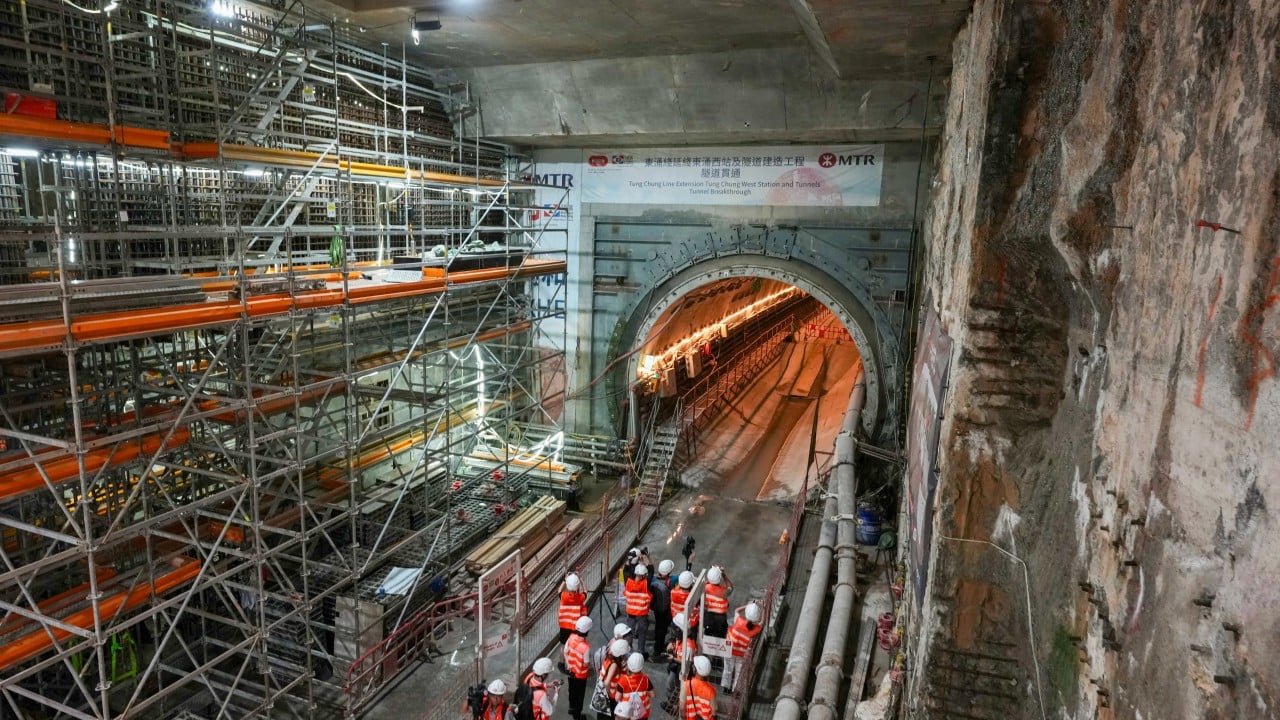
Structural defects inside a modern, high-budget transit station do not happen by accident; they represent a systemic breakdown in project governance, multi-tier subcontracting incentives, and quality assurance verification. When engineers and lawmakers describe defects at a Hong Kong Mass Transit Railway (MTR) station as "unimaginable," they are identifying a failure where financial and schedule pressures overrode basic civil engineering controls. This analysis deconstructs the mechanical, contractual, and regulatory failure modes behind transit construction scandals—specifically reflecting the well-documented structural and workmanship failures seen in Hong Kong’s rail expansion projects, such as the Sha Tin to Central Link (SCL) at Hung Hom Station and subsequent station works—to establish a rigorous framework for diagnosing infrastructure quality collapse.
The Deconstruction of "Unimaginable" Defects
In civil engineering and large-scale transit construction, calling a defect "unimaginable" is a political term rather than a technical one. Every physical failure on a rail construction site traces back to a predictable deviation from engineering specifications. When lawmakers and independent engineers express shock at station defects, they are typically reacting to the convergence of three distinct failure categories: structural connection compromises, material non-conformance, and unauthorized field modifications.
Structural connection compromises occur when load-bearing elements fail to transfer forces as designed. In reinforced concrete transit stations—which must withstand immense hydrostatic pressure from groundwater, soil loads, and dynamic train vibrations—the integrity of rebar couplers and diaphragm walls is non-negotiable. Cutting threaded steel reinforcing bars short so they cannot screw fully into mechanical couplers reduces tensile strength at the exact point of maximum stress. While a single compromised coupler might be absorbed by a structure's safety factor, systematic shortening across dozens or hundreds of connections creates a latent vulnerability that invalidates the original structural calculations.
Material non-conformance involves substituting specified concrete grades, waterproofing membranes, or fire-retardant coatings with inferior alternatives, or failing to cure and vibrate concrete properly. Poor concrete consolidation leaves honeycombing—voids around the steel reinforcement—which accelerates corrosion when groundwater penetrates the station box. Once water reaches the rebar, oxidation expands the steel's volume, spalling the surrounding concrete and degrading structural capacity years ahead of schedule.
Unauthorized field modifications represent the breakdown of engineering change control. On complex subterranean sites, unexpected ground conditions or utility clashes frequently require design adjustments. Under proper protocols, a site engineer submits a Request for Information (RFI) to the lead designer, who recalculates the loads and issues a stamped revision. When crews alter rebar layouts, drill unauthorized penetrations through waterproof barriers, or skip inspection hold points without documented engineering sign-off, the physical asset no longer matches its as-built drawings.
The Principal-Agent Problem in Multi-Tier Subcontracting
To understand why skilled contractors execute substandard work on flagship public infrastructure, one must examine the economic structure of Hong Kong's construction supply chain. Mega-projects operate under a principal-agent hierarchy where incentives misalign at every contractual boundary.
- The Client and Project Manager (MTR Corporation): Tasked with delivering complex transit expansions under intense political pressure to meet opening dates and contain budget overruns, the project manager faces severe reputational and financial penalties for delays.
- The Main Contractor: Operates on thin margins in a competitive bidding environment. Profit depends heavily on schedule adherence, liquidated damages avoidance, and variation order claims.
- Domestic and Tier-2/Tier-3 Subcontractors: Execute the physical labor—steel fixing, formwork, concrete pouring—often under lump-sum or piece-rate contracts. For a labor subcontractor, time spent waiting for an inspector to sign off on a rebar cage before pouring concrete is uncompensated overhead.
This structure creates an asymmetric payoff matrix. The subcontractor captures 100% of the immediate cost savings from cutting corners—such as trimming a rebar thread rather than re-aligning a misaligned coupler—while the long-term tail risk of structural degradation is externalized onto the public asset owner and taxpayers. Because concrete permanently conceals the steel reinforcement within hours of placement, the probability of immediate detection is low unless an inspector is physically present at the exact moment of the pour.
Failure of the Three-Tier Quality Assurance Architecture
Standard civil engineering governance relies on a three-tier inspection model designed to catch errors before work is covered up. When major defects reach completion, all three layers have failed simultaneously.
The first line of defense is contractor self-inspection. Under ISO 9001 and standard contract conditions, the main contractor’s quality control team must verify dimensions, materials, and workmanship before requesting an external check. When schedule compression becomes acute, contractor quality teams lose organizational independence; site agents prioritize pouring concrete on schedule over rejecting faulty steelwork.
The second line of defense is resident site staff (RSS) verification. Employed by the project manager or engineering consultant, RSS inspectors enforce the Inspection and Test Plan (ITP). An ITP designates mandatory "hold points"—critical stages, such as completed rebar installation prior to concrete placement, where work cannot legally proceed without a signed inspection form (commonly known as a Request for Inspection and Survey Check, or RISC). Defects scale into systemic scandals when contractors bypass hold points, pour concrete without signed RISC forms, or submit retrospective paperwork weeks later to sanitize the audit trail.
The third line of defense is regulatory audit and independent checking. Government oversight bodies—such as Hong Kong’s Highways Department, Buildings Department, and Electrical and Mechanical Services Department—rely primarily on document audits and spot checks rather than continuous on-site surveillance. If the second tier generates falsified or incomplete records, regulatory audits become blind to physical reality until a whistleblower emerges or physical symptoms like severe water seepage appear.
The Mechanics of Schedule Compression and Risk Transfer
Mega-projects rarely suffer from quality collapse during the early planning phases; degradation accelerates during the critical-path recovery phase. Geotechnical surprises, delayed land handovers, and utility diversions routinely consume schedule contingency early in a project's lifecycle. Rather than formally extending the completion date—which triggers political scrutiny and legislative funding debates—project leadership frequently attempts to recover lost time through parallel work sequencing and compressed shift cycles.
This creates a severe operational bottleneck. Night shifts and weekend pours operate with reduced supervisory ratios. Fatigue degrades workmanship accuracy, while lower-tier foremen face explicit or implicit pressure to hit daily volume targets. Under these conditions, fixing a misaligned rebar coupler—which might require dismantling adjacent formwork and delaying a concrete pour by 24 hours—is viewed by site supervisors as an unacceptable disruption. Cutting the bar to force a fit solves the immediate schedule problem at the expense of permanent structural integrity.
Known Facts Versus Analytical Hypotheses in Public Infrastructure Scandals
Evaluating infrastructure failures requires separating verified physical evidence from institutional hypotheses.
Verified Mechanisms and Facts:
- Physical Non-Conformance: Independent investigations into major Hong Kong rail station defects have repeatedly confirmed tangible deviations from approved designs, including improperly connected rebar couplers, missing inspection records (RISC forms), and unauthorized structural modifications.
- Documentation Gaps: Commissions of inquiry have established that thousands of critical inspection forms were either missing or submitted after concrete had already been poured, proving a breakdown in procedural compliance.
- Remediation Costs: Rectifying concealed structural defects in subterranean stations requires invasive non-destructive testing (such as ultrasonic phased-array testing), selective concrete breakout, structural strengthening, and schedule delays running into months or years, costing hundreds of millions to billions of Hong Kong dollars.
Analytical Hypotheses:
- Cultural Normalization of Deviance: Drawing on sociologist Diane Vaughan’s analysis of the Space Shuttle Challenger disaster, it is highly probable that bypassing inspection hold points did not begin as malicious sabotage. Instead, minor procedural shortcuts went unpunished during early phases, gradually redefining acceptable site practice until major structural compromises became routine.
- Commercial Coercion: While formal contracts mandate strict quality compliance, commercial pressures between main contractors and labor subcontractors likely created an unspoken understanding that strict adherence to hold points would result in commercial penalties or exclusion from future tenders.
Tactical Diagnostic Framework for Infrastructure Oversight
Preventing structural and workmanship failures in complex transit projects requires replacing trust-based paperwork audits with verifiable, tamper-proof engineering controls. Asset owners and government regulators must enforce five structural reforms across active and future rail contracts.
- Digital Geofenced Hold Points: Replace paper RISC forms with mobile, time-stamped, geolocated photographic verification linked directly to Building Information Modeling (BIM) elements. A concrete batching plant dispatch system should be algorithmically locked from releasing concrete for a specific structural pour until the digital hold point receives dual cryptographic sign-off from both the contractor and resident site staff.
- Direct Employment of Critical Trade Inspectors: Sever the commercial link between quality inspectors and main contractors. Independent quality control engineers must report directly to the asset owner or statutory regulator, with compensation structures completely insulated from project completion bonuses.
- Mandatory Non-Destructive Testing (NDT) Quotas: Establish random, unannounced ultrasonic and ground-penetrating radar audits on 5% to 10% of completed reinforced concrete elements prior to architectural finishing. High-probability random detection alters the subcontractor's economic calculation, making corner-cutting financially irrational.
- Tiered Subcontractor Caps and Direct Payment: Restrict subcontracting to a maximum of two tiers beneath the main contractor for structural works, and implement project bank accounts to pay verified subcontractors directly. Eliminating multi-tier margin skimming ensures labor crews are funded adequately to execute work to specification.
- Criminal and Debarment Liability for Record Falsification: Treat retrospective signing of inspection hold points or falsification of material test certificates as criminal fraud rather than a contractual breach, paired with automatic multi-year debarment from public works tendering for culpable firms and individual signatories.
Limitations of Governance Reforms
No oversight architecture eliminates all execution risk on mega-projects. Tightening hold-point controls and increasing independent testing inevitably slow down site production rates and increase upfront administrative overhead. If asset owners impose rigid quality enforcement without adjusting baseline schedules and realistic cost contingencies to match, contractors will price the friction into higher initial bids or generate aggressive commercial claims for delay and disruption. Furthermore, excessive bureaucratic checking can induce defensive engineering, where site staff refuse to make routine field decisions without protracted committee reviews, paralyzing project momentum. Effective governance requires calibrating inspection intensity strictly to structural criticality—applying zero-tolerance verification to primary load-bearing and waterproofing elements while streamlining approvals for non-structural architectural finishes.
Strategic Directive for Asset Owners and Regulators
Public transit authorities and infrastructure regulators must immediately audit active underground construction contracts for missing or retrospective inspection documentation rather than waiting for physical symptoms or whistleblowers to surface. Before any concealed structural element is cleared for architectural cladding or track installation, authorities must mandate a complete digital reconciliation of signed Inspection and Test Plans against concrete delivery dockets, backed by targeted ultrasonic testing on high-stress structural joints. Projects exhibiting greater than a 2% discrepancy between concrete pours and pre-pour signed hold points must be placed under an immediate stop-work order until physical core sampling and structural recalculations verify safety margins.