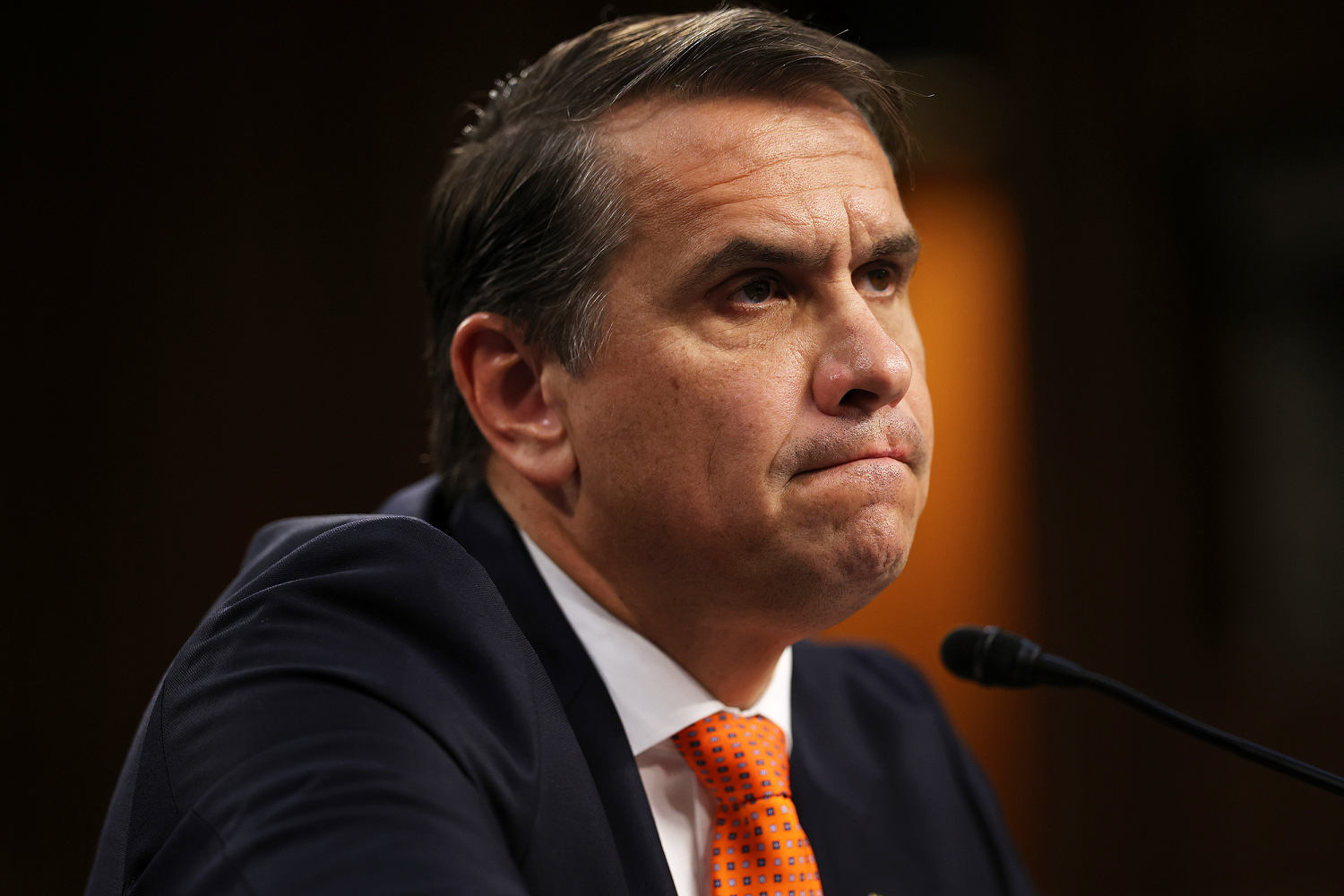
The confirmation pathway for political appointees hinges on the fragile equilibrium between executive intent and legislative leverage. When Acting Attorney General Todd Blanche executed a formal order rescinding the Department of Justice's proposed 1.8 billion dollar allocation—colloquially designated as the anti-weaponization fund—he did not merely resolve a procedural hurdle. He dismantled the primary structural bottleneck stalling his transition from acting administrator to Senate-confirmed cabinet head. This resolution exposes the core mechanics of how congressional gatekeepers extract binding concessions from the executive branch when policy mechanisms collide with statutory oversight.
The Structural Anatomy of the Impasse
The confrontation centered on a distinct friction point within institutional power distribution. The fund originated from a settlement agreement resolving a high-value civil dispute involving executive tax records. Within this settlement, the administrative framework authorized compensation channels for individuals deemed targets of politically motivated regulatory action.
For the legislative branch, this mechanism represented a dangerous budgetary bypass. Senators controlling committee advancement votes identified three distinct systemic risks:
- Appropriation Authority Erosion: The circumvention of standard congressional budget allocations through executive settlement mechanisms.
- Precedent Hazard: The establishment of an administrative indemnification pool capable of rewarding partisan actors or specific subsets of criminal defendants without statutory authorization.
- Audit Immunity Extension: Provisions granting sweeping, unmonitored protections against future tax compliance examinations for executive family members and associates.
The impasse intensified because verbal assurances from executive nominees carry zero binding legal weight. Acting Attorney General Blanche repeatedly testified that the mechanism remained dormant, noting that zero funds transferred, zero board members were appointed, and zero claims processed. Yet, legislative resistance persisted because executive declarations lack structural permanence. Without a written, formal rescission, a future administrative directive could instantly reactivate the dormant pipeline.
The Cost Function of Confirmation
In legislative game theory, a committee hold functions as a high-yield veto asset. Senators holding decisive votes on the Judiciary Committee exercised their positional leverage to impose a binary choice on the executive branch: sacrifice the contested administrative vehicle or forfeit the permanent confirmation.
The cost function for the administration involved balancing ideological objectives against institutional control of the Department of Justice. Retaining the acting designation allowed the executive to maintain operational command without Senate approval, but this path carries diminishing returns, mounting judicial challenges, and structural instability. Conversely, securing a permanent attorney general provides long-term institutional permanence, judicial continuity, and the elimination of ongoing confirmation friction.
The resolution required a precise compromise. Blanche's administrative order achieved two explicit outcomes:
- Total Revocation: The explicit nullification of the May 18 settlement provisions that established the compensation pool, rendering it legally nonexistent.
- Temporal Boundedness: The strict retroactivity limitation applied to tax audit immunities, ensuring that protections applied solely to past, closed matters rather than shielding future filings from statutory oversight.
Institutional Fallout and Precedent
The mechanics of this confirmation battle establish a clear precedent for executive-legislative friction in appointments. When an administrative policy directly threatens legislative appropriations power or creates perceived backchannel indemnifications, senators will utilize procedural bottlenecks as an enforcement mechanism, overriding even intense direct pressure from the executive.
The immediate removal of the hold clears the committee pathway, shifting the operational focus toward the full floor vote. However, the underlying tension regarding executive compensation mechanisms and regulatory oversight remains an active fault line. Future administrations attempting similar settlement-driven funding allocations must account for the absolute necessity of legislative sign-off or risk immediate procedural gridlock.
Deploy executive nominees with explicit mandates to separate structural departmental leadership from contentious policy settlements, ensuring that cabinet confirmations remain insulated from auxiliary legal disputes that trigger mandatory legislative vetoes.
Todd Blanche rescinds Trump's $1.8B anti-weaponization fund
This video provides an in-depth breakdown of the official order issued by acting Attorney General Todd Blanche to eliminate the contested funding vehicle and clear his path forward in the Senate.

.png?itok=1mb05mKJ)

