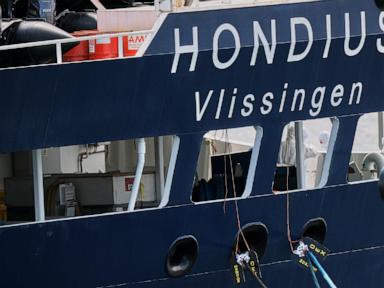
The containment protocol enforced upon the MV Hondius at the Port of Rotterdam exposes a critical structural failure in maritime biosecurity: the mismatch between standard vessel sanitation and the transmission dynamics of the Andes hantavirus (ANDV). When the Rotterdam local health authority (GGD) mandated an unexpected round of extra cleaning prior to final inspection, it underscored that traditional cruise ship sanitation frameworks are fundamentally unequipped for zoonotic pathogens capable of human-to-human transmission. The incident, which resulted in 13 cases and three deaths, marks the first documented hantavirus outbreak on a commercial vessel, transforming an isolated ecological hazard into a mobile, multi-jurisdictional containment crisis.
Evaluating this outbreak requires abandoning generic public health platigudes and instead mapping the precise operational bottlenecks, viral kinetics, and structural vectors that allowed a localized South American pathogen to compromise an advanced expedition vessel.
The Dual-Vector Transmission Model
Standard maritime sanitation protocols are optimized for norovirus or influenza—pathogens dominated by fomite-to-oral or direct respiratory droplet transmission. The MV Hondius crisis introduced a highly volatile dual-vector scenario that invalidated these standard operational models.
[Primary Vector: Oligoryzomys longicaudatus]
       │ (Excreta / Aerosolization)
       ▼
[Patient Zero (Environmental Exposure)]
       │
       ├─► Vector A: Fomite & Bio-aerosol Accumulation (HVAC System)
       │
       └─► Vector B: Secondary Human-to-Human Transmission (Sustained Close Contact)
The primary vector began with environmental exposure. Index Case 1 contracted the virus during land travel in endemic regions of Argentina before boarding the ship in Ushuaia on April 1. Hantaviruses are typically shed in the urine, feces, and saliva of infected rodents—specifically the long-tailed pygmy rice rat (Oligoryzomys longicaudatus) in the case of ANDV. When these excretions dry, the viral particles become unstable but highly infectious bio-aerosols. The mechanical disturbance of these particles (such as sweeping or vacuuming without HEPA filtration) introduces them into the breathing zone of human hosts.
The secondary vector—and the one that elevated the MV Hondius incident into an international priority—is human-to-human transmission. Unlike North American hantaviruses (such as the Sin Nombre virus), the Andes virus possesses a molecular profile that allows transmission between humans via close, sustained physical contact and bodily secretions.
Onboard an expedition vessel, this creates an exponential risk profile. While the World Health Organization (WHO) and the European Centre for Disease Prevention and Control (ECDC) note that the general public faces a negligible threat, the micro-environment of a ship cabin acts as an incubator. The physical proximity of passengers, shared air volumes, and prolonged exposure during the 1-to-7-week incubation period created an environment where the virus moved sequentially from the index case to immediate cabin contacts, including the ship's medical officer.
The Micro-Environmental Amplification Loop
A cruise ship is a closed thermodynamic and aerodynamic system. The escalation of cases on the MV Hondius highlights the structural vulnerabilities of maritime HVAC systems when confronting non-standard pathogens.
- Aerosolization and Mechanical Recirculation: Standard cabin ventilation systems often rely on a percentage of recirculated air to optimize thermal efficiency. If the filtration units lack Minimum Efficiency Reporting Value (MERV) 13 ratings or HEPA classification, fine bio-aerosols bypass standard particulate traps.
- The Velocity Deficit: When pathogens are shed inside low-ceilinged cabin environments, the air exchange rate per hour (ACH) dictates the clearance time of viral particles. Low ACH values combined with laminar airflow patterns can trap localized clouds of viral particles, increasing the cumulative viral load inhaled by subsequent occupants or cleaning crew.
- Fomite Persistence: Though hantaviruses are enveloped viruses and technically susceptible to lipid-disrupting detergents, their survival time on non-porous structural surfaces (stainless steel, marine-grade plastics) in high-humidity environments can extend to several days, creating a persistent secondary exposure mechanism for crew members tasked with routine cabin maintenance.
This environmental profile explains why the Rotterdam GGD rejected the initial three-day decontamination timeline proposed upon the ship’s arrival. A standard surface wipe-down is fundamentally insufficient when viral particles have potential reservoirs within the vessel's forced-air infrastructure.
Quantifying Containment and Diagnostic Latency
The operational challenge of managing the MV Hondius outbreak lies in the radical disconnect between the virus's biological timeline and standard maritime itinerary planning. The mathematical reality of the virus's incubation period makes real-time screening impossible.
$$Incubation\ Period = [7\ days \le X \le 49\ days]$$
Because the incubation window extends up to seven weeks, passengers who contracted the virus early in the voyage did not manifest symptoms until weeks after potential secondary exposures had occurred. Case 1 displayed symptoms on April 6 and succumbed on April 11, yet Case 5 (the ship's doctor) did not present symptoms until April 30. This diagnostic latency means that visual screening, temperature checks, and self-reporting logs are structurally useless during the active phases of an onboard outbreak.
Furthermore, the initial presentation of Hantavirus Pulmonary Syndrome (HPS) mimics common, less severe illnesses. The early phase consists of non-specific febrile symptoms:
- Fever $\ge 38^\circ\text{C}$ and chills
- Profound myalgia targeting major muscle groups
- Gastrointestinal distress (vomiting, diarrhea, abdominal pain)
Only after a 2-to-5-day prodromal phase does the pathology shift abruptly to capillary leak syndrome, characterized by rapid fluid accumulation in the lungs, acute respiratory distress syndrome (ARDS), severe hypotension, and cardiogenic shock. Because the transition from mild febrile illness to respiratory collapse occurs over hours rather than days, the medical infrastructure of a standard vessel is overwhelmed almost instantly.
The MV Hondius was forced to execute emergency medical evacuations to South Africa and offload passengers at isolated territories like Saint Helena and Cape Verde. This geographical fragmentation severely degraded the ability to maintain a contiguous epidemiological cohort, spinning a single shipboard outbreak into a multi-national contact-tracing bottleneck involving citizens from over 23 countries.
The Biosecurity Remediation Protocol
To safely return a hantavirus-contaminated vessel to commercial service, maritime operators cannot rely on standard cruise ship sanitation guidelines. The GGD's demand for extra cleaning indicates that the initial decontamination strategy failed to mitigate the specific risks of desiccated viral fragments. An enterprise-grade remediation strategy requires a multi-phase, non-linear protocol.
Phase 1: Bio-Aerosol Suppression
Dry sweeping, standard vacuuming, and high-pressure washing are strictly prohibited. These actions re-aerosolize viral particles, endangering the remediation crew. All surfaces must first be misted with an EPA-registered disinfectant effective against enveloped viruses (such as a 1:10 dilution of sodium hypochlorite or accelerated hydrogen peroxide). This neutralizes the viral envelope while stabilizing the physical matter, preventing it from becoming airborne.
Phase 2: HVAC System Remediation
The entire ventilation loop must be isolated. Technicians wearing positive-pressure respirators or full PPE with PAPR (Powered Air-Purifying Respirators) must extract all filters as biohazardous waste. The ductwork must undergo a deep volume decontamination using vaporized hydrogen peroxide (VHP) or chlorine dioxide gas to ensure total gaseous penetration of all inline plenums, mixing boxes, and terminal diffusers. Following gaseous sterilization, the system must be retrofitted with HEPA-grade filtration elements before air turnover is re-established.
Phase 3: Porous Soft-Goods Destruction
Unlike hard bulkheads, soft goods such as cabin bedding, mattresses, carpets, and drapes present deep fiber matrices where organic material can hide. Given the high case fatality rate (approximately 38% in this specific cluster), laundering is an unacceptable risk vector. All soft goods from affected cabins and adjacent thermal zones must be stripped, sealed in hazardous material containment bags on-site, and transferred directly to high-temperature incineration facilities onshore.
Phase 4: Structural Rodent Exclusion
Because the primary introduction occurred via environmental exposure, the vessel's physical perimeter must be audited using strict vector-proofing frameworks. This means inspecting all mooring lines for specialized rat guards, sealing any structural entry points greater than 6 millimeters, and deploying specialized tracking dust or non-toxic bait arrays within void spaces to verify that no wild rodent populations have established an active harbor within the hold or galley areas.
Strategic Operational Mandate
The long-term commercial fallout for expedition cruising is distinct from mainstream mass-market tourism. Vessels operating in remote, ecologically sensitive, or polar environments face a unique operational landscape.
The immediate decision by Oceanwide Expeditions to delay the MV Hondius’ subsequent voyages until mid-June reflects the financial realities of regulatory friction. The company initially forecasted a seamless return to its Arctic schedule by late May; the intervention of Dutch health authorities proved that public health agencies are shifting toward a zero-tolerance posture regarding exotic zoonotic threats.
For operators running remote itineraries, the strategic play requires a complete overhaul of pre-boarding protocols and shipboard engineering:
- Itinerary Integration: Health screening must be directly synchronized with a passenger's pre-cruise travel itinerary. If a passenger has engaged in rural, off-grid trekking in known hantavirus endemic zones (such as specific provinces in Argentina or Chile) within 45 days of embarkation, they represent an unmitigated risk to the vessel's biosecurity loop.
- Engineering Redundancy: Future vessel procurements for expedition classes must mandate isolated, negative-pressure medical wards equipped with dedicated, non-recirculating ventilation systems capable of handling highly infectious pathogens.
- Contractual Indemnification: Port-of-entry agreements must be updated to establish clear, pre-negotiated quarantine protocols. As demonstrated by Rotterdam's deployment of fenced containment container housing for foreign crew members, ports are increasingly unwilling to allow infected or exposed personnel to mingle with local populations, transferring the massive logistical and financial burden of prolonged isolation entirely back onto the vessel's operator.