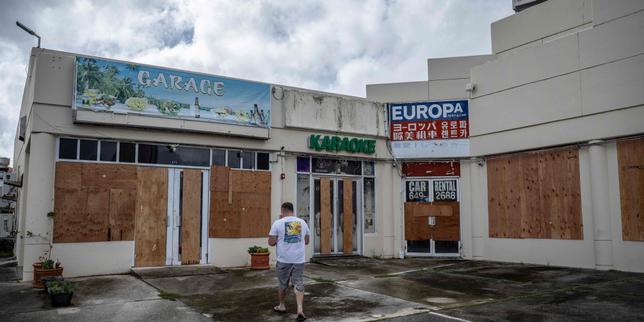
The approach of a Category 5 equivalent weather system like Supertyphoon Bavi toward isolated US Pacific territories exposes a structural vulnerability in remote supply chains, infrastructure design, and federal emergency deployment. When a major meteorological event threatens hubs like Guam or the Commonwealth of the Northern Mariana Islands (CNMI), the challenge is not merely meteorological; it is a complex logistical bottleneck defined by geographic isolation, fixed infrastructure constraints, and extreme dependency on maritime imports.
Standard disaster reporting focuses on wind speeds and immediate storm surge predictions. A rigorous strategic analysis, however, evaluates the threat through three distinct operational vectors: the vulnerability of critical utility infrastructure, the resilience of the maritime supply chain, and the economic friction of post-event capital reallocation. Understanding these variables explains why a remote island economy requires a fundamentally different mitigation framework than a mainland jurisdiction.
The Triad of Infrastructure Vulnerability
To quantify the potential disruption of a supertyphoon, the built environment must be disaggregated into interconnected failure points. In remote Pacific territories, infrastructure resilience relies on three critical systems: power generation and distribution, potable water continuity, and structural engineering compliance.
1. Power Distribution and Grid Fragility
The primary point of failure during high-velocity wind events is the electrical grid. While mainland grids often feature redundancy through interconnected regional networks, island grids operate as isolated microgrids.
- Transmission Lines: Overhead transmission lines are highly susceptible to kinetic damage from flying debris and sustained wind shear exceeding 150 miles per hour.
- Substation Exposure: Substation transformers, if not hardened or elevated, face catastrophic failure from localized flooding or saltwater intrusion, which causes immediate electrical shorting and long-term corrosion.
- Generation Constraints: Island power plants often rely on imported fuel oil. If generation facilities sustain structural damage, the entire economic ecosystem grinds to a halt, rendering automated water pumps and communication networks inoperable.
2. The Water-Energy Nexus
Water security on isolated islands is directly dependent on electrical continuity. Municipal water systems rely on deep-well pumps to extract water from underground aquifers or treatment plants to process surface water.
- Pumping Failure: Without a robust electrical grid or localized, redundant diesel generation at each well site, water distribution fails within hours of grid collapse.
- Contamination Risks: Torrential rainfall exceeding twelve inches within a 24-hour period overburdens storm drainage systems, leading to surface runoff infiltrating freshwater lenses or damaging treatment facilities. This necessitates long-term boil-water advisories and accelerates the depletion of bottled water reserves.
3. Structural Variance in Building Stocks
The impact on the physical built environment is divided along historical construction standards.
- Reinforced Concrete Standard: Following devastating storms in the late 20th century, building codes in Guam and the CNMI shifted heavily toward reinforced concrete construction. Commercial buildings and modern residential units built to these specifications exhibit high resistance to structural failure under extreme wind loads.
- Legacy and Non-Standard Structures: Vulnerability remains concentrated in legacy wooden structures, tin-roofed dwellings, and informal settlements. When these structures fail, they generate heavy kinetic projectiles that threaten adjacent hardened infrastructure and block critical transportation arteries.
Maritime Logistics and the Just-In-Time Supply Chain Bottleneck
The defining characteristic of an island economy is its total reliance on maritime shipping for basic sustenance, fuel, and medical supplies. Guam serves as the transshipment hub for the wider Micronesian region. When a supertyphoon forces port closures, it triggers a cascading disruption across the entire Western Pacific.
[Port Closure Due to Storm Approach]
                 │
                 ▼
[Vessels Diverted / Delayed at Sea]
                 │
                 ▼
[Depletion of On-Island Just-In-Time Inventory]
                 │
                 ▼
[Cascading Stockouts in Outer Islands (CNMI, FSM)]
The Port Functions as a Single Point of Failure
The Jose D. Leon Guerrero Commercial Port in Guam handles over 90% of the island's total imports. A disruption here creates an immediate logistical halt.
- Pre-Storm Decoupling: Approximately 48 to 72 hours before anticipated gale-force winds, port authorities cease commercial operations. Gantry cranes must be pinned down or stowed to prevent structural collapse. Commercial vessels are ordered to leave the harbor to ride out the storm in the open ocean, as ships moored to docks risk destroying both themselves and the concrete piers under heavy surge conditions.
- The Container Deficit: Island retailers operate on a Just-In-Time (JIT) inventory model. On-island warehouses rarely hold more than a 14-to-21-day supply of perishable goods and consumer staples. A port closure lasting more than five days leads to rapid depletion of grocery shelves and medical inventories.
- Post-Storm Hydrographic Bottlenecks: Reopening a port requires more than just waiting for the wind to subside. The U.S. Coast Guard and Army Corps of Engineers must conduct hydrographic surveys to identify underwater debris, shifted sandbars, or sunken vessels that could puncture the hulls of incoming cargo ships. If the channel is compromised, the island remains isolated even if the terrestrial infrastructure is intact.
The Economic Friction of Remote Post-Disaster Recovery
The financial reality of disaster recovery in remote territories defies standard macroeconomic models applied to contiguous landmasses. On the US mainland, mutual aid agreements allow utility trucks, construction crews, and emergency supplies to cross state lines via highway networks within hours. For Guam and the CNMI, every single piece of heavy equipment, utility pole, and specialized technician must travel thousands of miles via air freight or maritime transport.
The Cost Function of Remote Capital Reallocation
$$\text{Recovery Friction} = f(\text{Distance}) \times \left( \frac{\text{Asset Weight}}{\text{Available Air Cargo Capacity}} \right) + \text{Local Labor Scarcity}$$
This formula dictates that the velocity of recovery is inversely proportional to the weight of the required assets.
Airlifting heavy utility bucket trucks and concrete poles via military transport aircraft (such as C-17s or C-5s) is astronomically expensive and limited by available airframes. Shipping them via sea takes weeks. Consequently, the initial phase of recovery faces an asset bottleneck, extending the duration of business interruption and compounding gross domestic product (GDP) losses.
Insurance Market Hardening
The recurring threat of supertyphoons creates long-term structural headwinds for local real estate and commercial development.
- Premium Escalation: Global reinsurance firms, which underwrite local insurance providers, price in the extreme risk profiles of the Western Pacific. Following a major event like Bavi, property insurance premiums typically spike across the entire region, regardless of whether individual properties sustained damage.
- Capital Flight: High insurance costs combined with stringent building requirements increase the cost of capital for new developments. This can lead to a stagnation in the local housing supply and deter foreign direct investment, particularly in the tourism sector, which serves as a primary economic driver alongside federal military spending.
Strategic Playbook for Long-Term Risk Mitigation
To shift from a reactive disaster response posture to a proactive model of economic and structural resilience, regional policymakers and federal agencies must execute a structural overhaul of island asset management.
Hardening the Grid Through Targeted Subterranean Conversion
Attempting to underground an entire island electrical grid is cost-prohibitive due to volcanic rock formations and high water tables. The optimal strategy requires a segmented approach:
- Critical Path Undergrounding: Prioritize the complete undergrounding of power lines connecting generation plants directly to hospitals, water treatment facilities, the commercial port, and major airport hubs.
- Microgrid Decentralization: Install localized solar arrays coupled with industrial battery storage systems at key community nodes. This ensures that even if the primary transmission lines fail, localized water wells and emergency shelters maintain power independent of the main grid.
Restructuring Strategic Reserves
The current model relies too heavily on federal deployment post-event. The Federal Emergency Management Agency (FEMA) must transition toward a permanent, climate-controlled, forward-staged inventory system located directly on-island. These facilities must hold not just meals and water, but critical industrial components: high-voltage transformers, water treatment chemicals, and structural repair materials. By minimizing the reliance on immediate post-storm air bridges, the territory reduces its recovery time-horizon by weeks.
Port Modernization and Redundancy
Investing in heavy, shore-based gantry cranes engineered to withstand winds up to 170 miles per hour is an operational necessity. Furthermore, developing secondary breakwater structures and alternative offloading platforms on the southern portions of the islands ensures that if the primary port facility faces structural compromise, a secondary maritime entry point remains viable to receive international aid and commercial cargo.