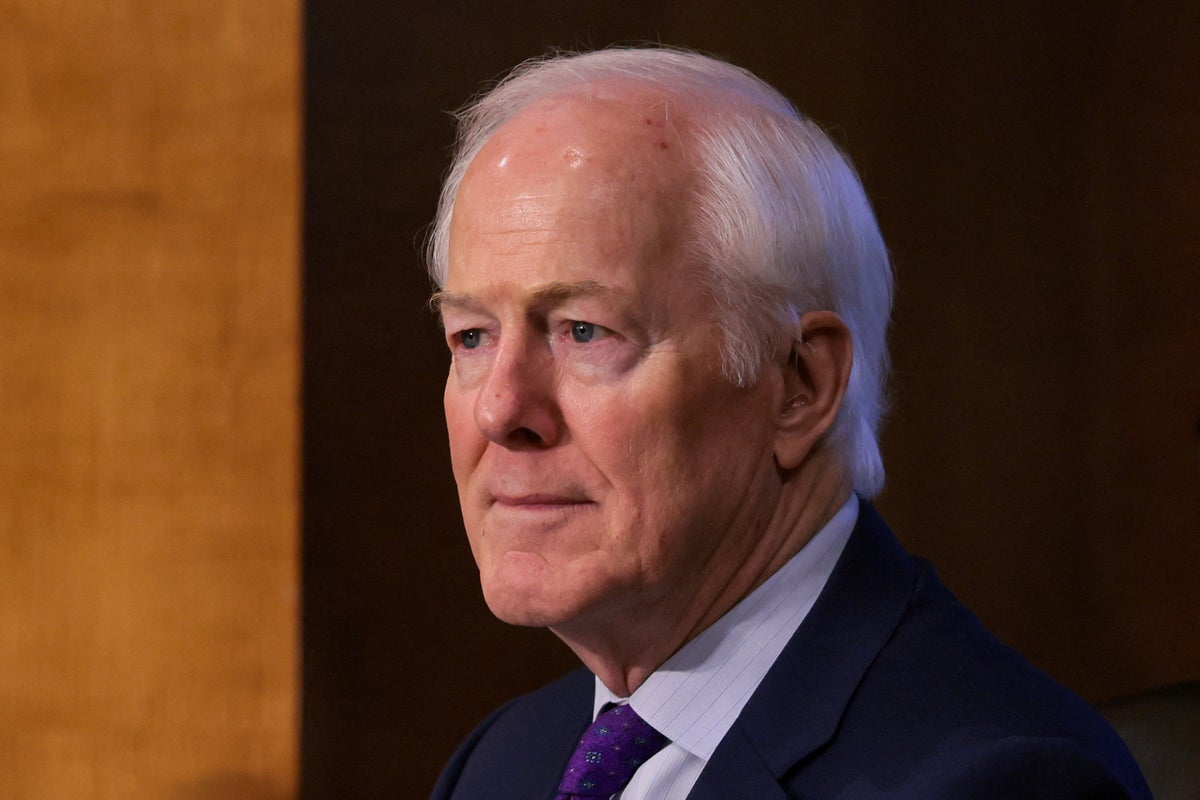
Political leverage within an administration does not derive from structural authority alone; it functions as a dynamic system governed by legislative yields, mid-term seat margins, and factional alignment. When a senior lawmaker projects that a sitting executive faces an exceptionally hostile operational environment following a mid-term cycle, they are not merely offering an emotional forecast. They are identifying a fundamental structural shift where the executive's policy agenda collides with a fractured legislative branch.
To analyze this friction requires stripping away the rhetorical veneer and examining the raw mechanics of governance. The friction between an incoming or sitting executive and their own party in Congress can be mapped across three distinct variables: the structural vulnerability of razor-thin majorities, the ideological fragmentation of the voting bloc, and the inevitable shift in lawmaker incentives during a second presidential term. Don't forget to check out our recent article on this related article.
The Tri-Border Friction Framework
An executive's capacity to pass legislation, secure confirmations, and manage oversight relies on a predictable legislative ecosystem. When mid-term elections alter the composition of Congress, they fundamentally rewrite the executive's cost function. This dynamic is dictated by three structural pillars.
1. The Margin-of-Error Deficit
In a highly polarized legislative body, a slim majority strips the executive of tactical flexibility. When a governing party holds only a single-digit majority in the House or a one-seat margin in the Senate, every individual lawmaker gains effective veto power over the administration’s agenda. The executive can no longer afford to lose moderate holdouts on contentious fiscal bills, nor can they alienate ideologically rigid factions on defense spending or judicial appointments. This transforms every routine legislative vote into a high-stakes negotiation, driving up the transactional cost of governance. To read more about the background here, Al Jazeera offers an in-depth breakdown.
2. The Lame-Duck Incentives Asymmetry
The structural reality of a second presidential term introduces a profound divergence in time horizons between the executive and the legislature. A president in their final term faces an absolute temporal constraint; their focus is fixed on rapid policy execution and historical legacy. Conversely, lawmakers operate on recurring election cycles.
[Executive Time Horizon: Fixed 4-Year Cap] ---> Focus: Rapid Legacy Execution
                                                      |
                                              (Incentive Gap)
                                                      |
[Legislative Time Horizon: Perpetual Cycles] -> Focus: Localized Re-election & Brand Survival
As the mid-term election passes, individual senators and representatives shift their calculations away from supporting a departing executive and toward securing their own electoral survival. This asymmetry erodes party discipline. Lawmakers willingly distance themselves from an unpopular executive or block administration initiatives if they perceive that compliance will invite a primary challenge or alienate general election voters in their home districts.
3. Factional Balkanization
Modern political parties are not monolithic entities; they operate as coalitions of competing factions. In a post-midterm environment where margins are compressed, these internal factions balkanize. The executive face challenges from two distinct flanks:
- The Pragmatic Flank: Lawmakers representing competitive or swing districts who demand moderate policy concessions to insulate themselves from shifting public sentiment.
- The Ideological Flank: Hardline members who view narrow majorities as an opportunity to hold the party leadership hostage, demanding pure policy outcomes and refusing compromise.
This dual-flank pressure creates an operational bottleneck. Any concession made to satisfy the pragmatic flank alienates the ideological flank, and vice versa, paralyzing the legislative apparatus.
The Mechanics of Legislative Paralysis
When these structural pillars collapse, the executive branch experiences an operational slowdown characterized by specific institutional failures. The most immediate casualty is the budget and appropriations process. Rather than passing comprehensive spending bills, the legislature resorts to short-term continuing resolutions, stripping the executive of the ability to execute long-term strategic initiatives or reallocate capital toward shifting priorities.
Simultaneously, the confirmation pipeline for executive branch appointments, judicial vacancies, and regulatory heads becomes a battleground. In the Senate, holdouts utilize procedural delays and filibuster threats to extract highly localized concessions or policy pivots from the White House. Important administrative posts remain vacant or are filled by compromise candidates who lack the mandate to enforce the executive’s regulatory vision.
The ultimate manifestation of this friction is the weaponization of oversight. When mid-term shifts diminish the executive's influence over committee chairs, the legislature transitions from a policy-producing body to an investigative one. The executive is forced to reallocate massive legal and administrative resources to respond to subpoenas, committee hearings, and budget audits, shifting the White House from an offensive policy posture to a defensive damage-control strategy.
Strategic Realignment Options
To mitigate a hostile legislative environment, an executive cannot rely on standard partisan appeals. They must pivot to a distinct set of operational strategies designed to bypass or exploit the fractured legislature.
First, the executive can maximize the deployment of unilateral administrative power. This involves utilizing executive orders, agency rulemaking, and national security directives to achieve policy outcomes without legislative approval. The fundamental limitation of this strategy is its structural fragility; policies enacted via administrative fiat are highly vulnerable to judicial review and can be instantly dismantled by a subsequent administration.
Second, the executive can pursue highly selective, transactional cross-party coalitions. By identifying hyper-specific issues—such as infrastructure deployment or defense procurement—the White House can build temporary majorities that bypass the recalcitrant factions of their own party. However, this strategy carries a severe political penalty, as it frequently infuriates the party's core base and accelerates factional balkanization.
The final, most high-risk tactical option is the deliberate weaponization of the executive bully pulpit against non-compliant lawmakers within their own party. By publicly targeting recalcitrant legislators, the executive attempts to leverage primary election threats to force compliance. The structural risk here is clear: if the targeted lawmaker successfully resists the pressure, the executive's perceived authority is permanently degraded, signaling to the rest of the legislature that the administration's leverage has expired.