The suspension of Colombia's presidential transition framework ("empalme") by President-elect Abelardo de la Espriella represents a systemic structural break in the country's institutional continuity. Initiated as a direct countermeasure to outgoing President Gustavo Petro’s formal refusal to recognize the June 21, 2026 runoff results, this rupture elevates democratic uncertainty from a standard administrative dispute to a high-stakes constitutional standoff. When an outgoing executive challenges the legitimacy of an election and the incoming executive halts the bureaucratic mechanisms of state transfer, the breakdown is not merely rhetorical. It alters the country's risk profile, destabilizes sovereign market metrics, and stresses the operational boundaries of the nation's armed forces.
To analyze this crisis objectively, one must look past the partisan vitriol and dissect the core underlying mechanics: the mathematics of the disputed vote, the bureaucratic levers of the transition freeze, and the strategic risk functions governing the behavior of both factions.
The Microeconomics of the Electoral Dispute
The current institutional crisis is structurally anchored to a razor-thin margin. In the June 21 runoff, de la Espriella secured 12,959,542 votes (49.66%), while the ruling party’s candidate, Senator Iván Cepeda, captured 12,708,712 votes (48.70%). The resulting delta of 250,830 votes represents a margin of just 0.96% of the total active electorate.
In public choice theory, a margin below 1% acts as an incentive structure for an outgoing incumbent to challenge the outcome, as the costs of contesting the results are lower than the long-term political costs of conceding power. The friction centers on Form E-14, the primary document used in Colombia's electoral architecture to record handwritten and digital tally sheet counts at the polling station level.
The structural vulnerability of this system is defined by a two-stage aggregation process:
- The Pre-Count (Conteo Rápido): An informational, rapid-transmission tally executed by logistics third parties (primarily Thomas Greg & Sons) designed to give early market and public clarity.
- The Official Scrutiny (Escrutinio): The legally binding judicial verification of physical E-14 forms by the National Electoral Council (CNE) and regional registries.
Historically, discrepancies between the pre-count and the scrutiny emerge from human compilation errors or ballot layout inefficiencies. In the 2022 legislative elections, a design error led to a 5.49% variance, correcting an initial undercount of leftist coalition votes. In the 2026 cycle, independent international observers, including the European Union and the Carter Center, verified that the system remained reliable and fully traceable. However, the 0.96% margin falls well within the zone where rhetorical manipulation of Form E-14 data can effectively polarize the public, even in the absence of forensic proof of systematic digital altering.
The Dual-Suspension Mechanism of the Empalme
The transition process in Colombia is not merely a courtesy; it is a highly regulated operational audit. During this period, outgoing ministries must provide comprehensive inventories of fiscal obligations, pending legislative bills, security briefings, and state assets to the incoming administration. The collapse of this process occurred via a two-sided structural bottleneck.
The Incoming Order
De la Espriella ordered Vice President-elect José Manuel Restrepo to halt formal interactions with the outgoing cabinet. Strategically, this move serves to deny legitimacy to Petro’s fraud narrative. By freezing the transition, the incoming administration signals that it will not participate in an administrative routine while its underlying legal mandate is actively disputed by the sitting executive.
The Outgoing Retaliation
In response, Finance Minister Germán Ávila ordered the current administration's transition team to withdraw entirely, citing hostile rhetoric from de la Espriella's camp—specifically from transition committee member Carlos Alonso Lucio. Ávila formally requested that Inspector General Gregorio Eljach oversee any remaining legally mandated documentation transfers.
This dual-suspension behavior creates an acute information asymmetry. The incoming cabinet is blocked from accessing real-time internal metrics regarding fiscal deficits, execution rates of public works, and active intelligence on criminal networks. This lack of visibility significantly increases the probability of governance friction immediately following the scheduled August 7 inauguration.
The Institutional Stress Function
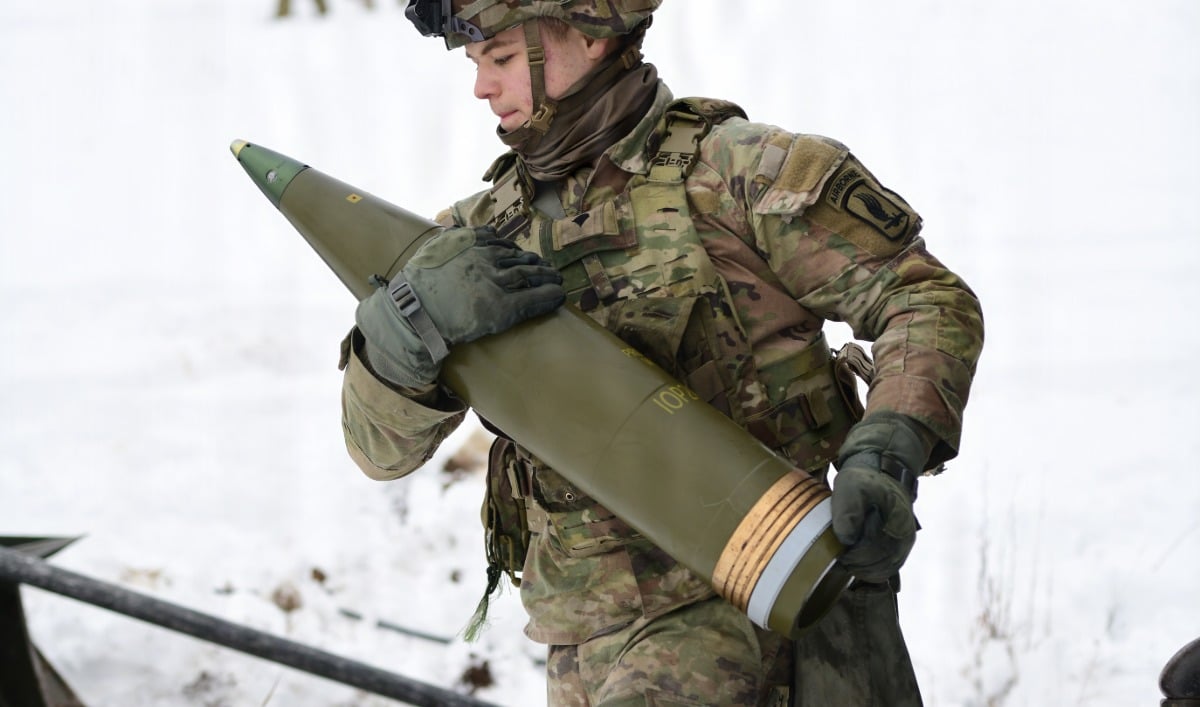
The standoff shifts the political conflict from civilian administrative offices to the broader state apparatus. De la Espriella’s public directive to the Colombian Armed Forces—explicitly calling on them to disobey any presidential orders that violate the constitutional timeline—forces a critical institutional variable into the equation.
Under Article 219 of the Colombian Constitution, the military is a non-deliberative body that answers directly to the sitting president as Commander-in-Chief. However, this authority is legally bound by constitutional maintenance. By presenting a scenario where the sitting president's non-recognition of an election resembles an extra-constitutional power preservation play, the incoming administration sets up a competing definition of structural legitimacy. The military's internal legal councils must now calculate risk along two distinct vectors:
- The Chain of Command Variable: Adhering to the immediate directives of the active president (Petro) until August 7.
- The Constitutional Mandate Variable: Honoring the certified electoral outcome to prevent an unconstitutional extension of executive power.
This institutional stress is amplified by de la Espriella’s call for external mediation and domestic resistance. By inviting international oversight and mobilizing his base to protect the vote, the incoming administration is building an enforcement mechanism outside standard judicial channels. This step bypasses the traditional reliance on the Council of State and the Constitutional Court.
The Sovereign Risk Matrix
The immediate consequence of an unresolved transition collapse is an increase in country risk premiums. International capital markets evaluate political transitions using predictability indices. A breakdown in the transmission of fiscal data between an outgoing finance ministry and an incoming economic team yields predictable market distortions.
[Transition Suspension] ──> [Fiscal Information Asymmetry] ──> [Delayed Policy Formulation]
                                                                         │
[Capital Flight / Volatility] <── [Yield Curve Steepening] <─────────────┘
The primary economic bottleneck is the delayed preparation of the 2027 General Budget of the Nation. Typically, the incoming team uses the June-July window to align the previous administration's fiscal realities with their upcoming legislative agenda. A complete freeze in this workflow shortens the runway for policy design. This delay increases the likelihood of a fiscal standstill in the first quarter of the new term, causing the domestic yield curve to steepen as investors demand higher premiums on short-term sovereign debt (TES).
Strategic Paths to Resolution
With the August 7 inauguration date fixed by the constitution, this institutional deadlock will likely resolve through one of three structural pathways, ordered by probability based on historical institutional resilience.
Scenario A: Accelerated Scrutiny and External Validation
The National Electoral Council (CNE) finishes the official scrutiny ahead of schedule, issuing a definitive, legally binding certification of de la Espriella’s victory. Backed by the existing clean bills of health from the EU and the Carter Center, this judicial finality makes the outgoing administration's fraud narrative politically untenable. The transition resumes under strict oversight from the Inspector General’s office.
Scenario B: De Facto Parallel Transition
The formal, public "empalme" remains frozen due to mutual political posturing. To avoid an operational crisis on August 7, informal, technocratic communication lines open between incoming Vice President Restrepo and civil service directors within the ministries. Data transfer occurs through standardized statutory reports rather than collaborative bilateral meetings. This path preserves political narratives while preventing a total systemic failure on day one.
Scenario C: Acute Constitutional Crisis
The Petro administration uses administrative or extraordinary legal maneuvers to delay the final certification of the vote past the August 7 deadline, citing open investigations into the E-14 forms. This action triggers a direct standoff between the executive branch and the electoral courts. In this scenario, the constitutional burden shifts entirely to Congress and the Armed Forces to enforce the transition of power based on the initial registry tallies.
Given the structural costs of a prolonged administrative freeze, the most tactical move for the incoming administration is to establish direct data conduits through independent state supervisory organs like the Inspector General and the Comptroller General. This approach allows them to bypass the political veto of the outgoing cabinet, bypass the gridlocked bilateral committees, and secure the operational data required to govern effectively from day one.