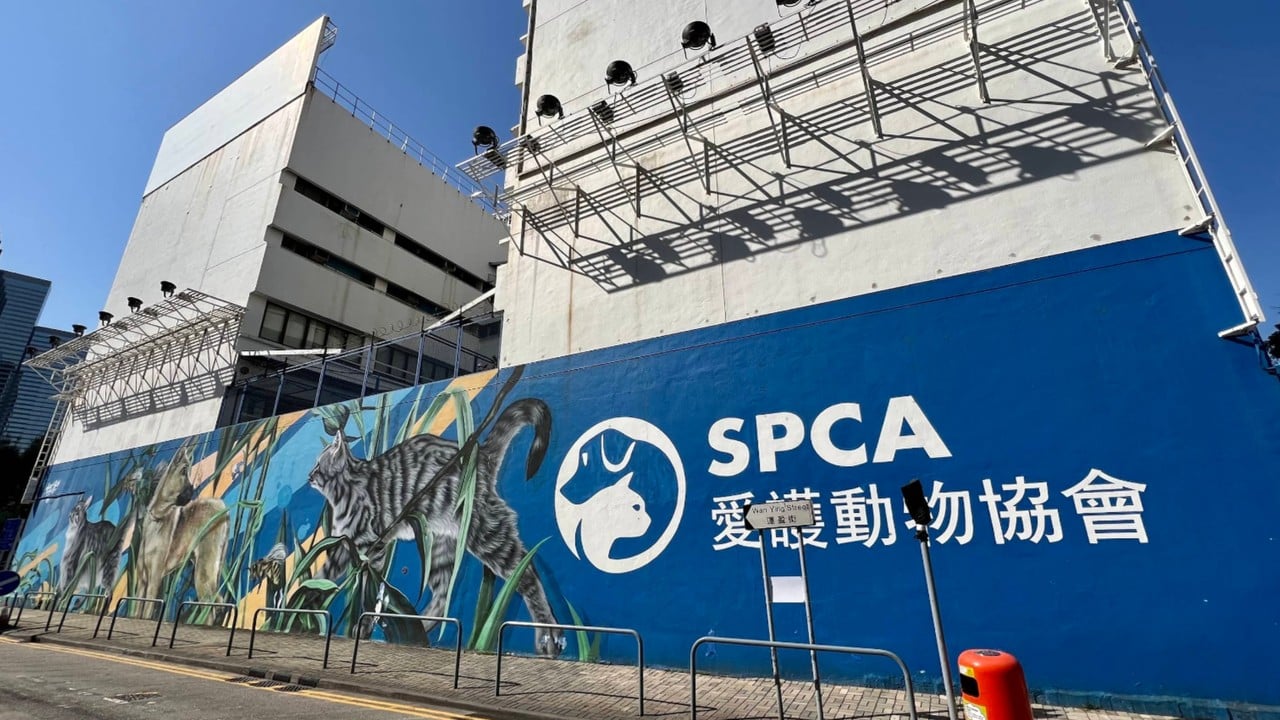
A non-profit organization’s balance sheet is not merely built on capital; it is sustained by public trust. When the Society for the Prevention of Cruelty to Animals (SPCA) Hong Kong abruptly cancelled its scheduled July 18, 2026, fundraising "flag day," it did not do so because of logistical failure. The cancellation represents a defensive maneuver to contain a severe reputational crisis.
The friction began when the SPCA petitioned to remove graphic online footage documenting an extreme animal abuse incident in Jieyang, Guangdong. By attempting to suppress the material, the SPCA activated a predictable public backlash. Analyzing this collapse reveals the structural misalignment between institutional risk-mitigation strategies and the dynamics of grassroots digital advocacy.
The Strategic Miscalculation: Harm Reduction vs. Information Asymmetry
The incident in Guangdong involved four minors who filmed themselves torturing a stray dog and her offspring. Because the perpetrators were under the age of 14, mainland authorities did not pursue criminal charges, opting instead for assignment to a specialized educational facility. This outcome left a justice deficit among animal welfare advocates, who turned to public awareness campaigns—including digital footage distribution and physical banners in high-traffic districts like Mong Kok—to demand systemic legal reforms.
The SPCA’s subsequent intervention can be analyzed through two competing institutional objectives.
The Institutional Logic (The Prevention Function)
The SPCA justified its request to remove the unedited footage by citing two primary operational risks:
- The Contagion Effect: Empirical psychological research indicates that highly publicized, explicit acts of violence can trigger copycat behavior among vulnerable demographics.
- Secondary Trauma: Broad dissemination of unedited graphic violence inflicts psychological distress upon the general public, compromising the baseline mission of welfare organizations to reduce suffering.
The Public Logic (The Advocacy Function)
Conversely, the donor base and grassroots activists operated under a different strategic framework:
- The Exposure Mandate: In jurisdictions with nascent or poorly enforced animal protection laws, public outrage is the primary mechanism for legislative pressure. Suppressing evidence directly dilutes this leverage.
- Accountability Alignment: By requesting that police remove the campaign assets (including Mong Kok banners), the SPCA was perceived not as a protector of animals, but as an agent of state censorship protecting the perpetrators from scrutiny.
                     [Graphic Abuse Footage Exposed]
                                    |
            ________________________|________________________
           |                                                 |
[SPCA: Prevention Logic]                          [Public: Advocacy Logic]
  - Prevent copycat acts                            - Maximize outrage to drive reform
  - Limit secondary trauma                          - Document systemic failure
           |                                                 |
           v                                                 v
  (Requests Video Removal) --------------> (Perceived as Censorship/Cover-up)
                                                     |
                                                     v
                                        [Donor & Volunteer Boycott]
This misalignment converted the SPCA's protective policy into a public relations liability. The organization failed to recognize that in digital advocacy, the perceived suppression of evidence is frequently treated as an endorsement of the status quo.
The Economics of a Flag Day Cancellation
A "flag day" in Hong Kong is not merely a symbolic event; it is a highly structured, capital-generating operation. The decision to cancel the July 18 event carries immediate and measurable balance-sheet consequences.
The SPCA planned to deploy approximately 7,000 volunteers across the city. To understand the financial impact, we can model the lost opportunity cost using a basic fundraising efficiency formula:
$$\text{Gross Revenue Loss} = V \times T \times R$$
Where:
- $V$ represents the number of active, deployed volunteers ($7,000$).
- $T$ represents the average active street hours per volunteer.
- $R$ represents the mean donation collection rate per volunteer-hour.
Street fundraising of this scale routinely generates millions of Hong Kong dollars in unrestricted operating capital. Beyond the immediate cash-flow deficit, the cancellation incurs sunk costs:
- Administrative Overhead: The staff hours dedicated to securing government permits, coordinating regional depots, and organizing logistics.
- Collateral Production: The physical printing of donation bags, tin cans, "flags" (stickers), and volunteer identification assets.
- Donor Lifetime Value (LTV) Erosion: Flag days serve as the primary entry point for converting casual street donors into recurring monthly contributors. Halting this acquisition channel chokes the long-term donor pipeline.
The SPCA chose to absorb these financial losses because the alternative was worse: a highly visible public boycott. Proceeding with 7,000 volunteers on the streets during a period of peak public hostility would have exposed vulnerable volunteers to verbal confrontation, severely damaging internal morale and permanently alienating the volunteer base.
Institutional Communication Bottlenecks
In its apology, the SPCA acknowledged a failure to fully communicate its positioning. This is a classic symptom of institutional insularity. When an organization transitions from an advocacy-first posture to a bureaucratic-first posture, its communication loops undergo a specific breakdown.
First, there is a bureaucratic delay. The SPCA acted through formal police and regulatory channels to address the video distribution. These channels operate outside the public eye. By the time the public realized the banners and videos were being targeted for removal, the SPCA had not yet prepared a transparent, proactive statement explaining why. This created an informational vacuum.
Second, the organization suffered from jurisdictional friction. The abuse occurred in Guangdong, while the SPCA operates in Hong Kong. Although the SPCA stated it attempted to explore cross-boundary legal referral mechanisms, it possessed zero enforcement capabilities in mainland China. By intervening in the digital campaign of a case where it had no legal jurisdiction to deliver justice, the SPCA assumed all of the reputational risk of the case without any of the power to resolve it.
The Strategic Path to Institutional Recovery
To recover from a structural trust deficit of this magnitude, the SPCA must pivot from defensive damage control to structured operational reform.
1. Decouple Content Moderation from Law Enforcement
The SPCA must establish a clear boundary regarding online advocacy. Future efforts to mitigate the distribution of graphic content should be handled through direct engagement with platforms and digital wellness experts, completely bypassing law enforcement agencies. This prevents the organization from being weaponized or perceived as a tool of state-level information control.
2. Implement Dual-Track Advocacy Protocols
When graphic abuse cases occur outside the SPCA's direct jurisdiction, the organization must deploy a dual-track response framework:
- Track A (Clinical Assessment): Publish objective, educational breakdowns of why such behavior occurs and what legislative remedies exist in the target jurisdiction.
- Track B (Alternative Content): Instead of requesting the removal of activist banners, provide alternative high-impact, non-graphic educational campaign assets that activists can use to achieve the same lobbying goals without violating safety policies.
3. Structural Re-allocation of Sunk Capital
The SPCA announced it will redirect its immediate resources toward localized animal welfare support, advocacy, and education. To make this transition credible, the organization must publish a audited, transparent breakdown of how the capital originally earmarked for the July 18 flag day is being deployed into local rescue operations. Transparency in capital reallocation is the only viable mechanism to rebuild the donor pipeline.