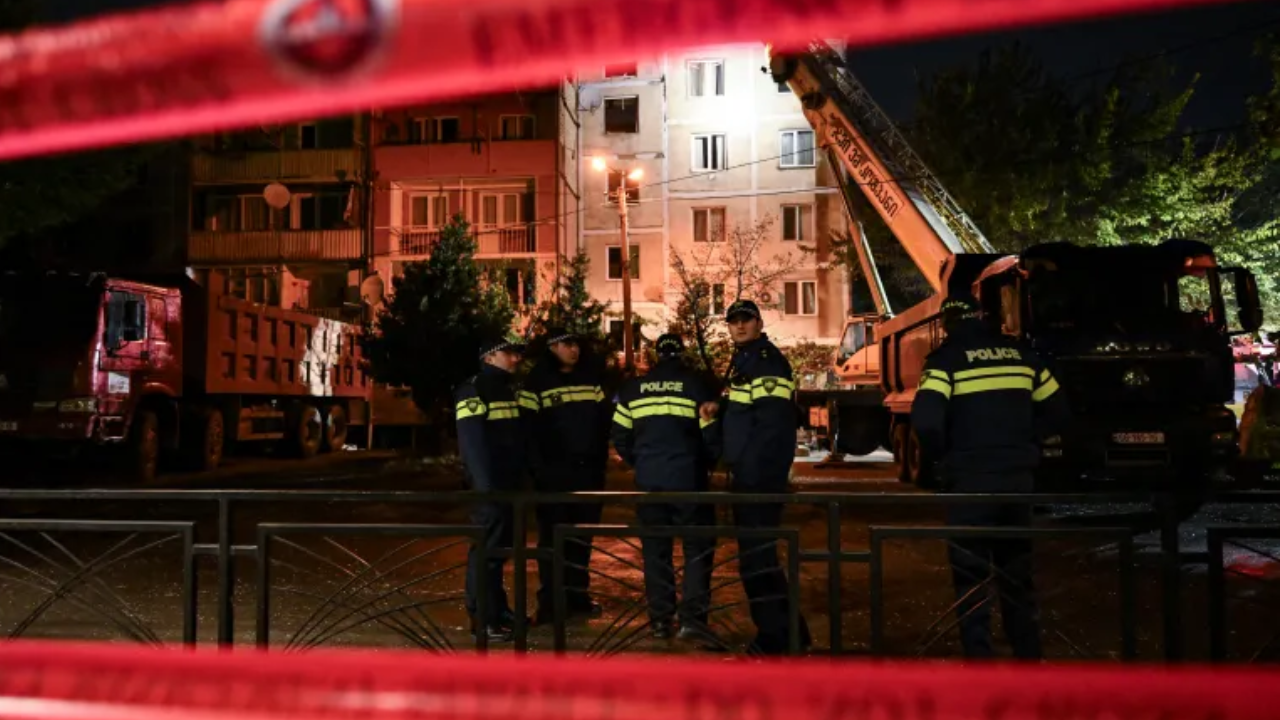
A catastrophic building collapse following a suspected gas leak in Georgia, resulting in six fatalities including a child, exposes a systemic breakdown in utility containment, pressure regulation, and structural load redundancy. Standard news coverage treats these events as isolated tragedies driven by singular mechanical failures. In reality, a fatal structural detonation requires the simultaneous failure of four distinct engineering safeguards: odorization detection, pressure-relief valving, ventilation dispersion, and ignition isolation. Understanding how these systems fail in sequence provides the only reliable framework for preventing mass-casualty residential infrastructure collapses.
The Physics of Fuel-Air Detonations in Confined Structures
Natural gas, composed primarily of methane ($CH_4$), does not explode simply because it escapes a pressurized pipe. For a catastrophic overpressure event to occur inside a residential or commercial structure, the gas must accumulate within a specific stoichiometric window known as the Lower Explosive Limit (LEL) and Upper Explosive Limit (UEL). For methane in ambient air, this window sits precisely between 5% and 15% concentration by volume.
Below 5%, the fuel-air mixture is too lean to sustain flame propagation; an ignition source will produce localized scorching without a pressure wave. Above 15%, the mixture is too rich, lacking the oxygen molecules required to complete rapid oxidation. The fatal threshold occurs when a slow, undetected leak fills an unventilated void—such as a basement, utility shaft, or false ceiling—reaching roughly 9.5% concentration. At this stoichiometric optimum, combustion transitions from a slow burn into a rapid deflagration.
When ignition occurs inside a confined envelope, the resulting thermal expansion generates an instantaneous overpressure wave. Standard residential masonry and timber-frame structures are engineered to withstand vertical gravity loads and moderate lateral wind loads, typically failing at internal pressures between 1.5 and 3 pounds per square inch (psi). A stoichiometric methane deflagration in an unvented room generates pressures exceeding 100 psi. The structure does not merely burn; its load-bearing walls are blown outward, stripping vertical support from upper floors and triggering a progressive pancake collapse.
The Four-Tier Failure Cascade
Every fatal building explosion follows a deterministic chain of events. When an investigation points to a "suspected gas leak," operational analysts look at four specific failure points where the chain could have been broken.
1. Containment Breach and Pressure Excursion
Distribution networks step down gas pressure from high-pressure transmission mains (hundreds of psi) to medium-pressure municipal lines (15 to 60 psi) and finally to low-pressure service lines entering a building (typically 0.25 to 0.5 psi). A containment breach occurs through two primary mechanisms:
- Mechanical Degradation: Corrosion of aging cast-iron or unprotected steel service lines, joint separation caused by soil subsidence, or physical strikes during unpermitted excavation.
- Regulator Over-Pressurization: If the service regulator fails in the open position, medium-pressure gas floods low-pressure interior piping. Internal appliance valves, gaskets, and flexible connectors designed for half a pound of pressure rupture instantly under 40 psi, turning every stove and water heater into a high-volume gas jet.
2. Odorant Fade and Detection Blindness
Pure methane is colorless and odorless. Utility operators inject mercaptan—a sulfur-based compound detectable by the human nose at parts-per-billion concentrations—to provide an early warning system. This safeguard fails under specific chemical and environmental conditions:
- Soil Scrubbing: When an underground service pipe leaks, gas migrates through soil toward the path of least resistance, often following utility trenches directly into a building's foundation. Moist, iron-rich, or clay soils chemically adsorb mercaptan, stripping the odorant before the gas enters the basement. Occupants inhale an odorless, lethal concentration without warning.
- Olfactory Fatigue: Continuous low-level exposure desensitizes human olfactory receptors within minutes, rendering residents unable to perceive a rising concentration gradient.
3. Envelope Tightness and Ventilation Failure
Modern building codes prioritize thermal efficiency, sealing structural envelopes to prevent conditioned air from escaping. While this reduces energy consumption, it eliminates passive air exchange. In older, drafty buildings, minor leaks often dilute below the 5% LEL threshold through natural infiltration. In tightly sealed structures, or in subterranean basements lacking mechanical exhaust, leaked gas stratifies. Because methane has a specific gravity of 0.55 relative to air, it rises and pools in ceiling cavities and upper stories, creating an invisible reservoir of fuel waiting for an ignition trigger.
4. Ubiquitous Ignition Sources
Once a confined space reaches the 5% to 15% explosive window, ignition is statistically inevitable in an occupied building. Unlike industrial facilities classified under hazardous location standards, residential buildings contain dozens of unshielded arc generators:
- Thermostatic Relays: Refrigerators, HVAC systems, and water heaters cycle on and off automatically, creating microscopic electrical arcs across mechanical contact points.
- Solid-State Electronics: Light switches, doorbell transformers, and plugged-in appliances generate sufficient spark energy (methane requires only 0.28 millijoules for ignition, less than one-tenth the energy of a static shock from walking across a carpet).
Distinguishing Known Mechanisms from Investigative Hypotheses
In the immediate aftermath of a structural collapse, rescue operations take precedence over forensic metallurgy. Operational discipline requires separating established physical realities from preliminary hypotheses.
Confirmed Operational Realities:
- The structural failure mode—complete leveling of the building envelope—indicates a distributed internal overpressure event rather than a localized point-source explosive, which typically creates a localized crater while leaving peripheral load-bearing elements intact.
- The presence of multiple fatalities, including vulnerable occupants like children, points toward an unannounced ignition event occurring during normal occupancy, confirming that early warning systems (olfactory detection or audible methane alarms) either failed to trigger or were absent.
Variables Requiring Forensic Verification:
- Origin Point (Utility vs. Interior): Investigators must pressure-test the municipal main and service lateral up to the meter to determine if the leak originated outside the foundation (implicating utility maintenance and soil migration) or downstream of the meter (implicating interior plumbing, appliance failure, or unauthorized tampering).
- Regulatory Compliance: Whether the building possessed functional excess-flow valves (EFVs), which automatically slam shut when gas flow exceeds normal appliance demand, remains an open investigative variable.
- External Triggers: Seismic micro-shifts, recent nearby excavation work, or extreme temperature fluctuations that induce ground heave must be ruled out as catalysts for pipe shear.
Structural Limitations of Current Municipal Safety Models
Standard utility safety protocols rely heavily on periodic drive-by leak surveys using vehicle-mounted laser methane detectors and public self-reporting via odor detection. Both mechanisms suffer from severe operational blind spots.
Drive-by optical sensors measure atmospheric plumes along public roadways. They frequently miss subterranean leaks where gas migrates laterally under paved surfaces directly into building basements without venting to the street. Relying on human olfaction is fundamentally flawed due to mercaptan scrubbing in soil and the inability of sleeping occupants to detect odors.
Furthermore, the economic structure of utility maintenance creates a capital allocation bottleneck. Replacing legacy cast-iron and bare-steel distribution networks costs millions of dollars per mile. Regulators and utility operators frequently balance capital expenditure against statistical risk, leaving aging pipe segments in service under monitoring protocols that cannot detect sudden brittle fractures or third-party excavation damage in real time.
Tactical Risk Mitigation Protocol
Eliminating fatal building explosions requires shifting from passive, human-dependent detection to automated, physical isolation. Building owners, municipal regulators, and utility operators must execute three specific interventions:
- Mandate Point-of-Entry Excess-Flow Valves (EFVs): Install mechanical EFVs on all residential and commercial service lines. Unlike electronic sensors, an EFV operates purely on fluid dynamics; if a line ruptures or an interior pipe shears, the sudden surge in gas velocity forces a spring-loaded valve shut within milliseconds, starving the building of fuel before an explosive concentration can accumulate.
- Deploy Networked Methane Interlocks: Replace standalone battery-operated gas alarms with hardwired, lower-explosive-limit sensors positioned within 12 inches of ceilings in utility rooms and basements. These sensors must be wired directly to an automated solenoid shutoff valve at the exterior meter, cutting gas supply automatically when concentrations reach 10% of the LEL (0.5% gas-in-air)—well below the threshold of combustion.
- Enforce Sub-Slab Depressurization and Venting: In regions with aging distribution infrastructure or expansive clay soils, retrofit subterranean basements with continuous mechanical ventilation or passive vapor barriers to prevent migrating underground gas plumes from pooling inside foundation walls.