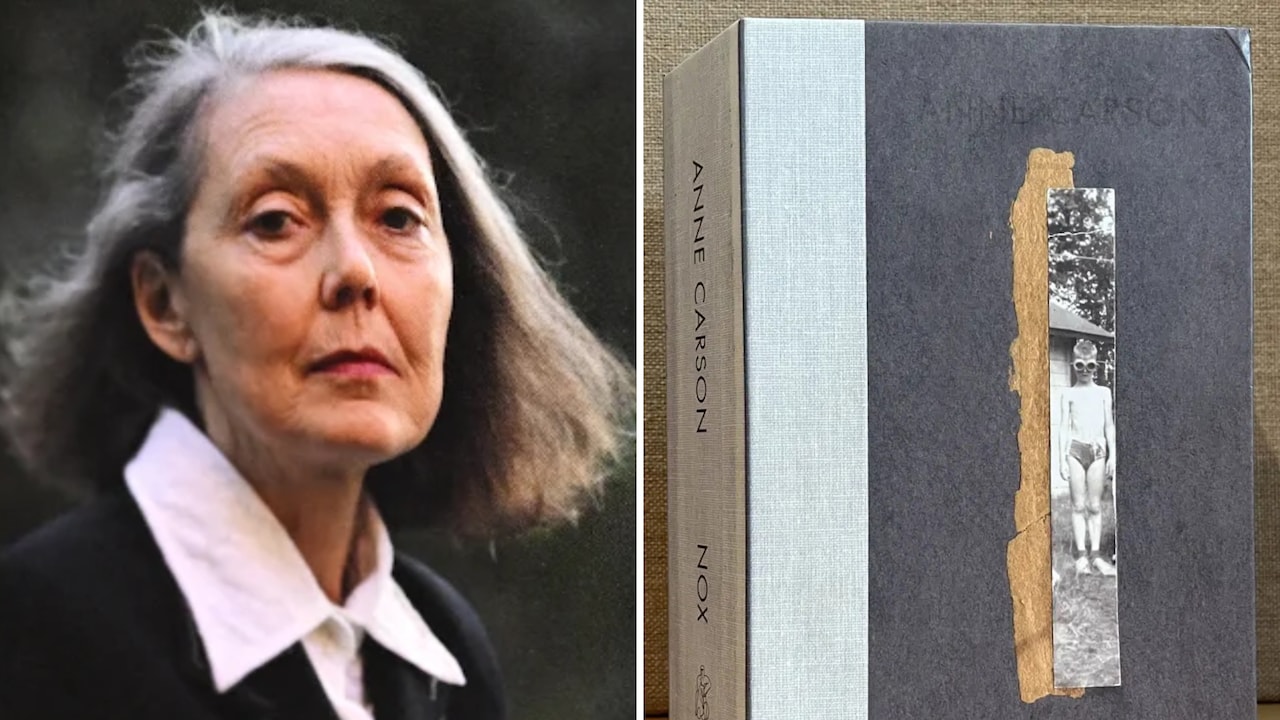
Anne Carson was sweeping her kitchen floor in Iceland when the Swedish Academy called. She didn't answer right away. Her husband, Robert Currie, had to insist she call them back. When she finally picked up the phone, she learned she had just won the 2026 Nobel Prize in Literature.
For readers who have spent decades tracking her career, the news felt both overdue and radically disruptive. The Swedish Academy cited her "bold and inventive oeuvre that, in playful dialogue with the classical tradition, has created new forms for contemporary literature". Translation? They honored a writer who refuses to stay inside any literary box you try to put her in.
If you've never read Carson, opening one of her books can feel disorienting. She doesn't write standard poetry collections or traditional novels. Instead, she welds ancient Greek scholarship, personal essays, comic strips, prose poems, and fragmented grief into something entirely her own. She is the 19th woman to win the prize out of 123 laureates, joining a Canadian literary lineage that includes Alice Munro, but bringing an entirely different kind of intellectual electricity to the table.
The Classical Origin of a Modern Rebel
Carson didn't set out to become a conventional literary darling. Born in Toronto in 1950, her path through academia was circuitous. She dropped out of the University of Toronto early on to try graphic design before returning to devour ancient Greek poetry, eventually earning her PhD.
That deep immersion in antiquity shapes everything she touches. But she doesn't treat the ancient world as a museum artifact behind glass. She treats Sappho, Euripides, and Stesichoros as living, breathing contemporaries who happen to be texting from another room.
When you read Autobiography of Red—her breakthrough 1998 novel in verse—you encounter a mythical red monster named Geryon navigating modern heartbreak, photography, and a volatile love affair with a man named Herakles. It sounds bizarre on paper. On the page, it hits with devastating emotional accuracy. She takes archaic fragments and bends them into contemporary mirrors.
Why Traditional Boundaries Stifle Writing
Most writers pick a lane. You write novels, or you write poetry, or you write literary criticism. Carson looks at those boundaries and treats them like suggestions meant to be broken.
In works like The Glass Essay, she moves seamlessly from three lonely women sitting at a kitchen table to Emily Brontë's biography, treating critical analysis and lyrical lament as parts of the exact same human impulse. In Nox, an elegy for her brother designed as an accordion-fold book packaged in a box, she glues photographs, dictionary definitions, and handwritten translations together into a physical artifact you have to hold to understand.
She has admitted in interviews that her experimental style constantly flirts with collapse. It gets weird. Sometimes it falls apart. But that willingness to risk total failure is precisely why her work commands such fierce loyalty among readers and fellow authors. She isn't writing to please market trends or hit bestseller lists. She's chasing a specific thought until it breaks open.
Where to Start If You Are New to Her Work
Jumping straight into academic translations of ancient Greek drama can feel intimidating if you aren't a classicist. Don't start there.
Begin with Autobiography of Red. It reads like a novel, moves like poetry, and stays with you for weeks after you close the back cover. From there, pick up Men in the Off Hours, where Anne Carson turns her gaze toward everything from Edward Hopper paintings to the afterlife of professional football players.
Keep a dictionary nearby. Pay attention to how she spaces her lines. Let go of the need for a neat narrative arc. When you stop looking for traditional plot structures and start paying attention to the way she builds emotional tension through pure syntax, you begin to see why the Swedish Academy had no choice but to hand her the highest honor in letters.
Go pick up a copy, sit somewhere quiet, and watch how a classicist from Toronto permanently rewrote what literature is allowed to do.