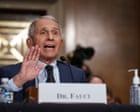
You would think years after the worst of the crisis faded, Washington would move on. Instead, Dr. Anthony Fauci finds himself right back under the congressional microscope. Senator Rand Paul and his Republican colleagues refuse to let the issue go, dragging the retired infectious disease chief back for another high-profile grilling over the origins of Covid-19.
If you are wondering why this feud refuses to die, look straight at the partisan divide over government accountability, scientific transparency, and how the world's most disruptive modern pandemic actually started.
The Core Conflict Behind the Subpoena
Senators pushed ahead with a subpoena forcing Fauci back to Capitol Hill. Leading up to the showdown, Republicans dropped over a thousand pages of Fauci's personal pandemic-era diary entries. Critics claim these notes reveal a split between his private uncertainties and his public messaging.
Fauci's defenders call the ongoing crusade an obsessive witch-hunt. Over 150 infectious disease experts signed public letters condemning the continuous hearings as political theater designed to harass a public servant who spent decades advising multiple presidential administrations.
Yet, the questions keep coming because definitive proof remains elusive. Intelligence agencies themselves remain split. Some lean toward a natural zoonotic spillover at a Wuhan wet market, while others point toward a potential laboratory incident. Because absolute certainty is missing, the political battleground stays wide open.
The Gain of Function Debate
At the heart of the Republican line of questioning is taxpayer-funded research. Lawmakers accuse Fauci's agency, the National Institute of Allergy and Infectious Diseases, of funding dangerous gain-of-function experiments at the Wuhan Institute of Virology through intermediaries like EcoHealth Alliance.
Fauci has repeatedly denied these claims, stating that the specific grants did not involve enhancing viruses to make them more lethal to humans and calling allegations of a cover-up preposterous. Technical definitions matter here, and they get lost in political soundbites. Scientists argue that the baseline research tracked natural coronavirus strains to understand potential threats, while critics insist the work crossed ethical and safety lines.
What the Private Journals Actually Show
The released journals cover the frantic early days from late 2019 through late 2022. They show a scientific community scrambling in real-time, dealing with fragmented data, shifting infection rates, and immense pressure from the White House.
Naturally, early private notes reflect uncertainty. Science relies on changing hypotheses as new evidence arrives. Critics treat every early shift in thought as a deliberate lie, while scientists view it as standard trial-and-error during an unprecedented global emergency. When you look at how information evolved during those initial months, changing guidance was inevitable, even if the public communication often felt clumsy and uncoordinated.
Stop expecting a clean resolution to this fight. The investigations will likely continue as long as political leverage remains attached to the pandemic's disputed beginnings.
To make sense of the noise, ignore the partisan theater and focus on the actual audit trails. Track the peer-reviewed papers, look at intelligence updates without the political spin, and accept that some historical answers take decades to surface.
Watch Anthony Fauci testify on COVID-19 origins
This video captures the intense congressional questioning and Fauci's direct defense regarding the origins of the pandemic and public health protocols.