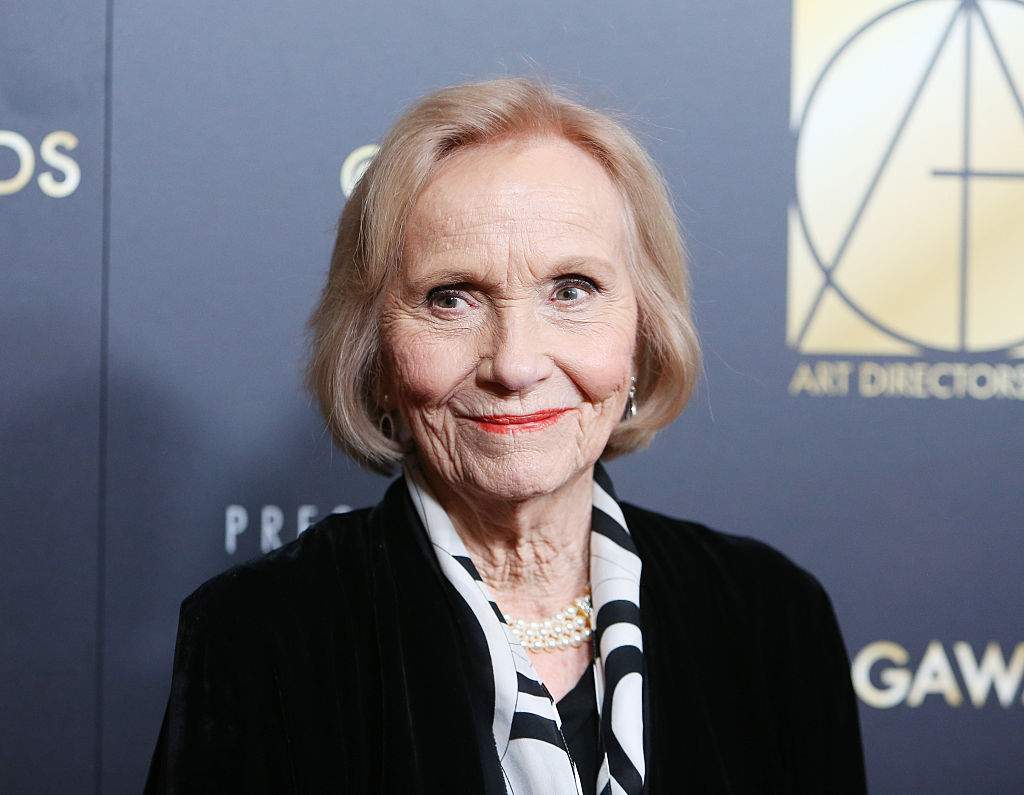
The passing of Eva Marie Saint at the age of 102 marks the termination of a distinct epoch within the American film industry. Standard retrospectives frequently reduce such longevity to sentimental cliches about the golden age of cinema. A rigorous appraisal, however, requires examining the structural mechanics of her career, the institutional constraints of the studio system, and the deliberate economic choices that governed her professional trajectory.
The Debut Vector and the Academy Optimization
Most performers spend decades building a brand equity baseline before securing critical validation. Saint bypassed this iteration cycle entirely through her motion picture debut in Elia Kazan's 1954 feature, On the Waterfront. Cast as Edie Doyle, she operated within an aggressive naturalist framework that contrasted sharply with the stylized melodrama prevalent in mid-century Hollywood. Meanwhile, you can read related stories here: Why Hollywood Custody Battles Are Never About The Kids.
The performance leveraged a strategic contrast coefficient. Playing opposite Marlon Brando’s kinetic, method-driven physicality, Saint maintained a grounded, understated register that maximized her screen presence without inflating runtime or dialogue density. This economy of expression yielded an immediate Academy Award for Best Supporting Actress. In industry terms, this established an elite valuation ceiling at t-zero of her feature film career, eliminating the standard adoption curve required by studio marketing departments.
The Hitchcock Variable and Genre Diversification Risk
Transitioning from gritty realism to high-gloss suspense represents a critical failure point for many actors. In 1959, Saint accepted the role of Eve Kendall in Alfred Hitchcock’s North by Northwest. This project tested a different operational model: the sophisticated, dual-identity femme fatale navigating a cross-country MacGuffin narrative alongside Cary Grant. To understand the full picture, check out the detailed analysis by Associated Press.
The risk profile of this transition was substantial. Typecasting threatened to pigeonhole actors who broke out in gritty social dramas into perpetual regional or gritty melodramas. By executing a pivot to a polished romantic thriller, Saint diversified her professional portfolio. The economic implication was immediate: access to top-tier international distribution networks and sustained residual value across multiple cinematic categories. The technical precision required to match Grant's deadpan delivery while maintaining an aura of espionage ambiguity demonstrated high adaptive range—an asset rarely quantified in traditional box-office metrics.
The Opportunity Cost Function of Domestic Priority
The most consequential variable in Saint’s career trajectory was her deliberate rejection of the maximization imperative. Traditional Hollywood growth metrics dictate that an actor post-Oscar win must scale production volume—accepting contiguous multi-picture deals, global press tours, and relentless commercial visibility to compound fame.
Saint explicitly altered this cost function. Confronted by management pressures to intensify her output while raising young children, she exercised a strategic contraction. Her rationale was unambiguous: maximizing career velocity required subordinating domestic stability, a trade-off she systematically refused.
[Traditional Trajectory]  --> High Volume  --> Burnout / Brand Saturation
[Saint Optimization Model] --> Bounded Output --> Extended Longevity & Asset Preservation
By prioritizing family over becoming a ubiquitous box-office fixture, she optimized for long-term psychological sustainability rather than short-term market saturation. This decision depressed her cumulative filmography volume relative to contemporaries, but it insulated her from the volatility and burnout that prematurely truncated numerous studio-era careers.
Institutional Memory and the Post-Golden Age Adaptation
As the studio system fractured in the 1960s and 1970s, many legacy actors struggled to find alignment with the gritty auteur-driven ethos of New Hollywood or the subsequent high-concept blockbusters. Saint mitigated this structural disruption by fluidly migrating across mediums. She maintained a continuous operational footprint across television, theater, and select cinematic character roles—ranging from Exodus to later television work like The Legend of Korra.
Her longevity serves as a case study in career risk management. By refusing to compromise personal parameters for the sake of hyper-growth, and by selecting scripts with rigorous narrative integrity, Saint constructed a professional blueprint defined by durability rather than transient ubiquity. Her century-plus lifespan mirrored her career architecture: deliberate, resilient, and structurally sound.
Hollywood legend Eva Marie Saint dies at 102 | 7NEWS
This video provides historical context and archival footage highlighting Eva Marie Saint's monumental contributions to cinema across her seven-decade career.