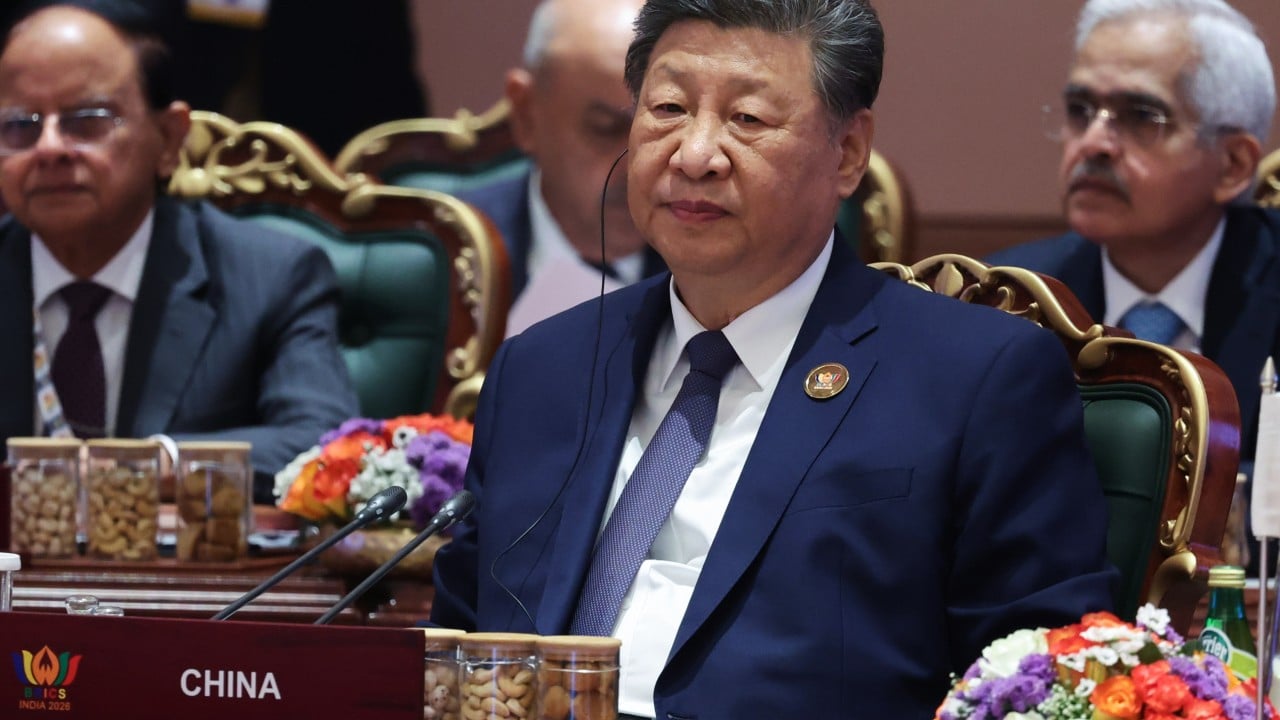
The structural evolution of multilateral economic blocs depends less on shared ideological alignments and more on supply chain interoperability. When Beijing formally introduced its five-point framework during the recent summit in New Delhi, the announcements were broadly interpreted through the lens of standard diplomatic messaging. A rigorous analysis of the underlying initiatives reveals a systematic blueprint for industrial integration, targeting the core bottlenecks of emerging market economies: high compute costs, fragmented trade portals, and a deficit in standardized engineering talent.
To deconstruct the mechanism of this technological statecraft, one must examine the specific vectors through which technical standards and infrastructure are being deployed across the Global South.
The Open Source Compute Strategy
The primary initiative centers on establishing an open-source artificial intelligence community and supporting large language model development. Historically, developing economies face severe capital constraints when attempting to build proprietary foundational models, compounded by proprietary licensing structures originating from Western markets.
By subsidizing and exporting open-source architectures, Beijing changes the unit economics of AI adoption for Brics members. Rather than purchasing expensive, proprietary commercial stacks, member states gain access to localized training models and specialized educational seminars. This creates a technological dependency loop. When engineers in Brazil, South Africa, or India train on Chinese-backed open-source repositories and utilize standardized developer frameworks, the underlying telemetry, hardware optimization pipelines, and toolchains naturally align with Chinese technological ecosystems.
Structural Friction Reduction in Trade and Industry
The second and third pillars target administrative and digital friction within cross-border commerce. The proposed special economic zone partnership utilizes an intelligent portal to coordinate regulatory and logistical policies.
In traditional trade frameworks, administrative overhead accounts for a measurable percentage of transactional drag between developing nations. By introducing a synchronized digital ecosystem cloud platform, the initiative attempts to automate customs alignment, industrial matching, and data exchange. The economic mechanism at play here is transaction cost minimization. When supply chain nodes across multiple nations communicate via a standardized digital infrastructure, the velocity of capital and goods increases, directly benefiting the dominant manufacturing exporter of the bloc—China.
The Hardware Deployment Vector
Manufacturing transformation requires capital expenditure that many emerging economies struggle to finance or execute without foreign engineering oversight. The intelligent manufacturing initiative bridges this gap by committing to assist member states in building smart factories and formulating industrial standards.
This is an export of industrial capacity. By establishing normative benchmarks for smart factory automation outside its borders, China secures long-term demand for its industrial machinery, sensors, and robotics sectors. It transforms domestic overcapacity in manufacturing hardware into regional infrastructure projects, locking developing economies into long-term maintenance and upgrade cycles managed by Chinese technical standards.
Human Capital Standardization
Technology transfer is functionally impossible without parallel investments in human capital. The fourth and fifth components—the engineer cultivation alliance and youth exchange programs—address the human element of technical integration.
By creating mutual recognition of competency standards for engineers across Brics nations, educational and professional qualifications become harmonized. When technical training is anchored to specific institutional frameworks, engineers from emerging markets are conditioned to operate, troubleshoot, and expand systems designed around specific technological paradigms.
Strategic Assessment and Market Implications
The long-term outcome of this five-point framework is the formation of a parallel technological standard outside Western oversight. The constraint of this strategy lies in the domestic economic pressures faced by participating nations, many of which must balance alignment with Beijing against trade dependencies elsewhere.
However, for economies seeking rapid industrial upgrading without the stringent conditionalities often attached to Western financial institutions, the Chinese model offers a functional shortcut. The strategic play for enterprises operating within these markets is to prepare for bifurcated technical compliance standards, where software architectures and industrial automation protocols must be engineered to interface simultaneously with distinct geopolitical technology stacks.