The screen glows in the pre-dawn quiet. Long before the morning news cycles churn into motion, before the coffee cups are filled or the city streets hum with traffic, the phone is already alive. There is a specific kind of stillness that belongs only to the very early hours, a stillness usually reserved for prayer or panic. For Natalie Harp, it belongs to neither. Or perhaps, it belongs entirely to both.
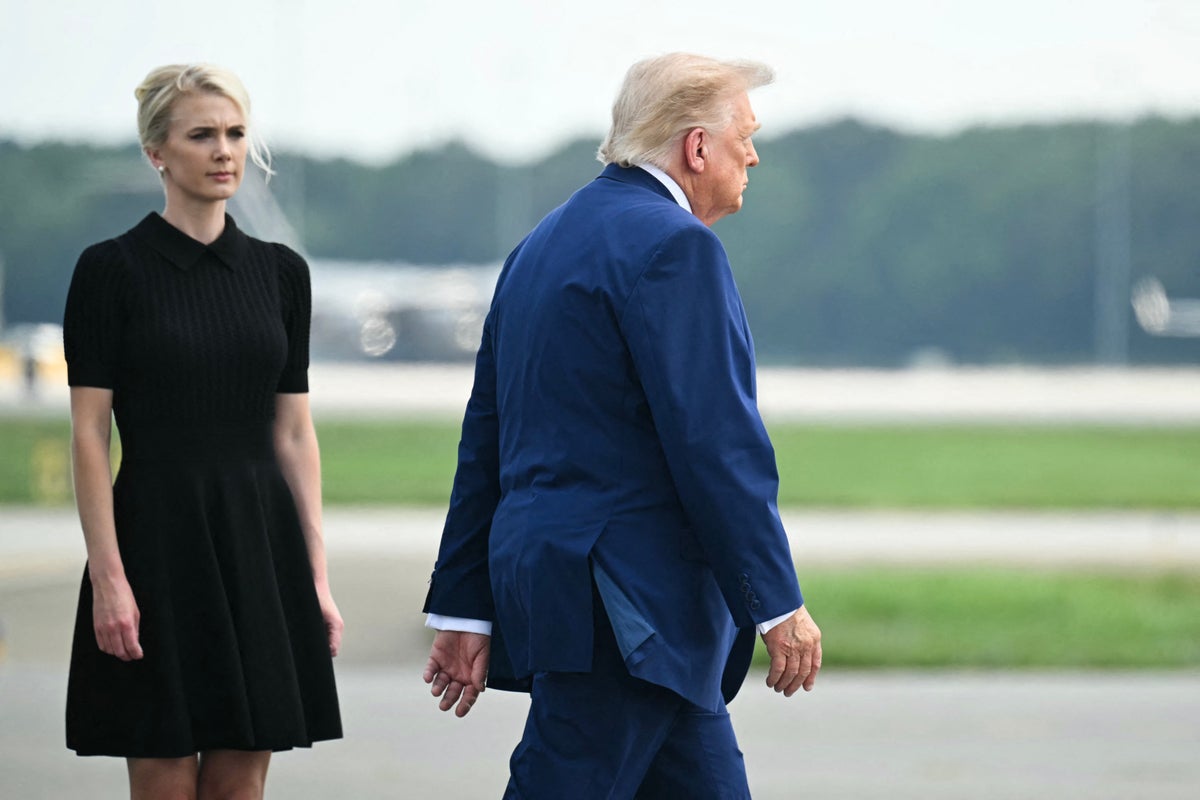
She forgets to eat. She forgets to sleep. These are not merely casual sacrifices tossed off in an interview; they are the physical toll of total absorption. Reports surface, as they often do in the hyper-accelerated slipstream of modern politics, detailing a handwritten note signed with an absolute, unsperving declaration: With all my heart. It is a phrase that belongs in a nineteenth-century romance novel or a cathedral pew. Instead, it is scrawled on internal correspondence, directed toward Donald Trump, an anchor point in a storm that never stops raining.
We look at this and blink. We wonder how a person dissolves so completely into the gravitational pull of another human being.
Gravity. That is the word.
Having spent years observing the eccentric machinery of high-stakes political orbits, I recognize the architecture of this kind of devotion. It does not arrive overnight. It builds itself brick by brick, fueled by proximity, crisis, and a shared sense of existential siege. When you stand next to the fire, you either burn or you become the fuel.
Consider how the modern political aide functions. To the outside observer, they are organizers, speechwriters, handlers. But beneath the institutional job description lies a psychological ecosystem that looks remarkably like monastic life. There are no vows of poverty or celibacy, but there are vows of erasure. Your schedule ceases to be yours. Your appetite becomes an inconvenience. Your identity is neatly folded, placed in a drawer, and replaced by the demands of the principal.
Harp’s journey did not begin in the traditional backrooms of Washington think tanks. She arrived via a very different door, carrying the raw, unfiltered urgency of a survivor. Having battled bone cancer and publicly credited experimental treatments tied to right-to-try legislation championed by Trump, her allegiance was forged in the furnace of personal salvation. When someone hands you your life back, loyalty stops being a political calculation. It becomes a debt that can never be fully repaid.
And so the debt is paid in hours. In lost sleep. In skipped meals. In handwritten notes that leave nothing in reserve.
There is a profound vulnerability in watching this unfold from a distance. It makes us uncomfortable because it holds up a mirror to our own modern search for meaning. We live in an era starved of absolute certainties. Institutions are hollowed out. Traditional anchors drift. When the secular world offers only shifting sands, the totalizing certainty of a charismatic leader offers solid ground—if you are willing to surrender your own footprint to stand on it.
This is where the distinction between a job and a vocation blurs into something unrecognizable.
Step closer for a moment. Imagine the green room air conditioning humming at a low, sub-zero vibration. The television monitors glow with twenty-four-hour commentary, murmuring in a low, constant hum. Papers are stacked precariously on a folding table. In the corner, illuminated by the cold blue light of a smartphone, someone is typing, checking, drafting, anticipating the next tremor before it registers on the Richter scale. The phone buzzes. The heart beats faster. Not out of fear, exactly, but out of readiness.
That readiness is intoxicating. It provides an adrenaline that outlasts hunger. It tells the nervous system that every second matters, that history is being written in real-time, and that you hold the pen—even if your name never makes it to the cover.
Yet, there is a cost. The human body is remarkably resilient, but it keeps a ledger of its own. It remembers every missed meal, every skipped night of rest, every adrenaline spike that substitutes for actual nourishment. Total devotion demands a body, and it consumes it quietly, day by quiet day, until the line between self and service vanishes entirely.
We judge this from the comfort of our detached viewpoints. We call it extreme. We call it unhealthy. But in doing so, we miss the point entirely.
The note signed With all my heart is not an anomaly. It is the logical conclusion of a political culture that has transformed leadership into a secular religion. It reminds us that power in the twenty-first century is not merely transactional. It is deeply, fiercely emotional. It relies on people who are willing to unmake themselves so that the icon can remain standing, larger than life, illuminated against the dark.
The screen dims. The room grows cold. Somewhere in the quiet hours before dawn, another notification lights up the dark, and the machinery starts all over again.