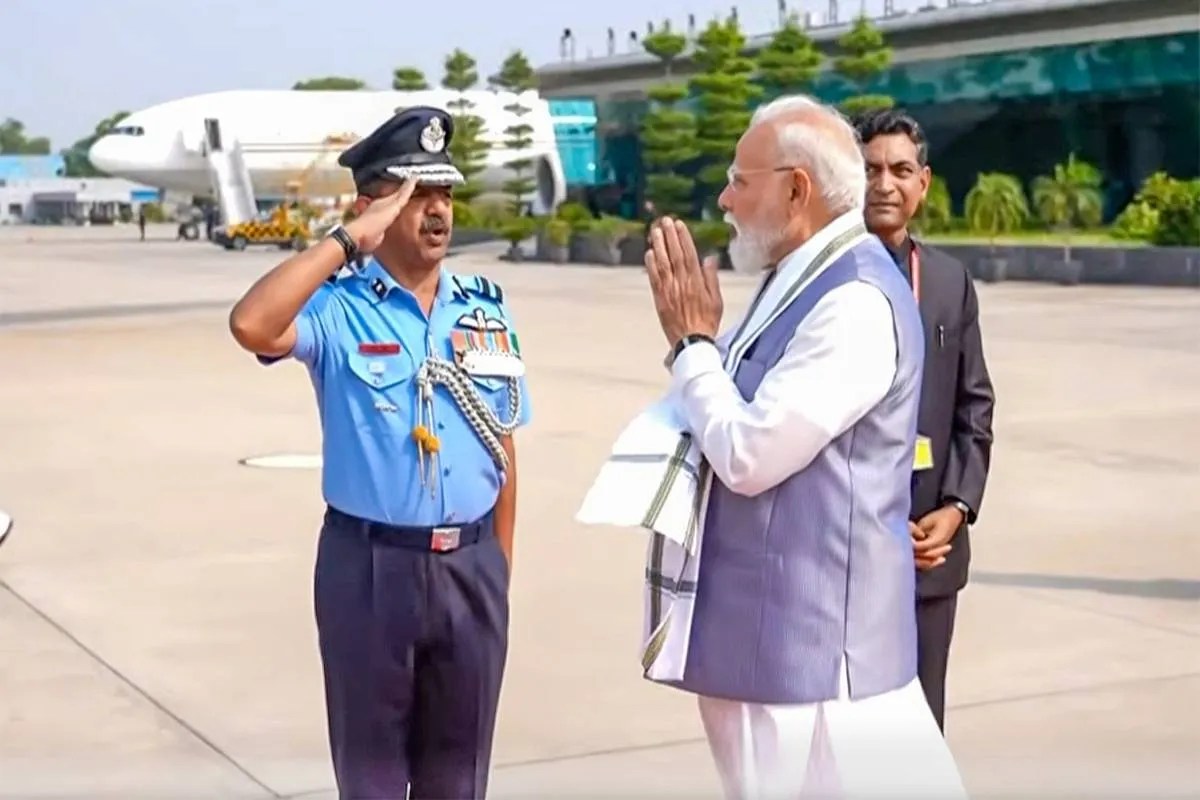
The strategic value of small island developing states is inversely proportional to their landmass and directly proportional to the geometry of their Exclusive Economic Zones (EEZs). With an EEZ spanning 1.3 million square kilometers across the Western Indian Ocean, the Republic of Seychelles commands the primary chokepoints and transit corridors connecting East Africa, the Middle East, and South Asia. Prime Minister Narendra Modi’s June 2026 state visit to Victoria, occurring on the Golden Jubilee of Seychelles' independence, marks a calculated shift from transactional diplomatic engagement to an integrated institutional partnership. This realignment addresses a specific geopolitical necessity: India’s requirement to secure its Sea Lanes of Communication (SLOCs) against structural vulnerabilities, asymmetric threats, and systemic encirclement by extra-regional powers.
The Geostrategic Cost Function of the Western Indian Ocean
To understand the mechanics of India's maritime strategy, the Western Indian Ocean must be analyzed through a cost-benefit framework of maritime power projection. For an blue-water navy operating from the mainland, maintaining a continuous mission-based deployment in remote waters introduces a compounding cost function driven by logistics, transit times, and maintenance intervals.
$$\text{Total Operational Cost} = f(\text{Transit Distance}, \text{Turnaround Time}, \text{Fuel Burn Rate}) + \text{Fixed Overhead}$$
Without access to regional logistics nodes, the operational efficiency of naval assets decays linearly with distance from home ports. Seychelles sits directly adjacent to the primary international shipping lanes through which a significant volume of global trade and energy supplies pass. By anchoring its presence in Victoria, India structurally reduces the variable cost of its maritime security operations.
The geopolitical utility of Seychelles for India operates across three distinct vectors:
- Chokepoint Interdiction Capability: The island nation provides an observation platform over the southern entry points to the Red Sea and the Mozambique Channel, mitigating the risk of state-sponsored interdiction or piracy.
- Asymmetric Risk Reduction: The proliferation of non-traditional threats, including maritime terrorism, narcotics trafficking, and Illegal, Unreported, and Unregulated (IUU) fishing, requires localized enforcement mechanisms rather than distant mainland interventions.
- Strategic Denial: The primary external variable is the expanding footprint of the People's Liberation Army Navy (PLAN) in the Indian Ocean. Securing preferential access to Seychellois infrastructure acts as a counterweight to extra-regional naval basing strategies.
Quantifying the Financial and Digital Infrastructure Blueprint
The bilateral alignment is supported by a structured financial mechanism. The USD 175 million Special Economic Package finalized in early 2026 establishes a blueprint for infrastructure development that avoids the debt-trap vulnerabilities characteristic of competing regional investments. The package is divided into two distinct tranches designed to optimize capital efficiency and local sovereignty.
The first tranche consists of a USD 125 million Rupee-denominated Line of Credit (LoC). By denominating the credit facility in Indian Rupees (INR) rather than USD, the framework insulates the Seychellois economy from exchange rate volatility and global monetary tightening cycles. This credit is earmarked for capital-intensive infrastructure, specifically the modernization of seaports and internal security facilities.
The second tranche comprises USD 50 million in direct grants targeted at high-impact community development projects and technological integration. The primary operational objective here is the exportation of India’s Digital Public Infrastructure (DPI) model. Under agreements to digitize governance, India is deploying modular open-source identity systems and digital payment architectures to Seychelles.
This digital export serves an analytical purpose: it embeds Indian technical standards into the administrative core of the Seychellois state. This technical integration creates long-term institutional path dependency, ensuring that future systemic upgrades, data architectures, and regulatory frameworks remain compatible with Indian systems rather than external alternatives.
The Operational Mechanics of Net Security Provision
India’s self-designated role as a net security provider in the region is often stated in policy documents but rarely broken down into its functional components. In practice, this role is executed through material transfers, intelligence integration, and cooperative surveillance architectures.
During the June 2026 visit, the transfer of the Fast Patrol Vessel Lespwar to the Seychelles Coast Guard illustrated the specific capability-building mechanism employed by New Delhi. The operational requirements of island diplomacy dictate that the recipient nation must possess the localized capacity to patrol its own waters, thereby reducing the direct enforcement burden on the Indian Navy.
[Indian Navy Strategic Assets]
       │
       ▼ (Long-range surveillance & deterrence)
[Joint Maritime Security Architecture] ◄───► [Coastal Radar Systems / Dornier Aircraft]
       │
       ▼ (Localized interdiction & patrolling)
[Seychelles Coast Guard (FPV Lespwar)]
The transfer works via a tiered maritime security model:
- Domain Awareness: India provides the overarching technical surveillance apparatus, utilizing coastal radar systems, shared automatic identification system (AIS) data, and donated Dornier maritime patrol aircraft.
- Data Processing: The information is synthesized through the Information Fusion Centre – Indian Ocean Region (IFC-IOR), establishing a real-time operational picture of the Western Indian Ocean.
- Localized Tactical Response: When a threat is detected—whether a pirate skiff, an illicit cargo vessel, or an unflagged IUU fishing trawler—the Seychelles Coast Guard deploys assets like the Lespwar to intercept, avoiding the need to divert a major Indian surface combatant from higher-priority duties.
This division of labor maximizes regional stability while preserving India’s high-end naval readiness for peer-level deterrence.
Climate Resilience and Port Infrastructure Defenses
A critical vulnerability for small island developing states is their existential exposure to climate disruptions. For Seychelles, seaports represent the literal lifelines of the national economy, handling over 90 percent of inbound supply chains. Rising sea levels and severe weather events present an immediate threat to these nodes, introducing the risk of structural failure and economic paralysis.
To address this, the strategy incorporates climate-resilience engineering under the auspices of the Coalition for Disaster Resilient Infrastructure (CDRI), specifically the Infrastructure for Resilient Island States (IRIS) initiative. Between 2025 and 2027, Indian and Seychellois technical teams are conducting comprehensive maritime risk assessments across all primary port facilities.
The engineering focus centers on three key variables:
- Hydrodynamic Modeling: Assessing the impact of altered wave energy patterns and tidal surges on existing breakwater structures.
- Early Warning Integration: Installing localized sensor networks that feed directly into national emergency centers, providing predictive analytics for extreme weather occurrences.
- Hardened Flood Defenses: Applying targeted civil engineering upgrades to reinforce wharf structures and prevent the inundation of cargo storage yards.
By protecting the physical entry points of the Seychellois economy, India positions itself as an indispensable partner for climate adaptation, offering an alternative to purely extractive infrastructure models.
Structural Divergences and Local Sovereignty Constraints
An objective strategic assessment must account for the structural limitations and historical points of friction within the bilateral relationship. The most prominent bottleneck remains the domestic political sensitivity in Seychelles regarding external military footprints, exemplified by the protracted controversy over Assumption Island.
The original framework envisioned a joint facility on Assumption Island to expand the operational reach of both nations' coast guards. However, domestic political pushback within Seychelles—driven by concerns over sovereignty, constitutional prohibitions against foreign military bases, and environmental anxieties—demonstrated the limitations of top-down strategic arrangements.
The lesson derived from the Assumption Island impasse has informed India's updated approach. The current strategy prioritizes local legitimacy and sovereign ownership over formal alliances or exclusive basing rights. Rather than pushing for sovereign control over land or facilities, New Delhi focuses on enhancing the capabilities of the host nation's institutions.
This model acknowledges that a security architecture built on local institutional strength is more resilient against political transitions than an architecture reliant on lease agreements or extraterritorial concessions. The strategic objective is not to establish an overt Indian military base, but to ensure that the existing Seychellois facilities remain structurally aligned with, and welcoming to, Indian operational requirements.
The Strategic Projection
The geopolitical trajectory of the Indian Ocean will be defined by the competition for maritime access points over the coming decade. India’s engagement with Seychelles under the MAHASAGAR framework (Mutual and Holistic Advancement for Security and Growth Across Regions) provides a clear alternative to traditional power projection models.
The definitive play for Indian strategy involves executing on three specific fronts:
- Accelerating Direct Shipping Links: Moving beyond air connectivity to establish permanent, subsidized maritime trade routes between Mumbai, Chennai, and Victoria to decouple Seychelles from reliance on East Asian supply chains.
- Scaling the Rupee-Denominated Financial Ecosystem: Expanding the local acceptance of Indian digital payment interfaces to cement financial interoperability and lower the transaction costs of bilateral commerce.
- Institutionalizing Naval Interoperability: Increasing the frequency of joint hydrographic surveys and coordinated patrols to turn deep-water access into a standardized operational norm.
By integrating economic security, digital infrastructure, and defensive capacity building into a single policy framework, New Delhi secures its western maritime flank. The relationship establishes that sustainable maritime dominance is achieved not through coercion, but through the systematic reduction of mutual vulnerabilities.