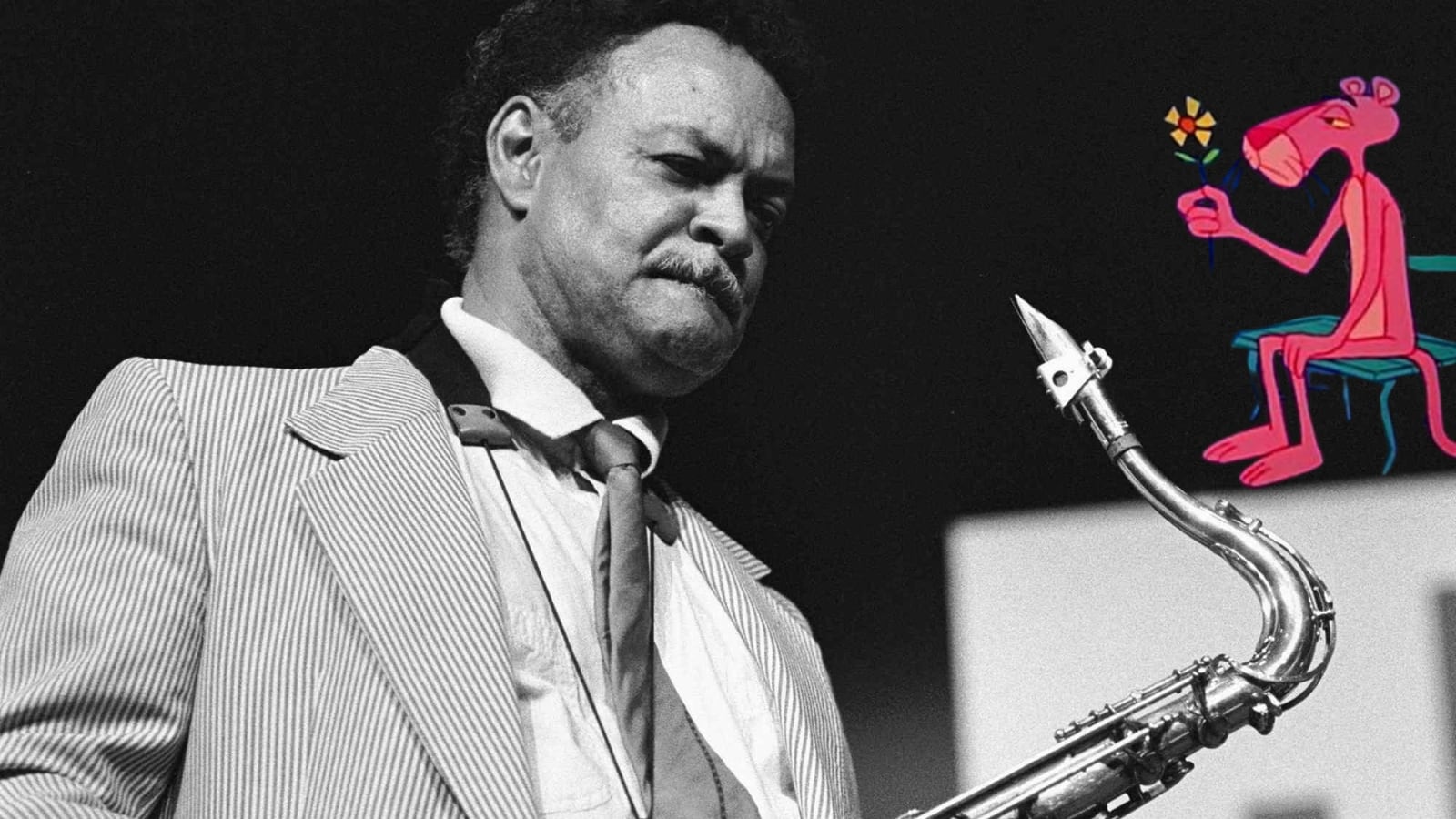
Plas Johnson’s execution of Henry Mancini’s The Pink Panther Theme in 1963 serves as a foundational case study in cultural resonance generated through session economics. The recording—completed in just two takes—produced one of the most recognizable tenor saxophone lines in recorded history. Behind this singular cultural artifact lies a structural framework that defined the mid-century American recording industry: the high-yield, white-label labor force known colloquially as The Wrecking Crew.
Understanding Johnson’s career requires bypassing superficial obituaries to examine the mechanics of session work, tone production, and the institutional dynamics of mid-20th-century Los Angeles studios.
The Economics of the Mid-Century Session Engine
Between 1950 and 1975, the recorded music industry shifted from big band ensemble touring to centralized studio production. This transition established a high-throughput assembly line in Los Angeles, where record labels minimized capital expenditure by outsourcing instrumental performance to an elite pool of session players.
Plas Johnson functioned as a core node within this operational matrix. The economic model relied on four distinct operational variables:
- Sight-Reading Velocity: Producers operated on strict union clock-out intervals (typically three-hour blocks to track three to four songs). Players were expected to execute complex arrangements on sight, eliminating rehearsal overhead.
- Dynamic Versatility: A tier-one session player had to navigate genre boundaries instantaneously—transitioning from a Frank Sinatra swing arrangement to a B.B. King blues session, a Marvin Gaye R&B track, or a Henry Mancini film score within a single workday.
- The Eight-Bar Efficiency Principle: As Johnson noted regarding his arrangement strategy, his primary directive was to elevate a track within a constrained window—typically an 8- to 12-bar solo, followed by vocal fills.
- Anonymity and Asymmetrical Value Capture: Session musicians received flat union scale wages while record companies and frontline artists captured the long-term equity and backend royalties.
[Record Label / Producer]
        │
        ├──> Frontline Artist (Equity & Long-Term Backend Royalties)
        │
        └──> Session Musician / Wrecking Crew (Flat Union Scale Fee)
                │
                └──> High Throughput / Immediate Execution
This structural dynamic meant that while Johnson’s tenor solo on The Pink Panther Theme earned three Grammy Awards and an Academy Award nomination for the score, his direct compensation was capped at the base session rate.
Technical Deconstruction: The Mechanics of the "Panther" Tone
Mancini explicitly composed The Pink Panther Theme with Johnson’s specific timbre in mind. The composition relies on a combination of swing phrasing, chromatic tension, and a sub-tone technique that demands precise physical control over the instrument.
Acoustic Architecture
- Sub-Toning and Air Stream Control: The opening motif requires softening the lower register of the tenor saxophone without losing pitch center. Johnson accomplished this by dropping his lower jaw slightly to damp the reed with his lower lip, allowing a higher ratio of air-to-tone ratio that created the signature "stealth" character.
- Micro-Timing and Pitch Bending: The slide into the principal minor third interval relies on vocalized pitch manipulation. Rather than hitting notes squarely on the pitch center, Johnson approached key target notes from below, introducing a microtonal blues inflection rooted in his early jump-blues career in Louisiana.
- Dynamic Contrast: The arrangement builds from an isolated, whispered tenor motif into an explosive full-horn ensemble splash. Johnson’s ability to maintain structural projection without overpowering the rhythm section’s bassline provided the mix engineer with natural dynamic balance at the microphone, requiring zero artificial compression during tracking.
Portfolio Distribution: From R&B to Hollywood Big Bands
Johnson’s catalog reflects an extraordinary volume of output across multiple market segments. An analysis of his recording footprint demonstrates how his labor was leveraged across three primary audio verticals:
                  ┌── Commercial Pop & R&B (Sam Cooke, The Beach Boys, Marvin Gaye)
                  │
Plas Johnson ─────┼── Vocal Standard Accompaniment (Frank Sinatra, Nat King Cole, Ella Fitzgerald)
                  │
                  └── Film & Television Soundtracks (Pink Panther, Peter Gunn, Merv Griffin Show)
Commercial Pop and R&B
Starting in the early 1950s after relocating from Louisiana to Los Angeles, Johnson provided the rhythmic and harmonic spine for foundational R&B and early rock tracks. His work with Sam Cooke (Twistin' the Night Away) and later with mainstream pop acts like The Beach Boys showcased his ability to deliver driving, blues-based horn lines that anchored commercial singles.
Vocal Standard Accompaniment
Arrangers such as Billy May and Nelson Riddle regularly requested Johnson for backing bands supporting Frank Sinatra, Nat King Cole, Peggy Lee, and Ella Fitzgerald. In these settings, the saxophone functioned as a secondary vocal counterpart. Johnson’s role was to fill the frequency gaps between vocal phrases without encroaching on the singer's formant range.
Film and Television Soundtracks
Beyond The Pink Panther, Johnson was a staple in Hollywood soundstages, contributing to scores by Henry Mancini, Lalo Schifrin, and Neal Hefti. His decade-plus tenure in the house band for The Merv Griffin Show further underlined the transition of session elite into broadcast television production.
Structural Bottlenecks of the Session Model
While the mid-century studio network provided steady employment for a small group of musicians, it carried distinct systemic limitations:
- Erosion of IP Ownership: Session musicians created iconic hooks that defined multi-platinum records, yet they held zero copyright interest in the underlying sound recordings or compositions.
- Erasure of Credit: Album packaging frequently omitted session personnel entirely. As Johnson noted in later retrospectives, touring acts were routinely constructed to mimically mime over studio tracks cut by uncredited session veterans.
- Technological Disruption: The advent of multi-track overdubbing, synthesizers, and eventually digital sampling in the late 1970s and 1980s reduced the demand for full live horn sections, concentrating session opportunities into a rapidly shrinking market.
Strategic Play: The Session Musician Playbook for the Modern Industry
The institutional framework that supported Plas Johnson’s career has largely evolved, but the underlying mechanisms for monetizing instrumental expertise remain active in today's sync, licensing, and remote-session economy. Modern instrumentalists and studio operators must adapt Johnson’s operational discipline while fixing the structural flaws of his era's value-capture model:
- Retain Master and Publishing Stakes: Modern session contributors should trade reduced upfront fees for fractional ownership in master recordings or songwriting splits, particularly when creating defining hooks or melodic solos.
- Build a Distinctive Sonic Signature: Rather than aiming for absolute neutrality, develop a specific tonal identity. Producers hired Johnson specifically because his tone brought a distinct, high-value asset to the recording within two takes.
- Diversify Across Media Outlets: Avoid single-market dependence. Balance commercial record dates with sync licensing for film, television, gaming, and digital media to ensure recurring yield across long-tail distribution channels.