The coffee in the glass cup was already cold, a skin of pale oil reflecting the fluorescent glare of the briefing room in Singapore. Outside, the maritime traffic moved through the Strait like beads on an abacus, methodical, endless, carrying the physical lifeblood of twenty nations. Inside, a mid-level defense attaché traced the rim of his cup with a thumb that bore a faint, permanent indentation from decades of handling cryptographic keypads.
He was tired. Not the tired of a late night, but the bone-deep fatigue of a man who has spent twenty years trying to explain an obvious truth to people who want simple math. You might also find this related article interesting: Why Weaponized Migration at Spains Border Is Destined to Happen Again.
For decades, the geography of power in the western Pacific was written in bold, permanent ink. Ports belonged to us. Lanes were kept open by our gray hulls. If a storm brewed three thousand miles away from the continental shelf, our flag was the one expected to fix the barometer. We drew circles on maps and called them perimeters. We built bases that looked like little pieces of Ohio dropped onto tropical archipelagos, complete with commissaries selling bulk-size cereal and bowling alleys smelling of floor wax.
It felt safe. It felt permanent. As discussed in recent reports by BBC News, the results are widespread.
It was also an engineering error.
Consider what happens when you build a bridge with only one pier. No matter how thick the concrete, no matter how deep the bedrock, the weight of the entire span focuses on a single point of failure. A gale hits from an angle the structural engineers forgot to model, and the whole thing groans.
That is what the Pentagon realized somewhere around the turn of this decade, though the admission came in the dry, bloodless dialect of congressional hearings and white papers. The strategy is changing. They call it digging in, but do not mistake that for the old habit of building bigger walls.
They want partners, not dependency.
To understand why this distinction keeps career diplomats awake at three in the morning, you have to leave the air-conditioned corridors of Washington and walk the docks of nations caught between gravity and momentum.
Imagine a dockworker in Manila named Mateo. I met someone much like him years ago during a port visit—calloused hands, a laugh that sounded like gravel rattling in a tin can, and a pragmatic view of geopolitics that put most think-tank fellows to shame. Mateo does not care about freedom of navigation as an abstract noun. He cares about the price of diesel for his cousin’s inter-island ferry. He cares whether the shipyard down the coast can service his crane without waiting six months for a proprietary spare part manufactured in a factory four thousand miles away.
For a long time, the American security architecture in Asia offered nations like Mateo's a Faustian bargain. We will keep the shipping lanes clear, the doctrine said. In exchange, you will let us park our steel where we want it, and you will buy our systems, and you will nod when we tell you who the weather is coming from. It was an arrangement built on patronage.
Patronage feels generous until the patron gets distracted.
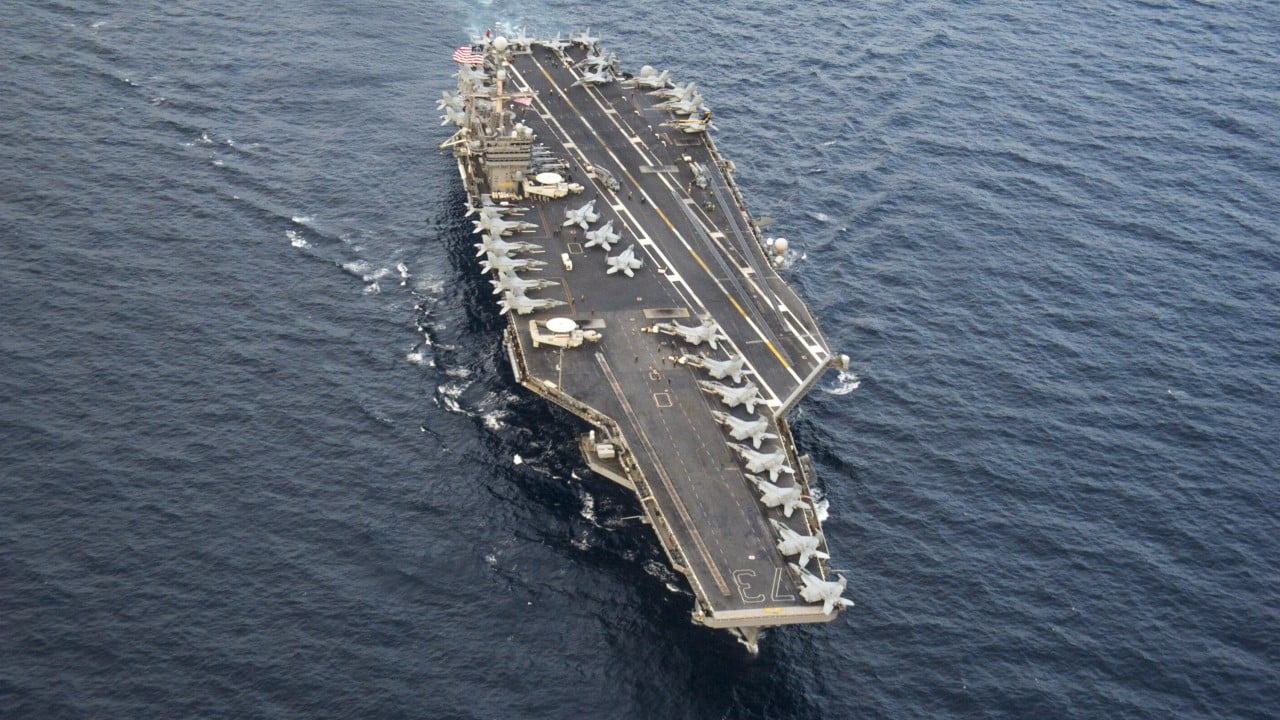
And the United States is distracted. Not because of lack of will, but because the math has broken. You cannot maintain a global footprint of permanent garrisons when the cost of maintaining a single amphibious assault ship approaches the GDP of a small European principality. More importantly, you cannot build a resilient alliance system when your allies are treated as real estate rather than co-designers.
So, the language in the briefing rooms shifted. The brass stopped talking about forward presence and started talking about distributed lethality, logistics resilience, and interoperability.
These are ugly words. They smell of PowerPoint slides and defense contractor quarterly reports. But translated into human experience, they mean something radical: sharing the load.
Instead of building one massive air base that can be neutralized by a single concentrated salvo of precision munitions, the new doctrine looks like a spiderweb. It involves prepositioning fuel in civilian warehouses across Southeast Asia. It means training Filipino, Japanese, and Australian technicians to service aircraft they did not build. It means letting partners manufacture their own maintenance schedules, their own supply chains, their own defensive resilience.
This is where the friction lives.
Dependency is comfortable for the strong because it guarantees obedience. It is comfortable for the weak because it absolves them of responsibility. If you rely entirely on an external guarantor for your survival, you never have to answer the hardest question of statecraft: What are you willing to break to keep what you love?
When the Pentagon says it wants partners, it is not an act of charity. It is an admission of vulnerability.
The defense attaché in Singapore put his cup down. The coffee stayed in the glass, dark and bitter.
"We used to think leadership meant carrying the piano up the stairs by ourselves," he said, staring at the map on the wall, where a dozen small colored pins represented nations that had historically been treated as spectators in their own theater. "Now we realize if we drop it, everybody dies. We need them on the other end of the bench. Even if they lift differently than we do."
This shift requires a psychological fracture in Washington's military establishment. For eighty years, American hegemony has been defined by exclusivity. Our tech was proprietary. Our intelligence was compartmentalized behind red-tape walls so high they required oxygen masks to clear. To share command-and-control architectures with a nation that might have a different domestic political cycle, or a different relationship with its neighbors, feels like handing the keys of a sports car to a teenager.
Yet the alternative is worse. The alternative is standing alone on a concrete pier while the tide comes up to your knees, holding a heavy rope that no one else is willing to help you pull.
Walk through any joint military exercise in the Indo-Pacific today, and you will see the messy reality of this transition. You will see Australian officers arguing with American logicians over radio frequencies that do not quite match. You will see Japanese engineers improvising repair protocols for vehicles designed in Detroit. You will hear languages colliding over intercoms—Tagalog, English, Bahasa, Japanese—creating a chaotic symphony of mutual frustration.
It looks inefficient. It looks clumsy.
It is also unbreakable.
A system built on dependency snaps under pressure because every link depends on the central node remaining intact. A system built on partnership bends because the strength is distributed across a thousand invisible sinews. If one node goes dark, the network reroutes. If one partner stumbles, another steps into the gap.
The old empire was a cathedral—monumental, glorious, and vulnerable to a single earthquake at the altar. The new architecture is a reef—grown slowly, composed of millions of living organisms, constantly adapting to the chemistry of the water around it.
The sun was dropping below the horizon outside the Singapore window, staining the Strait the color of a fresh bruise. Cargo ships flickered on their running lights, tiny stars moving through the dark water with absolute, indifferent purpose. They did not care who drew the lines on the map. They only cared that the channel was deep enough, the harbor was open, and someone was standing on the dock ready to catch the line.
:max_bytes(150000):strip_icc()/ar-American-Cheese-taste-test-horizon-4x3-54cc339550cd44b9a818c17bdfd5428d.jpg)