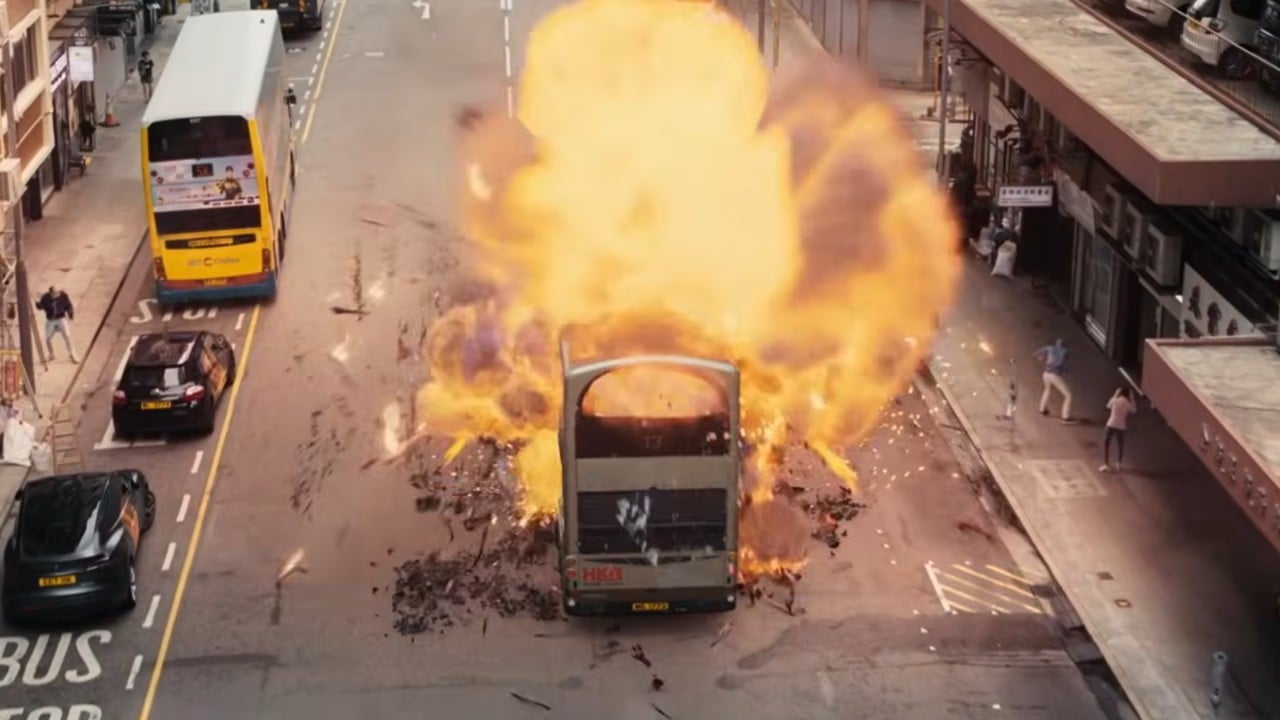
The neon of Nathan Road doesn’t flash so much as it bleeds into the evening mist. Underneath the hum of double-decker buses and the hiss of rain on concrete, a specific kind of quiet has settled over Hong Kong. It is not the peaceful stillness of a sleepy town. It is the heavy, deliberate silence of a room where everyone has decided, simultaneously, to look down at their shoes.
Step into a tiny cha chaan teng in Mong Kok. The air smells of milk tea and toasted butter. At a corner table sits Mr. Chan—a hypothetical composite of the three million commuters who traverse this transit system daily, but a reality in spirit. He is fifty-two. His hands bear the calluses of a life spent navigating the fierce, competitive gears of a global financial hub. A decade ago, Chan would have been arguing passionately over the morning paper, his voice joining a chorus of opinions on housing taxes, heritage preservation, or the local football standings.
Today, he stares silently at his phone. He scrolls past a news item about a neighborhood community center closing down. He pauses. His thumb hovers. Then, with a practiced, almost imperceptible flick, he clears the screen.
"Nothing to do with me," he mutters to his teacup.
This is the birth of the phantom. Sociologists call it collective apathy. In Hong Kong, it feels less like a clinical diagnosis and more like a low-grade fever, a creeping numbness that transforms a vibrant, hyper-connected metropolis into a collection of isolated islands. When an entire population decides that participation is futile, the city doesn’t stop breathing. It just stops feeling.
The danger of this shift is not explosive. It is corrosive.
The Cost of the Shrug
To understand how a community slips into this state, we have to look at the psychological mechanics of withdrawal. When individuals feel that their voices carry no weight in the grander scheme of their environment, a survival mechanism kicks in. It is called learned helplessness.
Imagine a dog placed in a shuttle box with two compartments separated by a low barrier. If the floor delivers a mild shock no matter where the dog stands, the animal eventually stops trying to escape. It lies down. It whimpers. Even when the barrier is lowered completely and a clear exit is provided, the dog remains still. The behavior has been learned.
For a human community, the shocks aren’t always physical. They are the systemic rejections of effort. When local heritage buildings are demolished despite community petitions, or when neighborhood initiatives stall in bureaucratic mazes, the collective muscle memory shifts. The shrug becomes the default setting.
But the shrug carries a massive, hidden invoice.
Sociological data from long-term urban studies consistently shows that when civic participation drops, municipal efficiency plummets. Why? Because the informal oversight mechanism of a city is its people. Without the nosy neighbor complaining about a broken streetlamp, the lamp stays dark. Without the passionate volunteer group organizing the elderly food drive, the vulnerable slip through the cracks of a rigid state framework.
The financial cost is measurable, but the social bankruptcy is absolute. When we say "we are nothing at all," we aren't just expressing humility. We are signing a waiver of existence.
The Mechanics of the Drift
The slide into indifference happens in three distinct phases.
First comes the exhaustion. Hong Kong operates at a baseline intensity that would paralyze most other cities. Space is a luxury premium; time is a currency spent with terrifying speed. When a person spends ten hours a day working to afford a flat the size of a parking space, their emotional bandwidth is already stretched to the snapping point.
Second is the rationalization. This is where the mind builds a fortress. I need to protect my family. I need to focus on my career. The big picture is too complicated. These are not cowardly thoughts; they are deeply rational responses to a high-pressure environment. The problem is that when everyone builds a fortress, the streets between them become a wasteland.
The final stage is the normalization of the void. This is the point where the absence of community life is no longer noticed. The local bookshop closes, replaced by a generic chain pharmacy, and nobody asks why. A neighbor passes away unnoticed for three weeks in a high-rise complex, and the reaction is a momentary shudder before the elevator door closes.
Consider the reality of the numbers. In urban centers where community engagement metrics drop by more than twenty percent over a five-year period, loneliness indices among the elderly skyrocket. It is a direct correlation. The less a society looks at itself, the more its most fragile members fade into invisibility.
The Fiction of Neutrality
There is a comforting lie that many tell themselves during a period of collective retreat: By doing nothing, I am remaining neutral. I am staying out of trouble.
Neutrality is a luxury of the uninvolved bystander. In a living, breathing city, there is no such thing as a blank space. If citizens vacate the public square of ideas, culture, and mutual aid, that space does not remain empty. It is instantly occupied by institutional inertia, commercial monotony, or outright neglect.
Think of a community as an alpine ecosystem. The trees don't actively fight the wind; they simply stand together, their root systems interlocking beneath the soil. If individual trees begin to pull back, deciding that their personal survival is independent of the forest, the soil loosens. The next storm doesn't just claim the weak; it takes the hill.
We see this play out in the smallest arenas. It is the decision not to greet the security guard in the lobby. It is the choice to ignore the rowdy teenager on the minibus rather than offering a firm, grounding word of guidance. It is the refusal to mentor the younger colleague because "they need to learn the hard way like I did."
These small deflections create a culture of transaction. I pay my rent, you give me the space. I pay my fare, you transport my body. The human element is scrubbed clean, leaving behind a sterile, functional machine that processes bodies but nurtures no souls.
Micro-Resistance and the Return of the Voice
The antidote to a city-wide numbness is never a massive, sweeping manifesto. Big promises are the currency of the very systems that cause the exhaustion in the first place. The cure is micro-resistance.
This does not require a podium or a banner. It requires an intentional rejection of convenience.
It looks like the independent coffee shop owner in Sham Shui Po who deliberately keeps a communal table in the center of his shop, forcing strangers to bump elbows and negotiate space for their sugar bowls. It looks like the retired schoolteacher who spends her Tuesday afternoons teaching Cantonese idioms to migrant domestic workers, bridging a cultural chasm through the simple act of shared phonetics.
These actions are mathematically insignificant in a city of seven million. Emotionally, they are revolutionary. They break the spell of the phantom. They prove that the person sitting across from you is not a statistical obstacle in your commute, but a co-author of the city’s immediate future.
The return of vitality requires a willingness to be inconvenienced by the lives of others. It means looking at the closing storefront and feeling a pang of genuine grief, then walking inside to buy a single pencil or a vintage bowl just to say, I see you were here.
The Final Ledger
Night deepens over the harbor. The water is a dark, churning mirror reflecting the neon towers of Central and Tsim Sha Tsui. It is an undeniable monument to human ambition, built on the sweat of generations who refused to be small.
Behind one of those thousands of glowing windows, a young woman is turning off her computer. She is tired. Her eyes burn from the glare of a spreadsheet. She could take the MTR home, eyes glued to a video of someone else's life, completely insulated by her noise-canceling headphones.
Instead, she catches the eye of a colleague who looks equally spent.
"Do you want to get some noodles?" she asks.
The question hangs in the air for a second. It is an invitation to spend energy she doesn't think she has. It is a risk of awkwardness, a disruption of the smooth, solitary journey home.
The colleague looks up, hesitates, and then smiles. "Yes. Let's go."
The city doesn't change because of this interaction. The economy doesn't shift. The grand narratives of history remain entirely unaffected. But in that tiny, ordinary corner of the concrete grid, the numbness recedes by a fraction of an inch. Two people have decided to exist together. The architecture of silence has a hairline crack, and through it, the city begins to breathe again.


