Silence fills the room before a single word is spoken. The air holds the distinct weight of anticipation, heavy with the knowledge that microphones record every syllable, cameras capture every micro-expression, and the world is watching. Diplomacy is often mistaken for a polite dance of sanitized phrases, a delicate ballet where offense is carefully avoided and meaning is obscured beneath layers of bureaucratic velvet. But sometimes, the velvet tears. Sometimes, the raw, unvarnished truth steps into the light, demanding attention and leaving no room for diplomatic ambiguity.
Consider the modern global stage. It is an arena where nations spar not just with economic sanctions or military posture, but with narratives. Every press conference, every international summit, every impromptu hallway interview is a battleground of perception. When a minister steps up to the podium, they carry the collective memory, the grievances, and the aspirations of over a billion people. They do not speak merely as individuals; they represent an institutional memory forged through decades of conflict, resilience, and hard-earned sovereignty. In similar updates, we also covered: The Battle for the Soul of Secular France.
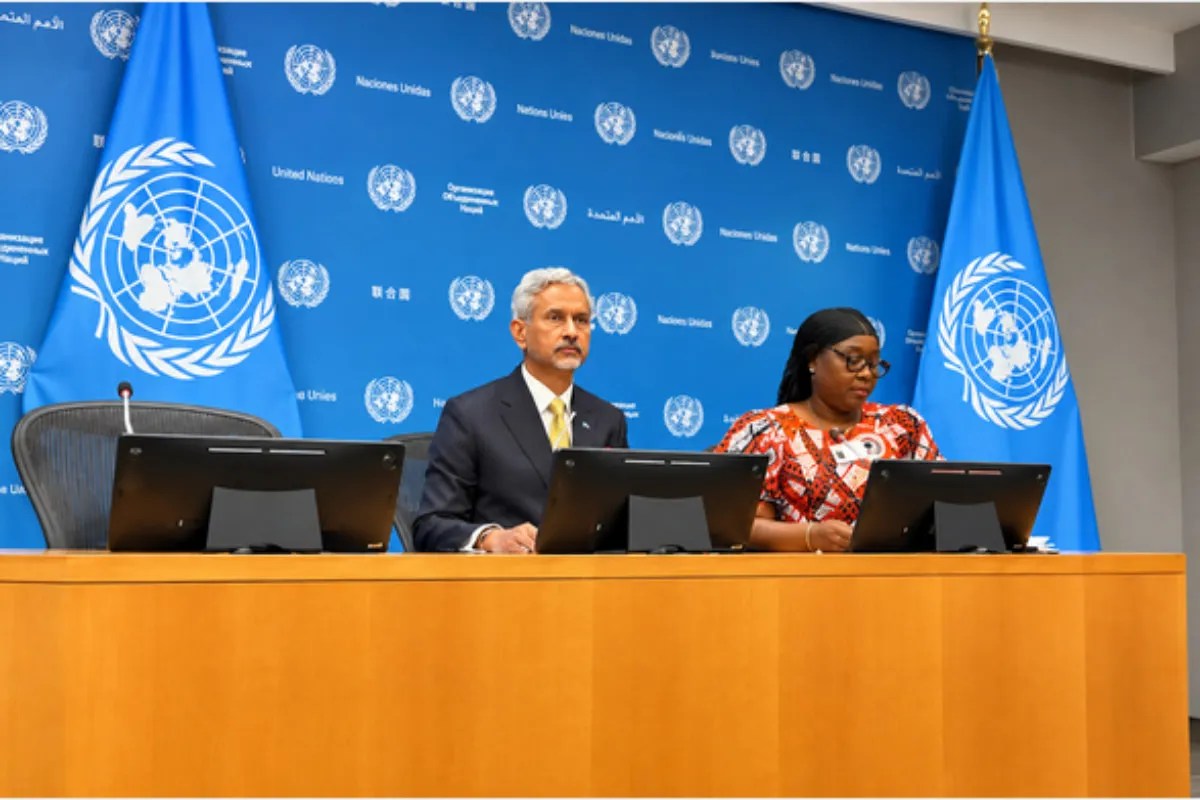
A microphone is extended. A question is posed. On the surface, it appears to be a routine inquiry, a standard journalistic probe into regional stability and bilateral grievances. But words possess subtext. They carry the historical baggage of proxy conflicts, unaddressed wounds, and persistent denial. When a representative from a nation long plagued by internal turmoil and international scrutiny questions another about security and integrity, the irony is thick enough to cut with a knife.
The response does not arrive wrapped in diplomatic platitudes. It arrives with surgical precision. BBC News has provided coverage on this important topic in extensive detail.
Precision.
That is the hallmark of modern Indian statecraft under External Affairs Minister Subrahmanyam Jaishankar. There is no fumbling for safe answers, no recourse to tired clichés designed to please everyone and say nothing. Instead, there is a calm, unwavering gaze and a delivery so deadpan yet devastating that the listener is forced to reevaluate the entire premise of the discussion.
To understand the impact of such a retort, one must step back and examine the choreography of cross-border relations between India and its western neighbor. For decades, the narrative surrounding South Asian geopolitics was dominated by a reflexive urge toward parity. International mediators would often urge both nations to talk, to negotiate, to find a middle ground, treating the victim of state-sponsored militancy and the exporter of that same militancy as equivalent actors in a complex dispute.
This false equivalence was a comfortable fiction for international observers. It allowed them to file neat reports, host symposiums, and issue bland calls for peace without ever confronting the core malignancy. But fictions have an expiration date. Reality has a stubborn way of breaking through the diplomatic glasshouse.
When Jaishankar addresses questions regarding terrorism, he strips away the diplomatic euphemisms that have shielded bad actors for generations. He reminds the international community of a fundamental axiom: you cannot dine with militancy and complain about the indigestion. You cannot nurture networks of terror within your borders and then stand on a global platform demanding answers about peace from the nation that bears the scars of your choices.
The question asked by the Pakistani journalist was designed to flip the script, to cast the accuser as the accused, to muddy the waters of accountability. It is a classic rhetorical maneuver, born from a playbook of deflection. But the counter-punch was instant and absolute. The core message echoed across capitals from New Delhi to Washington: an entity that has institutionalized extremism loses the moral standing to interrogate those who stand against it.
How does a nation reach this level of communicative clarity?
Experience.
Years of walking through the smoldering wreckage of Mumbai, of attending funerals of soldiers ambushed in remote mountain passes, of enduring decades of denial from a neighbor that treated violence as an instrument of state policy. This is not theoretical knowledge found in textbooks or discussed in academic ivory towers. It is lived experience, paid for in blood and resilience.
When Jaishankar speaks, he channels this accumulated history. He does not raise his voice. Anger is a luxury for the insecure; absolute clarity belongs to those standing on solid ground. His cadence is measured, his vocabulary precise, his demeanor chillingly composed. He treats evasion with the quiet disdain it deserves.
This style of communication has struck a profound chord with the Indian public and captured the imagination of global audiences. In an era dominated by hyperventilating news anchors and superficial soundbites, there is something magnetic about a leader who refuses to be baited, who dismantles complex falsehoods with a single, devastating sentence. It is a masterclass in holding one's ground without yielding an inch of moral territory.
Yet, beyond the viral video clips and the internet memes celebrating witty comebacks, there is a serious policy shift at play. India’s diplomatic doctrine has undergone a quiet revolution. The old approach of patient endurance, of turning the other cheek in the hope that international pressure would eventually reform an errant neighbor, has been permanently shelved. In its place stands a doctrine of active deterrence, uncompromising narrative control, and unapologetic self-defense.
Consider what happens next on the global chessboard.
As major powers realign and security dynamics shift in the Indo-Pacific and beyond, the tolerance for state-sponsored terrorism is shrinking. Nations that once preached patience are beginning to recognize that stability cannot be achieved by appeasing those who profit from chaos. By calling out hypocrisy directly, without diplomatic hedging, Indian diplomacy is reshaping the vocabulary of international relations.
The journalist who stepped up to the microphone that day expected a defensive reaction. They expected the usual formula of regret and conciliation. Instead, they encountered a mirror. And there is nothing more terrifying for those living behind illusions than a sudden, unblinking reflection of reality.
Words matter. They define the boundaries of what is acceptable in civilized discourse. When a senior statesman looks the proxy of an unstable state in the eye and dismantles their premise with cold, unassailable logic, it sends a signal far beyond the walls of the press room. It tells the world that the era of strategic ambiguity is over.
The narrative has changed. The truth has been spoken. And the echoes of that response will linger long after the microphones have been turned off and the cameras have faded to black.