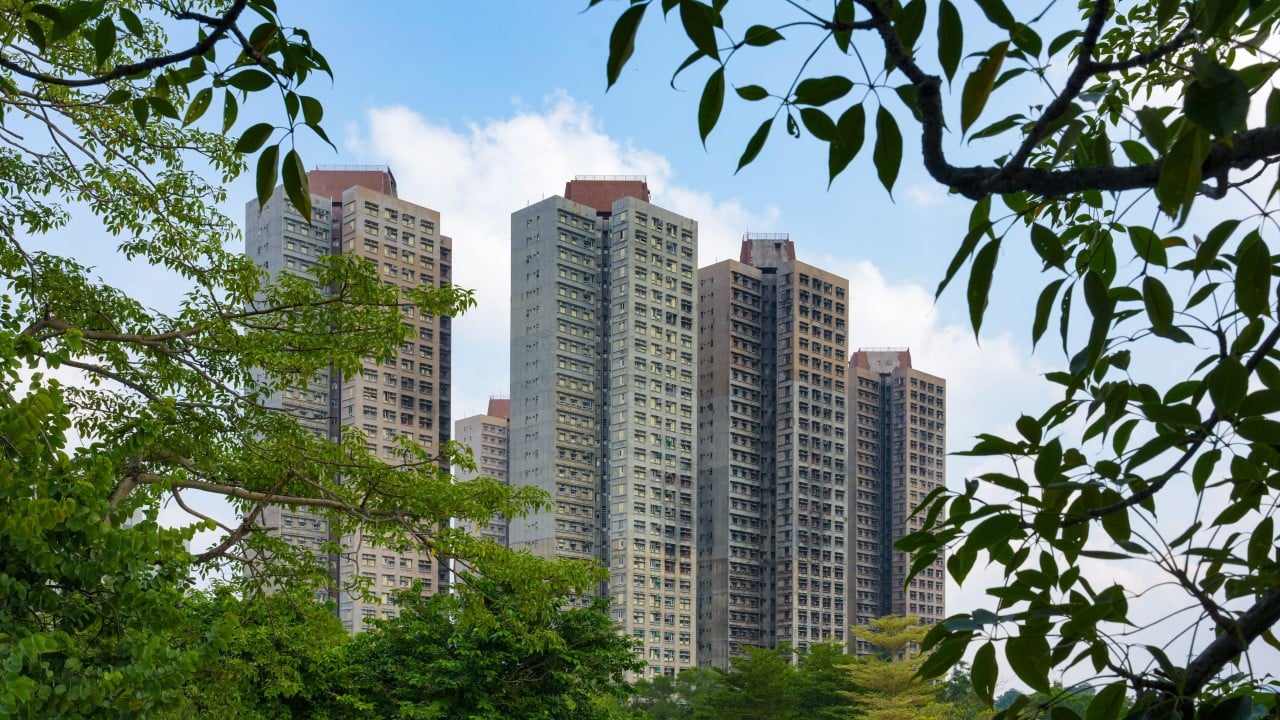
The air in Tai Po did not smell like smoke before it smelled like a catastrophe. It smelled like dust, old concrete, and the humid metallic tang of a city constantly trying to scrape away its own age. Outside the residential towers of Wang Fuk Court, thick forests of bamboo scaffolding webbed up the exterior walls, draped tightly in safety nets and green protective tarps. To anyone walking past, it was just another urban facelift. Another round of mandatory building maintenance in a metropolis that never stops polishing its armor.
Then came a spark.
A single lit cigarette, dropped carelessly among an abundant, suffocating fuel load of discarded construction waste and combustible debris trapped behind the mesh, changed everything.
What followed was not an act of nature. It was an execution of systemic gravity. Within minutes, the flame caught the nylon mesh and dry bamboo poles. It crawled upward with terrifying hunger, feeding on the chimney effect created by the recessed architectural design of the towers. By the time the alarms failed to sound—power was there, but the systems stayed chillingly silent—the inferno had already breached windows and clawed its way inside. One hundred and sixty-eight human beings lost their lives in the deadliest fire Hong Kong had seen in decades.
Months later, a thousand-page judicial report was finally laid bare. It did not offer comfort. It offered a mirror.
Consider what happened to the warnings before the disaster. Long before the first flame licked the fourth floor of Wang Cheong House, the residents knew something was wrong. They smelled burning plastic during minor welding work. They saw trash piling up against escape routes. They did what responsible citizens are supposed to do. They filed complaints. One hundred and eighty distinct grievances and inquiries were logged across various government bodies.
They bounced.
Like a discarded tennis ball, every safety concern was tossed across bureaucratic boundaries. The Independent Checking Unit, the Buildings Department, the Fire Services Department, and the Labour Department each possessed the authority to look, to check, and to halt. Instead, they perfected the art of looking away. Each department insisted the mandate belonged to someone else. They passed the ball until the ball hit a wall of fire.
Human fault became the invisible architect of the tragedy. The independent committee assigned primary blame not to fate, but to the private contractors, consultants, and inspectors who treated safety protocols as optional suggestions rather than absolute lines between life and death. Prestige Construction and Engineering and Will Power Architects sat at the epicenter of structural negligence. Yet the failure went deeper, rotting through decades of complacent oversight, compromised tendering practices, and suspected bid-rigging that tied the hands of enforcement agencies.
When the report finally dropped, the political fallout was immediate, albeit agonizingly delayed for survivors who had spent nearly a year mourning in temporary shelters. The housing minister resigned in a sweeping political decision. The disgraced Independent Checking Unit faced total disbandment. High-ranking officials bowed their heads, admitting to systemic failures that spanned generations.
Yet for the families whose doors will never open again, an official apology and a stack of redacted recommendations cannot rewrite history.
A city can tear down burned scaffolding. It can outlaw hazardous tarps, mandate strict new building maintenance laws, and establish elite task forces to crush corrupt bidding rings. It can rewrite the rulebooks to ensure that no future safety complaint ever falls into a bureaucratic vacuum. But no amount of legislation can resurrect the 168 lives consumed by an ordinary cigarette butt and extraordinary negligence.
The ash has settled over Tai Po. The reports are filed on government servers. But the reminder remains etched into the concrete skyline, standing as a quiet, haunting monument to the price of looking the other way.