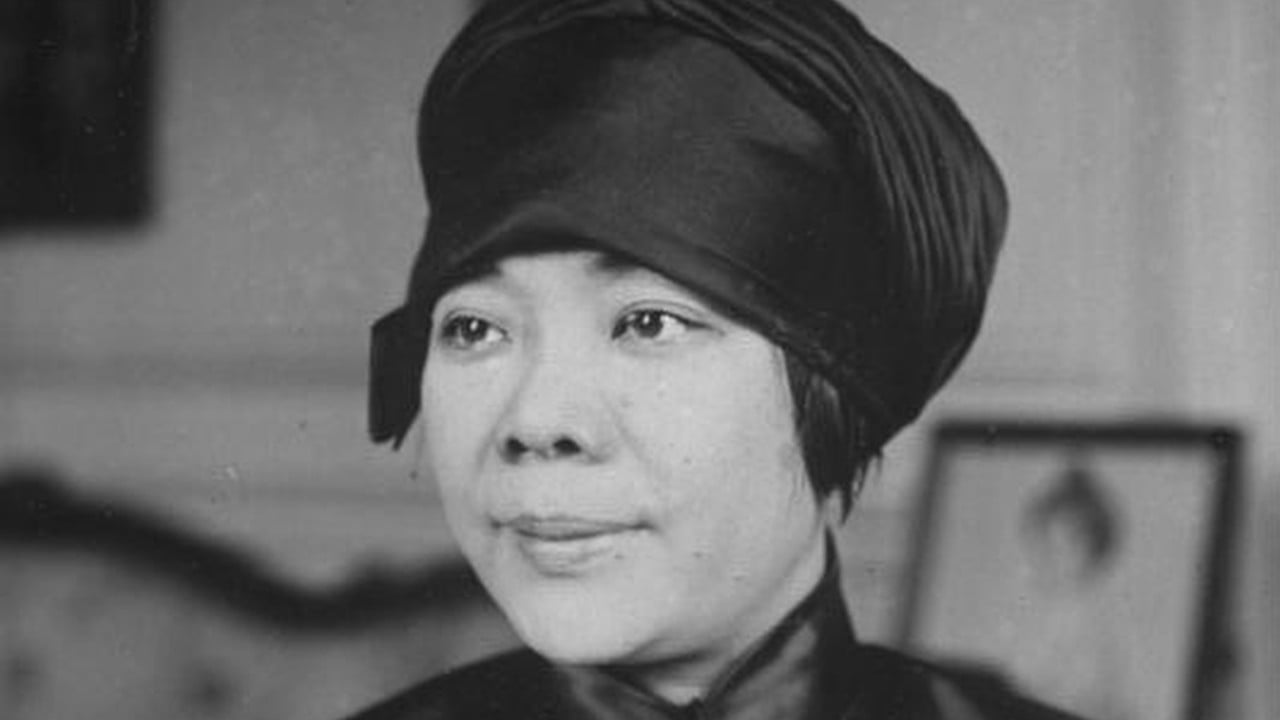
Zheng Yuxiu did not merely live through the collapse of the Qing dynasty; she actively detonated it. She carried live explosives in her luggage across borders, systematically organized hits on imperial ministers, and famously used a hidden rose branch to simulate a pistol barrel against the ribs of a hesitant diplomat during the Paris Peace Conference. Yet, reducing her legacy to that of a romanticized assassin—a modern xia nu or chivalrous swordswoman—obscures her most radical achievement. As China’s first female lawyer, judge, and holder of a French doctorate in law, Zheng converted the raw energy of anti-imperialist violence into the institutional architecture of the 1930 Civil Code, legally dismantling centuries of patriarchal subjugation for millions of women.
The historical trajectory from bomb-thrower to state jurist reveals a calculated evolution. Her violence was never nihilistic; it was a desperate tactical tool used when structural avenues for change were completely sealed. When the Republic of China emerged in 1912, Zheng recognized that permanent liberation required institutional permanence. Her life challenges the conventional narrative that early Chinese feminism was a mere derivative copy of Western movements, demonstrating instead how a home-grown revolutionary subverted global legal frameworks to secure unprecedented domestic rights. Meanwhile, you can explore related stories here: Why the Trump US Iran Deal Is Facing a Massive Reality Check From the G7.
The Logistics of Imperial Sabotage
The transition from a privileged upbringing in Guangdong to a revolutionary cell in Beijing required absolute tactical commitment. Zheng rejected the agonizing ritual of foot-binding and severed an arranged marriage contract at age thirteen with a brief, defiant letter. By 1905, she had joined the Tongmenghui, the revolutionary alliance led by Sun Yat-sen.
Her primary utility to the underground movement lay in her elite social standing. Operating as a courier, she exploited the reluctance of imperial authorities to thoroughly search wealthy young women traveling by train. Zheng packed nitroglycerin and detonation cords beneath layers of silk gowns, maintaining total composure while crossing military checkpoints. To explore the complete picture, check out the excellent article by USA Today.
Her covert operations culminated in the 1912 assassination of Aisin Gioro Liangbi, a staunch royalist general dedicated to preserving the Manchu monarchy. Liangbi's death broke the remaining spirit of the imperial court, accelerating the abdication of the Last Emperor.
The Limits of Individual Violence
Political assassination, while highly effective at destabilizing the Qing court, offered no blueprint for governing. The immediate aftermath of the revolution saw the rise of military commander Yuan Shikai, who quickly betrayed the republican cause to declare himself emperor. Zheng found herself targeted by the new regime's secret police, forcing her into exile in France.
This sudden displacement exposed the vulnerability of relying purely on political violence. The elimination of individual autocrats did not automatically dismantle the deep-seated autocratic and patriarchal systems governing Chinese society. Zheng realized that lasting structural transformation required mastery over the very laws used to enforce state power.
Subverting the Western Legal Monopoly
Arriving in Paris during the First World War, Zheng entered the Faculty of Law at the University of Paris, the Sorbonne. She faced a double barrier: she was an outsider navigating a foreign legal system, and she was a woman in an institution deeply rooted in the patriarchal Napoleonic Code.
She systematically used her presence in Paris to elevate China’s international standing. By 1917, she was addressing audiences at the Sorbonne, successfully lobbying for Chinese involvement on the Allied side of the war. This effort ultimately led to the deployment of over 140,000 Chinese laborers to Europe, a critical geopolitical move intended to guarantee China a seat at the post-war negotiating table.
The Myth of the Rose Branch Pistol
The 1919 Paris Peace Conference exposed the hypocrisy of Western international diplomacy. When the Allied powers decided to transfer Germany’s colonial concessions in Shandong to Japan rather than returning them to China, waves of anger swept through Chinese student groups in Europe.
The standard historical anecdote focuses on Zheng cornering the head Chinese delegate, Lu Zhengxiang, in a suburban Paris garden. Lacking a weapon, she broke a branch from a rose bush, concealed it within her wide sleeve, pressed the blunt wood into his side, and threatened him with death if he signed the Treaty of Versailles. Terrified or deeply shaken, Lu abstained from the signing ceremony, preserving China’s legal right to reclaim its territory.
Focusing exclusively on this theatrical moment diminishes the sophisticated organizing campaign Zheng ran behind the scenes. She coordinated a massive strike among Chinese students, workers, and journalists across France, creating a united front that completely cut off the delegation from capitulating to Allied pressure. The rose branch was merely the final exclamation point on a highly organized campaign of political resistance.
Codifying the Revolution
Returning to Shanghai in 1925 with her doctorate in pocket, Zheng confronted a fractured domestic legal landscape. Western powers still maintained extraterritorial courts, arguing that Chinese law was too primitive to govern foreign citizens.
Zheng opened a private law firm alongside her future husband, Wei Daoming, and aggressively dismantled this argument. Appearing in the French Concession courts, she defended Chinese citizens by turning French jurisprudence against the colonial magistrates. Her razor-sharp cross-examinations and deep understanding of Continental law embarrassed the colonial authorities, proving that Chinese jurists could match and exceed Western legal standards.
| Key Milestones in the Legal Career of Zheng Yuxiu |
| :--- | :--- |
| 1925 | Earned Doctor of Laws from the Sorbonne; returned to Shanghai to establish a private practice. |
| 1927 | Appointed as the first female judge in modern Chinese history, presiding over the French Concession court. |
| 1928 | Appointed to the Legislative Yuan, becoming a chief architect of the new Civil Code. |
| 1930 | Successfully codified absolute gender equality regarding inheritance, divorce, and property rights. |
The Battle for the 1930 Civil Code
Her appointment to the Nationalist Government’s Legislative Yuan in 1928 provided the ultimate platform to institutionalize her lifelong fight for women’s rights. As a key member of the Civil Codification Commission, she was tasked with replacing old imperial statutes with a modern legal framework.
The stakes were immense. Conservative factions within the Kuomintang sought to preserve traditional family structures that legally treated women as the lifelong property of fathers, husbands, and sons. Zheng fought these factions clause by clause.
"If the law does not explicitly guarantee a woman's right to her own name, her own property, and her own lineage, then every revolution we fought is an empty promise."
The resulting 1930 Civil Code was a monumental achievement in global legal history, introducing protections that outpaced many Western nations at the time:
- Absolute Freedom of Marriage: Arranged marriages were stripped of legal standing, requiring mutual consent from both parties.
- Equal Inheritance Rights: Daughters were granted the exact same legal rights to family estates as sons, striking a blow against traditional patrilineal wealth accumulation.
- Unilateral Divorce Protections: Women gained the legal right to sue for divorce on grounds of cruelty or abandonment, ending the old concubinage system's legal backing.
- Independent Property Ownership: Married women retained full control of their personal assets and earnings, independent of their husbands' financial decisions.
The Complications of Political Survival
An objective analysis of Zheng's life requires looking closely at her later career. She was an elite member of the Nationalist establishment, tightly connected to Chiang Kai-shek’s regime. As the Chinese Civil War intensified after the second World War, her proximity to power insulated her from the profound suffering of the rural population.
When her husband served as China’s Ambassador to the United States in the late 1940s, Zheng moved through high-society Washington diplomatic circles, raising funds for war relief. Yet back home, the Nationalist government was rapidly collapsing due to systemic corruption and economic mismanagement.
Following the communist victory in 1949, Zheng and her husband fled into exile, eventually settling in Los Angeles. Her final decade was spent far from the legal institutions she spent her life building, living in relative obscurity until her death in 1959.
The Institutional Blueprint
Zheng Yuxiu’s life proves that systemic transformation requires a dual strategy. The dramatic acts of sabotage and the confrontation in the Paris rose gardens made for gripping headlines, but her true victory was won in the quiet, painstaking drafting of legal codes.
She understood that raw political rebellion is temporary, while codified law shapes generations. By embedding gender equality directly into the foundation of modern Chinese civil law, she ensured that long after her bombs had exploded and her rose branch had withered, her revolutionary vision remained a permanent, enforceable reality.