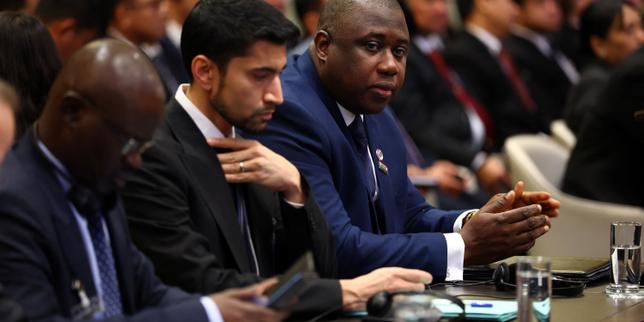
Small states rarely dictate the legal architecture of international accountability, yet The Gambia—the smallest nation on mainland Africa, located over 11,000 kilometers from Myanmar—achieved precisely that by filing an application against Myanmar at the International Court of Justice (ICJ) in November 2019. Standard geopolitical commentary frames this intervention as an anomalous act of humanitarian altruism. That reading misses the underlying mechanics. The Gambia’s legal offensive represents a calculated exercise in asymmetric statecraft, exploiting a specific doctrinal mechanism within the 1948 Genocide Convention to bypass traditional realpolitik bottlenecks and maximize diplomatic capital at minimal domestic cost.
The Structural Bottleneck of International Accountability
To understand why The Gambia was able to act where major powers stalled, one must examine the institutional paralysis that preceded November 2019. Following the 2017 clearance operations by Myanmar’s military (the Tatmadaw) in Rakhine State—which displaced over 700,000 Rohingya into neighboring Bangladesh—the international community faced three distinct legal dead-ends:
- The UN Security Council Veto Wall: Referral of the situation in Myanmar to the International Criminal Court (ICC) required a Chapter VII resolution from the United Nations Security Council. China and Russia possessed both the veto power and the strategic incentives to block any binding punitive measure against Naypyidaw.
- Jurisdictional Asymmetry at the ICC: Myanmar is not a state party to the Rome Statute. While the ICC eventually established partial jurisdiction over the crime of deportation because Bangladesh is a state party, the court remained barred from prosecuting the broader spectrum of atrocities committed entirely within Myanmar’s borders, including mass killings and systematic sexual violence.
- Bilateral Paralysis: Neighboring states in Southeast Asia operated under the ASEAN doctrine of non-interference, while Western powers relied on targeted sanctions that altered neither the Tatmadaw’s operational calculus nor the legal status of the Rohingya.
The system was locked. Accountability required a forum where Myanmar had already consented to jurisdiction, where no single great power held a veto, and where a plaintiff did not need to prove direct territorial or national injury.
The Legal Mechanism Erga Omnes Partes
The Gambia unlocked this deadlock by operationalizing a specific legal doctrine: obligations erga omnes partes. Under traditional international law, a state can only sue another state if it suffers direct harm—such as a border incursion, a trade treaty breach, or injury to its own citizens. Myanmar’s strategic defense rested on the assumption that no state with standing would dare file suit. Bangladesh, the only state suffering direct material injury via the refugee influx, had entered a reservation to Article IX of the Genocide Convention upon ratification, preventing it from unilaterally bringing a case to the ICJ without Myanmar’s consent.
Article IX of the 1948 Convention on the Prevention and Punishment of the Crime of Genocide contains a compromissory clause: any dispute between contracting parties relating to the interpretation, application, or fulfillment of the Convention can be submitted to the ICJ at the request of any party to the dispute. Myanmar ratified the Convention in 1956 without entering a reservation to Article IX. The Gambia ratified it in 1978, also without reservation.
The doctrinal breakthrough relied on precedent established by the ICJ in Belgium v. Senegal (2012), which affirmed that multilateral human rights treaties create common interests. Every state party has a legal interest in compliance by every other state party. Therefore, any contracting state—regardless of geographical proximity or direct injury—possesses locus standi (legal standing) to invoke the responsibility of another contracting state for alleged breaches of erga omnes partes obligations.
By decoupling legal standing from geographic proximity or direct harm, The Gambia transformed a regional crisis into an actionable bilateral dispute at The Hague. In July 2022, the ICJ explicitly rejected Myanmar’s preliminary objections, codifying the principle that non-injured states can enforce the Genocide Convention. This ruling established a permanent structural precedent for small-state litigation.
The Three Pillars of The Gambian Calculus
Why did Banjul assume this role rather than a wealthier, larger, or geographically closer nation? The decision was driven by three converging variables: institutional backing, domestic political transition, and human capital alignment.
1. Multilateral Cost-Externalization via the OIC
A small developing economy cannot independently fund multi-year litigation at the ICJ, which requires retaining elite international legal counsel, compiling evidentiary dossiers, and managing complex procedural filings. The Gambia solved the resource constraint through institutional delegation. Acting on behalf of the 57-member Organisation of Islamic Cooperation (OIC), Banjul served as the formal state litigant while the OIC established a dedicated trust fund to underwrite the legal fees.
This arrangement created a clean division of labor. The OIC could not file the case itself because the ICJ only hears disputes between sovereign states. By deputizing The Gambia—chair of the OIC’s Ad Hoc Ministerial Committee on Accountability for Human Rights Violations Against the Rohingya—the bloc gained a sovereign vehicle for its geopolitical objective, while Banjul externalized the financial burden of the litigation.
2. Post-Authoritarian Rebranding and Diplomatic Arbitrage
The timing of the filing coincided with The Gambia’s delicate democratic transition following the 2017 ouster of longtime dictator Yahya Jammeh. For 22 years, Jammeh’s regime had isolated Banjul through erratic foreign policy, human rights abuses, and withdrawal from international bodies like the Commonwealth and the ICC.
Under President Adama Barrow, the new administration needed to rapidly rehabilitate its international standing to unlock foreign direct investment, bilateral aid, and multilateral debt relief. Championing the Rohingya cause offered high-yield diplomatic arbitrage:
- Zero Bilateral Friction: The Gambia had no trade volume, defense agreements, or diplomatic dependencies with Myanmar. Retaliation from Naypyidaw carried zero economic or security cost for Banjul.
- Immediate Reputational Return: By positioning itself as the global vanguard of international law, Banjul signaled an irreversible break from the Jammeh era, earning immediate diplomatic goodwill in Washington, Brussels, and Geneva.
- Domestic Legitimacy: Establishing a Truth, Reconciliation and Reparations Commission (TRRC) at home while prosecuting genocide abroad created a coherent narrative of transitional justice, reinforcing the Barrow government’s legitimacy among domestic civil society and international donors alike.
3. The Key-Actor Catalyst
Institutional mechanisms remain dormant without specific human agency to activate them. The operational catalyst was Abubacarr Tambadou, The Gambia’s Attorney General and Minister of Justice from 2017 to 2020. Before entering Gambian politics, Tambadou spent over a decade as a prosecutor at the International Criminal Tribunal for Rwanda (ICTR), working directly on the legal mechanics of genocide prosecution, including the landmark Akayesu and Bagosora cases.
In May 2018, Tambadou visited the Kutupalong refugee camp in Cox’s Bazar, Bangladesh, as part of an OIC delegation. Recognizing the forensic parallels between the testimonies of Rohingya survivors and the evidentiary patterns he had prosecuted from the 1994 Rwandan genocide, Tambadou identified the gap between political condemnation and judicial action. He mobilized the Gambian cabinet, secured the OIC mandate, and retained the Washington-based law firm Foley Hoag—which had previously represented Nicaragua and Mauritius in landmark ICJ cases—to draft the application.
Operational Mechanics of the Litigation Strategy
Once the decision to file was made, The Gambia’s legal team executed a phased litigation strategy designed to secure immediate judicial intervention while building a long-term merits case.
First, Banjul requested provisional measures—the international legal equivalent of an injunction. The evidentiary threshold for provisional measures is significantly lower than for a final merits ruling; the applicant need only prove that the rights claimed are "plausible" and that there is an "urgent risk of irreparable prejudice." By relying heavily on the exhaustive reports of the UN Independent International Fact-Finding Mission on Myanmar (IIFFMM), The Gambia bypassed the need to conduct its own primary field investigations before filing. In January 2020, the ICJ unanimously ordered Myanmar to take all measures within its power to prevent genocidal acts and to preserve evidence, imposing a binding legal obligation on Naypyidaw within two months of the initial filing.
Second, the litigation forced a direct confrontation with Myanmar’s civilian leadership. When State Counsellor Aung San Suu Kyi traveled to The Hague in December 2019 to personally lead Myanmar’s defense, she inadvertently validated the jurisdiction and gravity of the proceedings while eroding her remaining international political capital. The visual contrast between a Nobel Peace Prize laureate defending military clearance operations and a small West African state invoking the UN Charter permanently altered the diplomatic framing of the crisis.
Third, the case acted as a force multiplier for parallel accountability mechanisms. Following the ICJ’s 2022 ruling on preliminary objections, major Western powers—including Canada, Denmark, France, Germany, the Netherlands, and the United Kingdom—filed joint declarations of intervention under Article 63 of the ICJ Statute. These states had hesitated to initiate the case themselves due to complex diplomatic calculations, yet once The Gambia absorbed the initial political friction and cleared the jurisdictional hurdles, they entered the proceedings to shape the legal interpretation of genocidal intent (dolus specialis).
Structural Limitations and Execution Risks
While The Gambia’s strategy demonstrated the potency of asymmetric legal warfare, the approach carries severe structural limitations that prevent it from serving as a universal panacea for mass atrocities:
- The Enforcement Vacuum: The ICJ possesses no police force or direct enforcement mechanism. Under Article 94 of the UN Charter, enforcement of ICJ judgments falls to the Security Council—returning the process to the exact geopolitical veto wall that The Gambia’s strategy was designed to circumvent. Following the February 2021 military coup in Myanmar, the junta ignored the ICJ’s provisional measures entirely, continuing military operations against civilian populations.
- The Temporal Drag: International litigation operates on a multi-year timeline that is fundamentally misaligned with the urgency of ongoing atrocities. Between the initial filing in November 2019 and the final judgment on the merits, nearly a decade can elapse, during which the protected population remains displaced in precarious conditions.
- The Compromissory Clause Bottleneck: The erga omnes partes strategy only functions when the target state has ratified a treaty containing an unreserved compromissory clause granting ICJ jurisdiction. States like China, India, and the United States have either entered reservations to Article IX of the Genocide Convention or declined to accept compulsory ICJ jurisdiction, rendering them immune to this specific legal maneuver.
- Political Continuity Risk: Because the litigation relies on the political will of the applicant state’s executive branch, a change in government or shifting geopolitical alliances in Banjul could theoretically threaten the continuity of the case, although OIC institutional backing mitigates this risk.
The Strategic Trajectory of Small-State Litigation
The Gambia’s intervention has permanently altered the risk calculus for states contemplating mass atrocities, proving that middle and small powers can weaponize multilateral treaty architecture to impose sustained diplomatic and legal costs on larger regimes. This model has already been replicated: South Africa invoked the exact same Article IX erga omnes partes framework in December 2023 to bring Israel before the ICJ, while Canada and the Netherlands utilized the Convention Against Torture to initiate proceedings against Syria.
To maximize the strategic utility of this precedent, international legal practitioners and foreign ministries must transition from ad-hoc litigation to institutionalized legal coalitions. Small states should systematically audit multilateral treaties—specifically the Genocide Convention, the Convention Against Torture, and the Convention on the Elimination of All Forms of Racial Discrimination—to map unreserved compromissory clauses across high-risk jurisdictions. Rather than relying on single-state initiatives vulnerable to domestic political shifts, regional blocs must establish standing legal-defense funds and pre-positioned evidentiary pipelines linked directly to UN investigative mechanisms. The era in which geographic distance or modest GDP excused diplomatic passivity is over; in modern international law, standing belongs to any state willing to claim it.