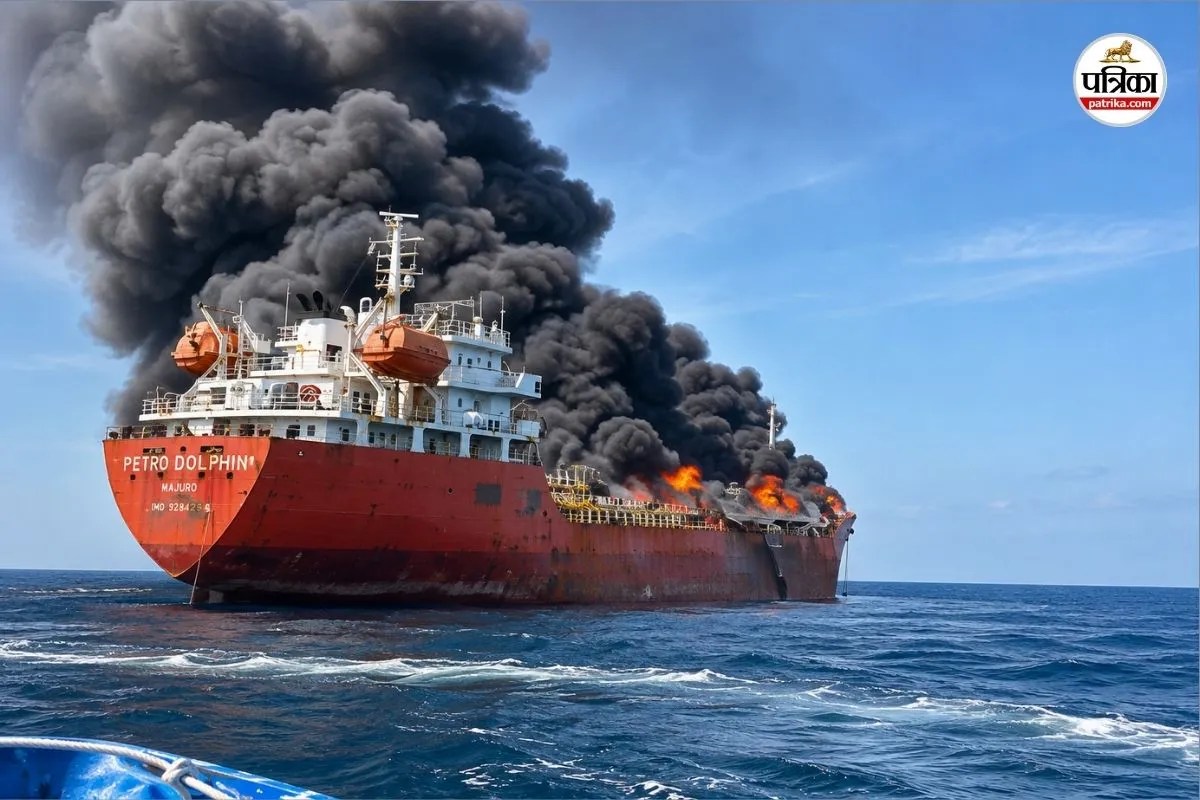
Commercial shipping lanes in the Middle East aren't just facing routine disruptions anymore. They are becoming active danger zones. When the Nicaragua-flagged tanker MT Petro Dolphin took a direct drone hit off the coast of Oman, it wasn't just another blip on a maritime radar. It brought a devastating human toll right back to the forefront: two Indian seafarers vanished into the Arabian Sea, while nine others narrowly escaped with their lives.
Union Minister of Ports, Shipping and Waterways Sarbananda Sonowal confirmed the grim details, noting that rescue teams managed to pull nine members of the 11-person Indian crew to safety near the Sohar Anchorage. But search operations for the missing pair highlight a terrifying reality that modern commercial shipping crews face every single day.
The Escalating Danger at Regional Anchorages
Let's look at the operational context. Tankers sitting quietly at anchorages like Sohar or Sharjah used to be safe havens. Not anymore. Just days before the MT Petro Dolphin strike, another vessel—the Panama-flagged crude tanker MT Gem No. 2 carrying 22 Indian nationals—was targeted by a drone at Sharjah Anchorage. Fortunately, that crew survived. This one wasn't as lucky.
Unmanned aerial threats don't care about flags of convenience or commercial neutrality. They are transforming routine energy transport routes into high-stakes hazard zones. For families waiting back home in India, these updates are a nightmare come true. At least 16 Indian seafarers have lost their lives since regional conflicts escalated in early 2026. Every single transit through the Strait of Hormuz and surrounding Gulf waters now feels like a roll of the dice.
Why Governments and Operators Are Struggling to Respond
You'd think maritime security protocols would adapt faster. But commercial shipping relies on volume, speed, and tight margins. Shipowners can't simply halt every vessel movement without choking global supply chains. When ships drop anchor outside regional ports to wait for clearance, they become sitting ducks.
India's Ministry of External Affairs has repeatedly demanded an immediate cessation of attacks on civilian infrastructure and commercial shipping. Officials are coordinating around the clock with local Omani authorities and international search teams to locate the missing sailors. Yet, diplomatic condemnations don't intercept incoming drones.
Crew members are carrying the heaviest burden of these geopolitical fractures. Many are questioning whether the hazard pay is worth the risk of sailing through waters where anti-ship projectiles and explosive drones treat commercial tankers as legitimate targets.
What Needs to Happen Now
If maritime commerce and freedom of navigation are going to survive in these key global chokepoints, a few hard truths must be addressed:
- Anchorages need active defense shields: Sitting stationary near port limits makes vessels prime targets. Port authorities must extend radar and counter-drone umbrella protections outward.
- Stricter routing guidelines: Maritime agencies need to rethink mandatory waiting zones, moving them further away from high-threat vectors.
- Immediate crew protection rights: Seafarers must have clearer legal backing to refuse voyages into active missile and drone corridors without facing career suicide or contract penalties.
The search for the missing crew members aboard the MT Petro Dolphin continues, but the wider crisis on the water isn't slowing down. Until regional hostilities find a permanent off-ramp, every tanker sailing past Oman remains exposed to the next invisible threat dropping out of the sky.