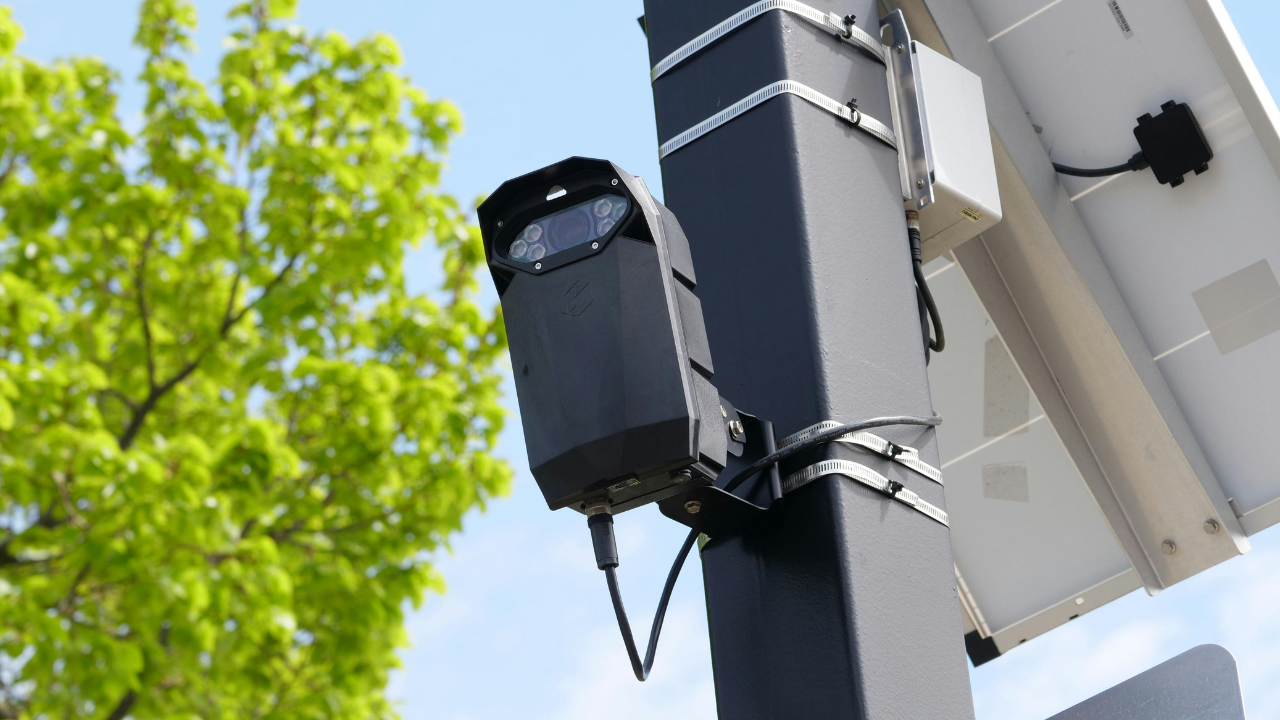
Municipal reliance on automated license plate recognition infrastructure has crossed a critical threshold where procurement failures now trigger physical asset reclamation disputes. When a Texas constable physically removed and ordered a private vendor to retrieve Automated License Plate Recognition units following the termination of a county contract, it exposed the structural fragilities embedded in modern public-private surveillance partnerships. This operational friction highlights a systemic misalignment between municipal governance lifecycles and the proprietary hardware deployment models favored by surveillance technology vendors.
To understand why standard municipal vendor relationships break down in this sector, one must analyze the underlying mechanics of public safety contracting. Cities and counties do not merely purchase cameras; they lease access to networked data loops. When contract terms expire or political priorities shift, the termination protocol frequently lacks the operational clarity required to handle physical infrastructure mounted on public right-of-way assets. Learn more on a connected topic: this related article.
The Procurement Architecture of Municipal Surveillance
Public safety agencies operate under strict budgetary constraints while facing constant pressure to adopt force multiplier technologies. Automated license plate recognition systems promise high-frequency data collection with minimal human staffing requirements. However, the economic model typically relies on a software-as-a-service foundation tied to proprietary hardware nodes.
This creates a structural dependency. The municipality controls the physical utility poles and the right-of-way access, but the vendor retains proprietary control over the firmware, the data ingestion pipeline, and the analytical software. When a county administration votes to terminate a service agreement, the legal dissolution of the contract does not instantly translate to a clean physical separation. More analysis by MIT Technology Review highlights related views on this issue.
The jurisdictional friction begins at the boundary where municipal infrastructure meets private corporate assets. Constables and local law enforcement officers find themselves managing physical disputes over hardware that was bolted onto public property under contracts negotiated years prior by preceding administrations. Without explicit, pre-negotiated decommissioning protocols, these terminations descend into ad-hoc physical removals.
The Cost Function of Data Ownership and Asset Recovery
The financial lifecycle of a surveillance contract involves three distinct cost centers that rarely align cleanly with political terms of office:
- Initial capital deployment or subscription activation fees.
- Ongoing network connectivity and maintenance overhead.
- Terminal extraction costs, which include physical labor, traffic control during removal, and data sanitization verification.
When a contract ends abruptly, the cost function shifts entirely to the public sector in terms of labor hours spent auditing hardware locations and managing vendor disputes. Vendors view their hardware as mobile capital assets that must be recovered quickly to maintain inventory deployment metrics. Local authorities view the same hardware as abandoned or contested property occupying public infrastructure without a valid operational franchise.
This divergence in valuation leads directly to tactical standoffs. A private vendor deploying units across multiple regional jurisdictions relies on standardized retrieval timelines. A local law enforcement official operating under direct county mandate prioritizes immediate site clearance once legal authorization ceases. When communication breaks down between corporate account managers and local field units, administrative disputes convert directly into physical enforcement actions.
Operational Vulnerabilities in Vendor Lock-In
The proliferation of automated surveillance creates an architectural vulnerability known as vendor lock-in through data siloing. Law enforcement agencies become accustomed to querying centralized databases aggregated by private networks rather than maintaining local, independent evidentiary stores.
When a contract is terminated and hardware is uninstalled, the immediate operational impact is not just the loss of the physical lens, but the potential severance of historical query access. Municipalities rarely build local redundancy for the high-volume data streams processed by third-party analytics engines. Consequently, ending a contract forces an abrupt degradation of surveillance coverage that patrol divisions may have grown to rely upon for daily investigative leads.
The friction observed in Texas demonstrates that local officials are increasingly willing to absorb this operational disruption to reassert local control over public space. The physical demand to retrieve equipment serves as a visible manifestation of a deeper institutional pushback against perpetual software subscriptions embedded in public infrastructure.
Strategic Execution for Municipal Infrastructure Exit
Managing the lifecycle of public-private technology partnerships requires a shift from passive procurement to active exit planning. Agencies entering into data-intensive surveillance agreements must mandate explicit decommissioning clauses prior to initial deployment.
The primary safeguard involves establishing a pre-funded escrow or designated bond dedicated entirely to asset extraction and data repatriation. If a contract lapses or is terminated for convenience, the physical removal of hardware must be governed by a strict operational checklist executed by neutral municipal engineering teams rather than reactive law enforcement personnel.
Furthermore, data governance frameworks must dictate the exact timeline for purging municipal datasets from corporate servers upon contract termination. Without legally binding sanitization standards, municipalities risk leaving sensitive citizen movement logs stranded in proprietary cloud environments long after the physical cameras have been uninstalled and returned to the vendor.