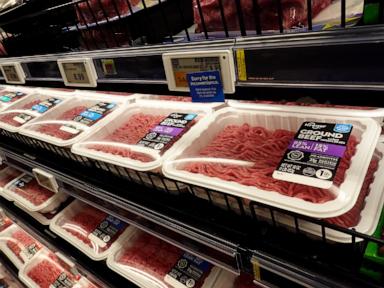
President Donald Trump signed an executive proclamation to temporarily remove tariffs on 300,000 metric tons of imported lean beef trimmings, setting off a political firestorm across America's cattle country. The administration pitched the 90-day tariff suspension as a direct relief valve for consumers battered by ground beef prices hovering near record highs of $6.89 per pound. But the move triggered a swift, furious backlash from the very agricultural base that carried Trump to victory. Ranchers, farm bureaus, and Republican lawmakers from major livestock states view the policy not as economic relief, but as a direct assault on domestic producers already grappling with a cow herd at a 75-year low.
The tension exposes a brutal economic paradox inside modern American agriculture. Years of persistent drought, searing feed costs, and severe weather events have decimated domestic cattle inventory. Lean beef trimmings, critical for blending with fatty cuts to produce commercial ground beef, are chronically scarce domestically. The White House argues that opening the floodgates to foreign imports will increase the aggregate beef supply by roughly ten percent and drag down retail prices at the supermarket checkout counter.
Yet, producers look at the exact same numbers and draw a terrifyingly different conclusion.
The American Farm Bureau Federation, the National Cattlemen's Beef Association, the Livestock Marketing Association, and the United States Cattlemen's Association joined forces in a rare, unified public condemnation of the White House directive. Their core argument centers on the mechanics of herd rebuilding. Expanding the national cattle herd requires immense capital, multi-year biological timelines, and, most importantly, rock-solid confidence that domestic investments will retain their market value. When the federal government steps in to artificially undercut domestic supply with foreign product priced twenty-five percent below market rates, that confidence evaporates.
Ranchers are caught in a classic structural squeeze. While retail prices remain stubbornly high, primary producers claim the influx of foreign beef threatens to depress the cash price they receive for their cattle at auction.
The political fallout stretches deep into the halls of Congress, alienating reliable allies. Senators like Deb Fischer of Nebraska and Chuck Grassley of Iowa publicly challenged the wisdom of undercutting local producers to achieve short-term price stabilization at the grocery store. Montana Senator Tim Sheehy noted that the administration's intervention runs counter to the long-term stabilization work rural communities have fought to secure.
The administration inserted a specific contingency clause into the official text to insulate itself against failure. The proclamation stipulates that if the targeted imports do not successfully drive down retail prices, or if foreign suppliers fail to deliver the mandated twenty-five percent discount, the White House holds the authority to terminate the suspension prematurely to prevent an unearned windfall for foreign operators.
This clause reveals a deep underlying anxiety within the executive branch. Even White House economists understand that manipulating import quotas is a blunt instrument against deeply entrenched structural inflation. The retail price of beef is governed by a complex chain of custody involving multinational packing conglomerates, logistics networks, and retail markup margins. Flooding the market with foreign lean trimmings does not guarantee that grocery chains will pass those savings down to the consumer rather than simply widening their corporate profit margins.
Economists specializing in agricultural markets point out that 300,000 metric tons amounts to a modest slice of total annual American consumption. It is large enough to rattle domestic auction yards and depress futures contracts, but potentially too small to fundamentally alter the weekly grocery bill of an average family staring at package labels.
The fundamental friction point remains unresolved. Consumers want affordable protein today. Ranchers need market stability to rebuild the generational supply chain for tomorrow. By choosing to appease the short-term political panic over grocery inflation, the administration risked fracturing the economic foundation of rural America.
The next ninety days will test whether executive fiat can bend global commodity markets, or if the policy will merely alienate its most loyal political constituency without ever lowering the price of a pound of hamburger meat.