The headlines cheered. Analysts uncorked the champagne. Another trade war averted, another diplomatic breakthrough saved by the bell.
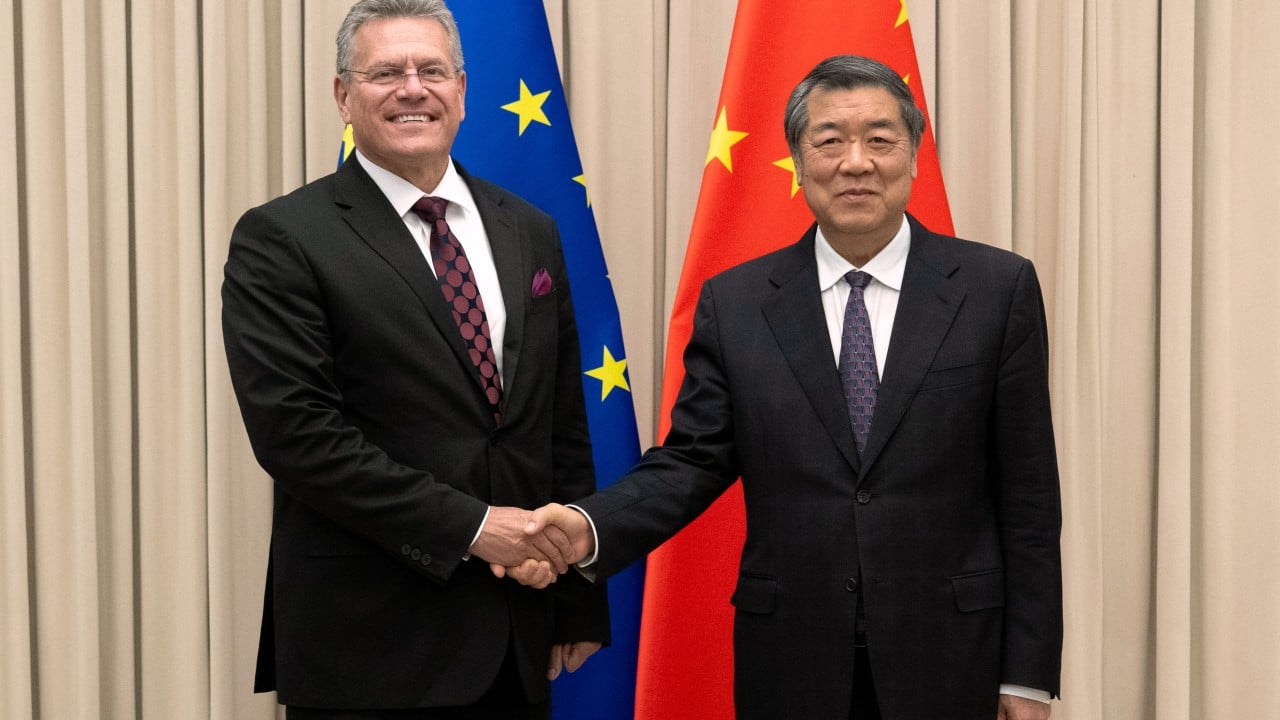
Brussels and Beijing supposedly pressed pause. They sat at the mahogany tables, exchanged polite communiques, and promised to talk things out. The lazy consensus is that sanity has prevailed. Cooler heads have cooled off the furnaces of protectionism. Trade officials want you to believe that institutional diplomacy just saved the global economy from a flat spin.
It is a fairy tale for tourists.
I have watched corporate supply chains rupture from the inside. I have seen procurement chiefs burn through eight-figure budgets trying to outrun regulatory crossfire while diplomats stage high-altitude photo ops. The truth nobody in the press room wants to print is stark: the trade war never paused. It merely evolved from a loud, messy street fight into a silent, bureaucratic strangulation.
Brussels did not secure a lasting detente. Beijing did not surrender its industrial policy. What actually happened is far more cynical. Both sides needed a breather to retool their economic weapons.
The Illusion of De-escalation
Let us look at the mechanics of what the pundits call a truce. Tariffs remain locked in place. Export controls on dual-use technology tighten by the quarter. Industrial subsidies in critical sectors like electric vehicles and semiconductors are not shrinking; they are mutating.
When a trade official tells you tensions are thawing, check the customs data. What you will find is not a revival of free trade, but a massive sorting operation. Both economies are quietly walling off their domestic champions while fighting proxy battles in third-party markets across Southeast Asia and Latin America.
The mainstream press treats these high-level negotiations as progress because they desperately want to believe the old rules of globalization still apply. They do not. The postwar trade consensus is buried six feet under, and no amount of diplomatic spin can resurrect it.
Why the Traditional Playbook is Dead
For decades, multinational boardrooms operated on a predictable assumption. Capital flowed where it was cheapest, goods flowed where demand was highest, and governments played the role of neutral referees keeping the lanes clear.
That model required a level of geopolitical trust that evaporated years ago.
When Brussels slaps anti-subsidy duties on imported green tech, it is not engaging in fair-market correction. It is practicing defensive nationalism. When Beijing floods overseas markets with cheap manufacturing output to compensate for a stagnant domestic property sector, it is exporting its unemployment.
Calling this a pause is like describing a ceasefire during an artillery barrage as peace. It ignores the strategic reality on the ground. Companies clinging to the old playbook—hoping that if they just wait out the political cycle, supply chains will snap back to 2019 norms—are walking blindly into a buzzsaw.
The Real Cost of Institutional Denial
I have spoken with executives who spent millions diversifying their manufacturing footprints into hand-picked hub countries, only to find themselves ensnared in secondary sanctions and origin-of-components audits that would test the patience of a forensic accountant.
The administrative burden of this supposed truce is staggering. Compliance departments are expanding faster than sales teams. Every shipment now requires a geopolitical background check.
Yet, institutional analysts keep pushing the same tired narrative. They ask: Will the next round of talks yield a comprehensive bilateral investment agreement? Will the WTO find its footing again?
These are the wrong questions entirely. Asking whether the WTO can solve twenty-first-century techno-nationalism is like asking a blacksmith to repair a microchip. The institutional architecture built in the late twentieth century was designed for a world of open borders and interchangeable widgets. We live in a world of weaponized supply chains, sovereign data borders, and strategic industrial planning.
How to Navigate the New Economic Reality
If you are running an enterprise or allocating capital in this environment, stop waiting for adult supervision to return to global trade. It is not coming back.
First, treat every cross-border market as a regulated utility rather than a free market. Margins will shrink not because of demand shifts, but because of friction costs imposed by nervous bureaucrats in both capitals.
Second, localization is no longer a buzzword for corporate citizenship; it is insurance against sudden policy shifts. If your supply chain depends on components crossing oceans where geopolitical flashpoints can flare up overnight, you do not have a supply chain. You have a prayer.
Third, ignore the joint statements issued at the conclusion of summit meetings. Look instead at capital expenditure patterns in domestic industrial policy. Follow the subsidies, not the communiques.
The geopolitical struggle between the European Union and China is structural. It is a collision between an aging regulatory superpower trying to protect its social model and an export-driven industrial giant determined to dominate the next technological epoch. Truces between them are tactical maneuvers, nothing more.
Stop planning for the return of normal. The friction is the system now. Adapt to it or get crushed by it.