Every time a Kremlin official boards a flight to Tianjin or Dalian to talk up bilateral maritime cooperation, the defense press corps treats it like the second coming of the Grand Alliance. Headlines scream about unstoppable Sino-Russian naval manufacturing alignments, joint arctic transit dreams, and the immediate resurrection of Russia's moribund commercial yards.
It is pure theater.
If you spend twenty minutes looking past the official state-media handshakes and actually audit the ledger of physical steel, dry docks, and propulsion tech, the entire narrative collapses. Moscow is not forging an equal partnership in maritime manufacturing. It is sliding into a subordinate vendor relationship where Beijing holds every single high-value card, from marine diesel blueprints to automated gantry crane software.
Let us dismantle the lazy consensus.
The Myth of the Joint Yard
The conventional wisdom floating around defense circles suggests that Russian shipyards, battered by sweeping sanctions and starved of Western electronics, will simply plug into Chinese supply chains. Need azimuth thrusters? Import them from Ningbo. Need modern hull-welding automation? Guangzhou has spares.
This argument ignores how heavy industrial manufacturing actually operates in the twenty-first century.
You cannot hot-swap a supply chain built on German automation and Finnish propulsion systems with Chinese equivalents overnight without rewriting the engineering specs of the entire vessel. Russian naval and civilian yards are suffering from systemic architectural calcification. Their facilities were laid down in an era when throughput mattered less than sheer mass. They lack the modular, parallel-assembly workflow that allows Chinese yards to turn out container ships and ice-strengthened bulk carriers with terrifying efficiency.
When a Russian delegation visits a Dalian shipyard, they are not looking at a peer facility. They are looking at a cathedral of efficiency that makes St. Petersburg look like an open-air museum. And Beijing knows it.
China State Shipbuilding Corporation is not handing over proprietary blueprints or lifting sanctions barriers out of ideological warmth. Every piece of hardware transferred across that border comes with commercial handcuffs. Beijing wants stable resource corridors, cheap energy, and an Arctic trade route secured by someone else's icebreakers. They do not want a resurrected Russian commercial shipbuilding competitor cutting into their global market share.
The Propulsion Bottleneck Nobody Talks About
Let us talk about marine diesel engines, because this is where the fantasy of Sino-Russian maritime synergy hits a concrete wall.
For decades, Russian yards relied heavily on Western-licensed medium-speed diesel engines or direct imports from Germany, France, and South Korea for their higher-end civilian fleet and auxiliary naval vessels. When those taps turned off, Moscow scrambled for domestic substitutes. The results have been catastrophic. Domestic engine programs suffer from metallurgical shortfalls, machining tolerances that belong in the 1970s, and abysmal mean time between failures.
Can China supply those engines? Yes and no.
China produces massive volumes of marine diesel powerplants, many built under European licenses or via indigenous refinement of MAN and Wärtsilä designs. But here is the catch that the geopolitical pundits miss. Beijing guards its export licenses for advanced propulsion systems with extreme jealousy. If China ships complete, high-reliability propulsion packages to Russian yards, it risks secondary blowback from Western maritime insurers and regulators who control the global shipping lanes Chinese exporters depend on.
Therefore, what Moscow gets is a trickle of lower-tier components, constant delivery delays, and markup prices that bleed already-insolvent domestic shipbuilders dry. The structural deficit is not being bridged. It is being monetized by Beijing.
The Arctic Pipe Dream
Then there is the Northern Sea Route. Every time Moscow and Beijing sign another memorandum of understanding on Arctic shipping, analysts hyperventilate about the death of the Malacca Strait.
Look at the ice-class tonnage currently rolling off Russian slips. It is virtually zero.
Russia's premier yards, like Zvezda in the Far East, were designed precisely to build the specialized Arc7 LNG carriers needed to haul gas from Yamal and Gydan. Those yards were heavily reliant on South Korean engineering expertise and specialized equipment. When those Western and allied partners pulled out, construction stalled mid-hull. Zvezda is currently a monument to incomplete ambition, staring at unfinished hulls while waiting for components that may never arrive via legal channels.
Beijing could step in and finish those hulls tomorrow, right? Wrong.
Chinese yards are booked out for years building ultra-large container ships and specialized tonnage for domestic and Western-aligned carriers. Diverting dry dock capacity to rescue high-risk, sanction-entangled Russian energy carriers makes zero commercial sense for a shipbuilder operating on razor-thin margins and facing global overcapacity warnings.
When Chinese executives talk about Arctic cooperation, they are talking about buying discounted Russian hydrocarbons transported on vessels they did not build, insured by pools they do not back, along routes they expect Moscow to patrol and maintain at its own fiscal peril.
The Uncomfortable Reality of Subordination
For centuries, Russian maritime strategy operated on the principle of sovereign self-reliance. Even during the Soviet era, though heavily bureaucratic and inefficient, the Red Fleet and its civilian adjuncts were built domestically from the keel up.
That autarky is dead.
By turning exclusively eastward out of geopolitical desperation, Moscow has traded one form of vulnerability for another, far more lopsided one. Beijing does not need to conquer or coerce Russian maritime infrastructure; it simply needs to watch it starve until the terms of engagement are entirely dictated by Chinese commercial interests.
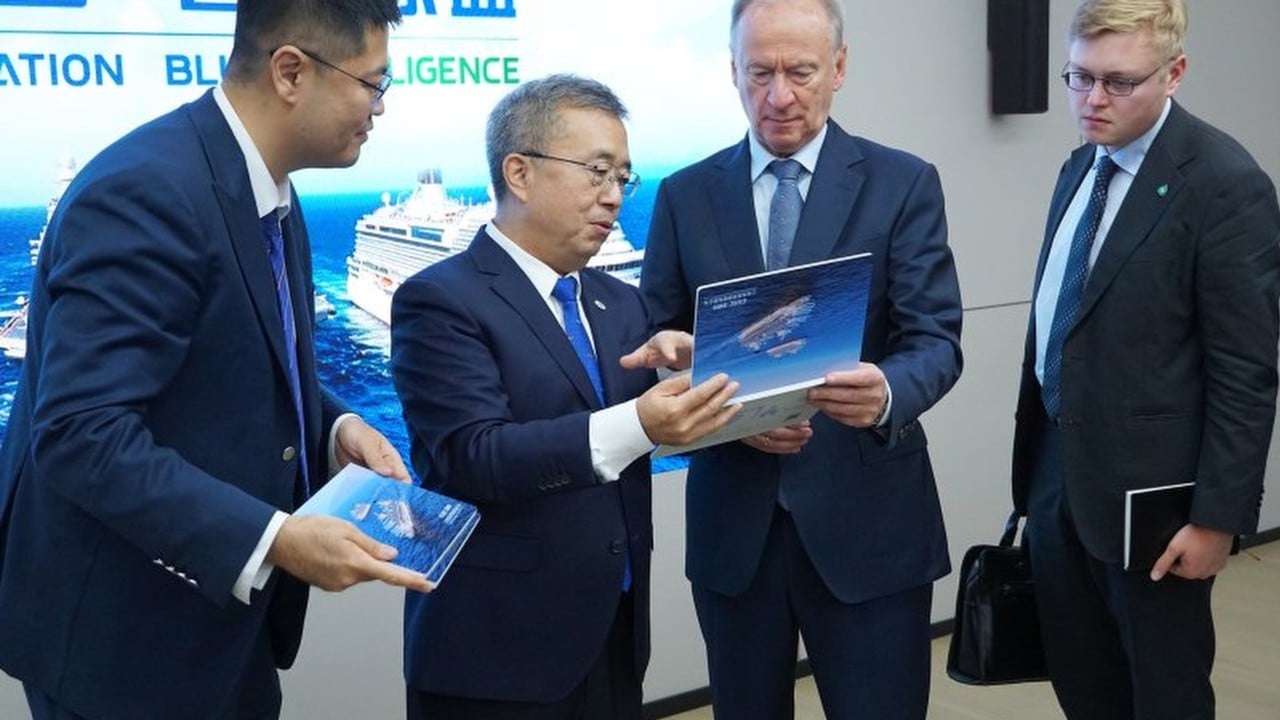
The next time a high-ranking Russian trade delegation poses for photographs in front of a gleaming Chinese shipyard, remember what is actually happening behind the smiles. It is not an alliance of equals. It is a liquidation sale, and the auctioneer speaks Mandarin.


